

Ayurveda does not look at kidneys alone. It looks at the whole metabolic system, the one that controls how your body processes, filters, and eliminates waste.
Modern medicine mostly looks at kidney disease through numbers like serum creatinine, GFR and any changes it sees in the structure of the kidneys. Ayurveda looks at the same problem in a different way. It sees the kidneys as a part of the Mutravaha Srotas, the group of channels that are involved in forming urine and removing waste from the body. When these channels become weak or blocked in some way, Ayurveda believes this can lead to disease. This idea is one of the main things that shapes how Ayurvedic treatment for chronic kidney disease is usually planned for each person.
Vata and Pitta doshas are also considered important in the Ayurvedic understanding of kidney health. An imbalance of Vata is traditionally associated with changes in tissue structure and disruption of the normal movement through the urinary channels. Pitta imbalance, on the other hand, is associated with inflammatory and oxidative processes. Ayurveda therefore considers it important to understand the individual’s dosha imbalance rather than focusing only on a single symptom or laboratory value.
This framework also gives importance to Agni, the body’s digestive and metabolic fire. Ayurveda considers that a weak Agni can make it harder for the body to process food and metabolic waste properly and this may result in something called Ama, that is, waste material that stays incompletely processed or builds up inside the body. According to this approach, supporting healthy Agni is therefore an important part of maintaining overall metabolic and renal well-being. You can also explore how kidney detoxification protocols are understood within this Ayurvedic approach.
Ayurveda also gives a lot of importance to Rasayana, which is basically a group of rejuvenative approaches used since ancient times to support tissue strength and overall vitality. When we talk about renal care, this concept is looked at along with diet, lifestyle changes, herbal formulations and other therapies suited to the person. Once these basic Ayurvedic ideas are clear, it becomes much easier to follow the terms used throughout this discussion on kidney health and chronic kidney disease.
Essential Terminology for Ayurvedic Kidney Care
Understanding the basic Ayurvedic terms used in kidney care can make this approach much easier to follow. These terms explain how Ayurveda views the kidneys, urinary function, disease processes, and the therapies traditionally used to support renal health.
Before exploring the question, Can Ayurveda reduce creatinine levels naturally, it helps to understand some of the key Sanskrit terms used in classical Ayurvedic texts. These terms describe different aspects of the body, disease conditions, and therapeutic approaches. Understanding their meaning also makes it easier to follow the reasoning behind Ayurvedic herbal and detoxification practices.
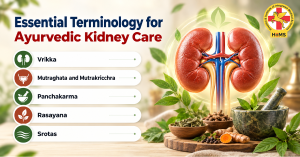
Vrikka
‘Vrikka’ is the classical Ayurvedic term used for the kidneys. Ancient Ayurvedic texts describe Vrikka as an important organ associated with Rakta (blood tissue) and Meda (fat tissue). This perspective places importance on circulation and fat metabolism when considering overall kidney function.
Mutraghata and Mutrakricchra
In Ayurveda, the terms ‘Mutraghata’ and ‘Mutrakricchra’ are used for the urinary and kidney-related problems. ‘Mutraghata’ means there is difficulty, blockage or stopping of urination, while ‘Mutrakricchra’ means urination that is painful or hard to pass. These old terms show how classical Ayurvedic texts looked at different urinary problems long ago.
Panchakarma
Panchakarma refers to a five-fold Ayurvedic cleansing and therapeutic approach and is an important part of Ayurvedic kidney cleansing. It includes procedures such as Vasti (medicated enema) and Virechana (therapeutic purgation), which are traditionally used to support the removal of accumulated Ama through the elimination pathways of the body. In kidney care, such procedures need to be selected and modified according to the individual’s health condition and should be carried out under qualified supervision.
Rasayana
Rasayana is a category of Ayurvedic rejuvenative therapy and formulations that is traditionally used for tissue nourishment, strength and overall vitality. Herbs like Ashwagandha and Amalaki come under this Rasayana approach. In renal care, they can be considered a part of a broader, individualised Ayurvedic plan rather than a standalone remedy.
Srotas
Srotas is a word used in Ayurveda for the network of channels inside the body. Through these channels, nutrients, fluids and waste keep moving from one place to another. Mutravaha Srotas is linked with urinary function, while Rasavaha Srotas is linked with the movement of plasma and nutrients. Ayurveda believes that keeping these channels working properly is an important part of maintaining the good health and balance.
With these basic terms in place, it becomes easier to understand how Ayurveda views kidney health and why different herbs, dietary measures and therapeutic procedures are included in an individualised approach to renal care.
Can Ayurveda Reduce Creatinine Levels Naturally?
Many people living with chronic kidney disease often ask, “Can Ayurveda reduce creatinine levels naturally?” In Ayurveda, the focus is not kept only on lowering a number on the report. It rather looks at the broader metabolic factors that might be affecting how the kidney works, and tries to support the natural filtration and waste removal process of the body.
Herbal filtration mechanisms are an important part of this approach. Herbs like Punarnava (Boerhaavia diffusa), Varuna (Crataeva nurvala) and Gokshura (Tribulus terrestris) have compounds that are being studied for their diuretic, anti-inflammatory, and nephroprotective properties. These properties may help support urinary function and help the body handle waste such as urea and creatinine, while also easing the inflammatory stress that comes with progressive kidney damage. This is why Ayurvedic herbs are traditionally used both to support waste removal and to protect kidney function.
GFR improvement through microcirculation is an important part of how Ayurveda looks at vascular and kidney health. Many people suffering from CKD notice changes in glomerular microcirculation, and this can affect how well the blood gets filtered. Ayurvedic formulations, mainly the ones classified as Rasayana, are traditionally believed to support endothelial function, circulation and the health of renal tissues. This attention given to microcirculation is considered one of the ways through which GFR may improve. It also becomes relevant for patients who are exploring how to improve GFR in Ayurveda, especially those who are thinking about making changes to their dialysis schedule.
Clinical evidence also provides some encouraging findings. A study on Ayurvedic treatment in patients with chronic renal failure reported statistically significant reductions in serum creatinine following Ayurvedic intervention. Separately, research by Banaras Hindu University reported positive effects from Ayurvedic medicines in 31.61% of patients within three days.
Timeline expectations also matter for realistic planning. Most patients start seeing some early shift in their blood markers within 4 to 8 weeks of following the treatment consistently, and more noticeable changes usually appear somewhere between month 3 and month 6. The next section talks directly about the protocol used to get these results and how it is structured in a safe way.
Have questions about your creatinine levels or kidney health? Speak with our doctor for guidance.

The Protocol for Stopping Dialysis with Ayurveda
Reducing dependence on dialysis through Ayurveda is not something that happens overnight. It involves a structured and closely monitored process that aims to support the residual kidney function while using Ayurvedic approaches to assist the natural elimination pathways of the body.
The process generally follows three sequential phases,
- Stabilization – Ayurvedic herbs, a personalised Ayurvedic diet for kidney patients and appropriate lifestyle changes are introduced while the patient continues dialysis at the existing frequency.
- Gradual reduction – As kidney markers show improvement and urine output increases, dialysis sessions may be gradually spaced out under close physician supervision. Dialysis should never be stopped abruptly, and every reduction should be supported by appropriate blood test results.
- Maintenance and monitoring – After dialysis has been discontinued, patients continue with their prescribed herbal protocols, dietary measures and regular laboratory monitoring to help maintain the progress achieved.
Basti, or medicated enema therapy, is given particular importance within this Ayurvedic approach. When kidney function is compromised and the kidneys have difficulty filtering waste efficiently, Ayurveda considers Basti a way of supporting elimination through the large intestine, which is viewed as an alternative pathway within Ayurvedic physiology. Specific herbal decoctions administered rectally are traditionally used to support the removal of accumulated waste and reduce the overall toxic burden. For the patients wondering how to stop dialysis with Ayurveda, understanding the different stages of CKD is also an important foundation for making informed decisions about kidney care.
Clinical observation offers some cautious optimism. Research published on 100 chronic renal failure patients reported the measurable improvements in creatinine and blood urea levels following Ayurvedic intervention, with some patients also showing a significant reduction in dialysis frequency. Ayurvedic approaches have also been associated with helping some patients move from three dialysis sessions per week towards eventual cessation when combined with consistent lifestyle practices and adherence to herbal protocols.
“Improvements in serum creatinine, blood urea, and hemoglobin were observed in patients treated with Ayurvedic formulations over six months, suggesting a measurable nephroprotective effect.” – PMC Clinical Study, NCBl
Throughout this transition, monitoring GFR, serum creatinine, potassium, phosphorus and the urine output remains essential. These measurements help determine whether kidney function is genuinely improving or whether the changes are only temporary. The next section looks at the specific herbs used within the Ayurvedic kidney care and the ways they are understood to support renal function at the cellular level.
Top Ayurvedic Herbs for Kidney Rejuvenation
The herbs for kidney rejuvenation in Ayurveda are traditionally used as part of a broader approach rather than as isolated remedies. They are considered for their combined actions, including supporting renal tissue, managing inflammation, and addressing factors that may interfere with normal urinary function.
As already discussed, Ayurvedic protocols do not limit themselves to individual kidney symptoms, they look at the wider metabolic factors connected with kidney dysfunction. This makes the herbs used in such protocols quite important for the overall approach, because each one comes with its own traditional properties and its own role in renal care.
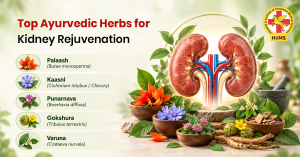
Palaash (Butea monosperma)
Known as the “Flame of the Forest”, Palaash is recognized for its potential role in supporting glomerular filtration and reducing the accumulation of uremic toxins. Its astringent and anti-inflammatory properties are also considered helpful in protecting tubular cells from oxidative stress. Palaash is identified as one of the primary herbs used in Ayurveda to address kidney failure symptoms and support overall kidney function.
Kaasni (Cichorium intybus / Chicory)
Kaasni is traditionally used to address inflammatory processes associated with chronic kidney disease. It is also considered supportive of liver-kidney detoxification pathways and has shown hepatoprotective and nephroprotective activity in clinical observations. Along with Palaash, it is considered an important herb in Ayurvedic approaches aimed at managing the symptomatic burden associated with kidney failure.
Punarnava (Boerhavia diffusa)
The name punarnava literally means “renewer”. It is traditionally considered an important Ayurvedic herb for managing edema and fluid retention associated with impaired renal filtration. Its diuretic properties are generally described as gentle and consistent, making it a commonly used herb in Ayurvedic approaches to long-term CKD management.
Gokshura (Tribulus terrestris)
Gokshura is traditionally used to support the health and function of the urinary tract. It is also known for its litholytic activity against the small renal calculi. In patients who are prone to kidney stones, it is often considered alongside Varuna as part of a broader Ayurvedic approach.
Varuna (Crataeva nurvala)
Varuna is traditionally valued in Ayurveda for its litholytic and diuretic properties. It is used in approaches focused on urinary flow and kidney stone related concerns. It is also considered to support the reduction of smooth muscle spasms in the ureter and the passage of urinary debris during appropriate therapeutic phases.
| Herb | Primary Action | Key Benefit |
| Palaash | Renal tissue protection | Supports reduction of uremic toxin load |
| Kaasni | Anti inflammatory | Supports management of kidney failure symptoms |
| Punarnava | Diuretic / anti-edema | Helps manage swelling and fluid retention |
| Gokshura | Urinary tract tonic | Supports stone clearance and urinary tract health |
| Varuna | Litholytic / antispasmodic | Supports calculi management and urinary flow |
The importance of these herbs goes beyond what each one does individually. Kidney health is also influenced by conditions such as hypertension, blood glucose imbalance, and ongoing inflammation, which can add to the burden on the kidneys over time. Understanding and managing these related conditions is therefore an important part of a broader Ayurvedic approach to kidney care, which is what the next section explores.
Support your kidney care with our specially selected Ayurvedic Kidney Care Combo:-

Management of Chronic Kidney Disease and Comorbidities
Kidney disease rarely occurs on its own. Managing the conditions that contribute to kidney damage is an important part of understanding. How to improve GFR in Ayurveda, as uncontrolled health problems can place additional stress on the kidneys and contribute to the loss of nephron function.
CKD and the conditions linked with it are all connected to each other in some way. High blood pressure can damage the small blood vessels present in the glomeruli, while blood sugar that is not controlled properly can lead to diabetic nephropathy. When there is some problem with the heart’s working, it can reduce the blood flow reaching the kidneys, and stress that continues for a long time can raise cortisol levels and add to inflammation inside the body. Ayurveda does not see these conditions as separate problems standing on their own. Instead, they are understood as a part of a person’s larger constitutional imbalance.
- Hypertension (Raktagata Vata/Pitta): High blood pressure is a major contributor to progressive kidney damage and can eventually lead to renal scarring. Ayurvedic herbs such as Sarpagandha (Rauwolfia serpentina), Ashwagandha and Arjuna (Terminalia arjuna) are traditionally used to support the vascular balance and reduce cardiac workload. Research published in academic literature reports that plant based agents with diuretic and vasodilatory properties may help reduce nephrotoxic stress and support glomerular filtration over time.
- Diabetes and Diabetic Nephropathy (Madhumeha): In Ayurveda, diabetes is called Madhumeha, and it is linked with an imbalance of Kapha and Vata along with a disturbance in Ojas, which means the vital essence of the body. Herbs like Gurmar (Gymnema sylvestre), Vijaysar (Pterocarpus marsupium) and Karela (Momordica charantia) are traditionally used to support healthy glucose metabolism. Keeping blood sugar stable matters a lot for kidney health, because if hyperglycemia persists for a long time, it can lead to the formation of advanced glycation end products and these can affect the structure and working of the glomerular membranes.
- Cardiac and Stress Factors: The connection between the heart and kidneys means that reduced cardiac output can affect blood flow to the kidneys. Arjuna bark preparations are traditionally used to support cardiac strength and healthy vascular function. Stress management is equally important. Chronic psychological stress can raise cortisol levels and contribute to inflammatory processes that may affect renal tissues. Clinical data has reported measurable reductions in urinary inflammatory parameters following integrated Ayurvedic protocols, highlighting the potential importance of stress management as part of a broader approach to kidney care.
An integrated Ayurvedic protocol, therefore, does not treat blood pressure, blood sugar, heart function and stress as separate issues; it considers all of them together. Supporting these connected areas at the same time may give a more well-rounded approach to managing what affects kidney health.
What you eat alongside these conditions can also influence the overall kidney care plan and how well dietary and herbal measures fit into it. This is why the next section looks at the Ayurvedic dietary approach designed for kidney patients and how food choices can support renal health from within.
The Ideal Ayurvedic Diet for Kidney Patients
What you eat has a direct effect on how much work your kidneys have to do. In Ayurveda, a properly planned diet is considered just as important as any herb or treatment.

The Ayurvedic diet for kidney patients is guided by two basic principles: Pathya, which refers to foods and habits considered supportive of health, and Apathya, which includes foods and habits that may aggravate a condition and are therefore best avoided. Importantly, Ayurvedic diet guidelines are tailored to an individual’s Prakriti (constitution). This means that a kidney patient with a Vata dominant constitution may receive different dietary recommendations from someone with a Pitta or Kapha constitution. This individualised approach is intended to help identify foods that may place greater strain on renal function while selecting those that better suit the person’s overall needs.
In practice, Ayurvedic Pathya for kidney patients can be planned around the functional needs of a compromised renal system. The dietary approach may include low-potassium, low-phosphorus, and low-sodium choices while still providing sufficient energy. The following table presents this guidance in the context of a typical Indian diet:
| Food Category | Recommended (Pathya) | Avoid (Apathya) |
| Grains | White rice, semolina (suji), plain wheat roti | Whole bran, millets in excess |
| Vegetables | Bottle gourd (lauki), ridge gourd, ash gourd | Spinach, tomatoes, potatoes, drumstick |
| Fruits | Apple, pear, guava (small portions) | Banana, orange, kiwi, dried fruits |
| Protein | Moong dal (small amounts), paneer in moderation | Red meat, kidney beans, chickpeas |
| Dairy | Diluted cow’s milk, cultured buttermilk (Takra) | Full-fat yogurt, aged cheese |
| Fats | Cow’s ghee in small quantities | Processed oils, hydrogenated fats |
| Spices | Coriander, cumin, fennel | Excess salt, chili, asafoetida |
Hydration Matters Too
Hydration requires just as much attention as food choices. Ayurveda does not follow a universal “eight glasses a day” rule for people with kidney disease. Instead, fluid intake is considered in relation to factors such as urine output, the stage of kidney disease and seasonal conditions. This is particularly important in advanced CKD, where excess fluid can contribute to edema and high blood pressure.
One practical approach is to take warm or room-temperature water in small, frequent sips instead of consuming large amounts at once. However, the appropriate amount of fluid can vary considerably between kidney patients, so individual medical and dietary guidance remains important.
Adjusting the Diet With the Seasons
Seasonal adjustment is another special part of the Ayurvedic approach towards renal nutrition. In the summer season (Grishma), sweating increases and this can affect how much fluid the body needs and how much urine is passed. In such times, Ayurveda suggests slightly more fluid intake along with cooling foods like ash gourd and coconut water, wherever suitable.
During winter (Hemanta), the digestive fire is traditionally believed to be stronger. This can be a good time to include more nutrient-dense Pathya foods, like warm moong dal soups and grains cooked with a small amount of ghee.
In the monsoon season (Varsha), chances of microbial contamination are higher, so freshly cooked and light meals are preferred. Ayurveda also suggest avoiding the raw or fermented food in this season, as it supports digestive and gut health, which can also affect overall renal wellbeing.
Dietary discipline works as an important base for the wider Ayurvedic approach towards kidney care. Once the food and daily habits are set right, other therapies can be added slowly as a part of an individualised plan. This takes us to the next part of the discussion, that is Panchakarma and how it plays a role in Ayurvedic detoxification for kidney-related conditions.
Panchakarma and Detoxification for Renal Failure
Panchakarma is an important part of Ayurvedic kidney care. It is traditionally used as a structured approach to address the accumulated ama and support the elimination processes of the body, particularly when the kidneys are not functioning properly.
Building on the dietary approach discussed earlier, structured detoxification procedures are intended to address concerns that dietary changes alone may not address. In Ayurveda, this includes accumulated metabolic waste or ama, which is considered capable of placing a burden on vulnerable tissues. Three procedures are particularly discussed in the Ayurvedic approach for kidney patients.
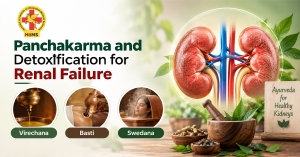
Virechana (Medicated Purgation)
Virechana works on cleansing the whole system through the gastrointestinal route. Carefully chosen herbal purgatives are given, usually after an oleation phase, which help in loosening the substances that have accumulated in the body. This process is traditionally believed to move ama from the tissues towards elimination. In CKD care, this approach is looked at with the aim of lowering the overall metabolic load on the body and supporting the elimination process that gets affected when the kidney function is not working properly.
Basti (Medicated Enema)
Basti is traditionally described as ardha chikitsa, meaning “half of all treatments”, highlighting its importance within Ayurvedic therapy. Its use in kidney related care reflects this traditional significance. Panchakarma therapies like Basti are used to manage nephrotoxicity and improve renal clearance. Basti works through the colon, which lies close to the lower urinary tract and has a shared vascular relationship with the kidneys. Medicated decoctions administered through Basti are traditionally used to support the secondary elimination pathways of the body and may be considered when primary renal filtration is impaired.
Swedana (Therapeutic Sweating)
Swedana, or therapeutic sweating, uses controlled perspiration as part of the Ayurvedic cleansing process. It may be carried out through herbal steam or poultice applications. Traditionally, Swedana is understood to use the skin as an additional route for elimination and is intended to help reduce part of the metabolic burden, including nitrogenous byproducts that may otherwise accumulate when kidney function is reduced.

Safety Warning
Panchakarma procedures for people with CKD need to be substantially modified compared with their standard applications. Strong purgatives, high volume Basti, and intense heat therapies can carry real risks, including electrolyte imbalance, dehydration, and cardiovascular stress, particularly in people with reduced GFR.
For this reason, these procedures should only be performed under the direct supervision of a qualified Ayurvedic physician with experience in renal cases. Ideally, care should also be coordinated with a nephrologist, with regular monitoring of serum creatinine and electrolyte levels throughout the treatment process.
The potential outcomes associated with these procedures have also begun receiving greater attention in formal research. The next section looks more closely at the available clinical evidence, including what studies report about Ayurveda’s measurable effects on GFR and creatinine in people with CKD.
Clinical Evidence: What Research Says About Ayurveda and CKD
Peer-reviewed clinical trials are now confirming the same thing that Ayurvedic practitioners have observed for centuries: that structured herbal and panchakarma protocols can bring measurable and statistically significant improvement in kidney function markers.
A significant study published via NIH/PubMed Central examining 100 CKD patients is an important reference in this area. The researchers followed patients across different stages of renal decline and used standardized Ayurvedic formulations along with dietary modifications. The study reported meaningful reductions in serum creatinine and blood urea nitrogen, two important markers used when assessing kidney function and renal stress. The client-supplied research also reports these improvements without the adverse effects commonly associated with long term pharmaceutical intervention.
Research summary: The 100-patient NIH-indexed CKD trial reported clinically relevant improvements in renal function parameters following Ayurvedic treatment. These findings support further consideration of structured herbal protocols as an adjunctive or primary management strategy, while additional research is needed to establish their effectiveness more definitively.
Multi-herbal regimens are receiving particular attention as well. A single-arm clinical trial assessing Anubhuta Kashaya and Kaishora Guggulu in patients with CKD reported positive outcomes across functional and symptomatic measures. This adds to an emerging area of research examining combinations of classical Ayurvedic formulations rather than focusing only on individual herbs. It also reflects Ayurveda’s traditional emphasis on using multiple formulations together to address different aspects of an individual’s doshic imbalance.
Key finding: Multi-compound Ayurvedic formulations that address the multiple doshic imbalances at the same time may offer advantages over isolated herbal interventions. This principle is also being reflected in emerging the clinical research designs.
Comparing integrated versus purely allopathic outcomes presents a more nuanced picture. Conventional medical care remains important for managing the acute complications and slowing disease progression. At the same time, the client-supplied content highlights the potential of integrated Ayurvedic approaches, particularly when introduced during earlier stages of CKD, to support the longer-term quality of life. Reported areas of interest include reduced fatigue, improved appetite, and more stable GFR trajectories. The Central Council for Research in Ayurvedic Sciences continues to expand its clinical research portfolio, with the aim of generating larger-scale clinical evidence that can help establish these patterns more clearly.
As research continues to develop, kidney health also depends on what happens outside the clinical setting. Daily habits, including yoga, pranayama, sleep, diet, and other consistent lifestyle choices, can form an important part of a broader approach to renal well-being. The next section looks at these preventive and lifestyle measures in greater detail.
Preventive Care and Lifestyle Modifications
Long-term renal recovery depends as much on your daily habits as it does on the medicine you take. Ayurveda has always considered lifestyle discipline as a proper clinical therapy, not something optional.
The clinical evidence and Panchakarma protocols we discussed earlier confirms that herbal treatment works better when it is paired with steady lifestyle changes. For long term renal wellbeing, Ayurveda gives a lot of importance to preventive care through lifestyle modification, and especially for kidney patients, these habits play a direct role in filtration capacity, inflammation levels and how quickly the tissue repair happens.
Four lifestyle changes can be particularly important for supporting renal health:
- Yoga asanas for renal stimulation. Practices such as Dhanurasana (Bow Pose) and Paschimottanasana (Seated Forward Bend) involve gentle compression and release around the lumbar region and are traditionally used to support circulation in this area. A consistent 20-minute daily asana practice may be more beneficial for maintaining this routine than doing longer sessions only occasionally.
- Pranayama for giving oxygen to kidney tissues. Breathing practices like Anulom Vilom and Bhramari are known to reduce oxidative stress and help improve oxygen supply to the kidney tissue. When pranayama is done regularly, it also helps in keeping cortisol levels under control, and this in turn reduces the inflammation load on kidneys.
- Sleep hygiene for repair at night. Kidneys do a good amount of cellular repair while we are in deep sleep. When sleep gets disturbed or cut short, this repair process does not happen properly, and it can raise creatinine and urea levels in the body. Getting seven to eight hours of uninterrupted sleep is not just a lifestyle suggestion, it is something that really matters clinically.
- Eliminating nephrotoxic habits. Some everyday habits can put extra stress on the kidneys. Regularly taking NSAIDs, eating too much sodium and having processed food often can add to the kidney health risks. Keeping the sodium intake under 1,500 mg in a day and avoiding over-the-counter painkillers without proper medical supervision can help reduce unnecessary strain on the kidneys and may also support a slower progression of the disease.
Pro Tip: Try to keep a check on your urine output every day. If you notice it going down again and again, this can be an early warning that your kidneys are under more stress, and it is a good time to revisit your diet and also talk to your practitioner.
These everyday habits provide an important foundation for the broader Ayurvedic approach to kidney care. The next section brings the key ideas from the entire discussion together and looks at what an effective Ayurvedic kidney care plan should include.
Key Takeaways: The Bottom Line on Ayurvedic Kidney Care
Ayurveda offers a well-grounded, root-cause approach towards renal recovery, one that works on the disease process itself and not just on the numbers we see in reports.
As discussed throughout this guide, the Ayurvedic treatment for chronic kidney disease combines its traditional understanding of the body with practical approaches such as herbs, diet, lifestyle changes, and therapeutic procedures. Rather than focusing only on suppressing symptoms, it aims to support the body’s metabolic and elimination processes. As integrated healthcare addressing root causes continues to gain attention in chronic disease management, this broader approach to kidney care becomes increasingly relevant.
Here are the five key points that patients and caregivers should take forward,
- Root-cause focus: Ayurveda pays attention to the real reason behind renal decline, that is, the imbalance in Doshas and the buildup of Ama in the body, rather than just focusing on elevated creatinine or fluid retention mentioned in a lab report.
- Herbal precision: Specific botanicals such as Punarnava and Palaash have demonstrated measurable creatinine lowering effects, with these findings supported by peer-reviewed clinical data in CKD populations.
- Dialysis management: Integrated Ayurvedic protocols have been associated with reductions in dialysis frequency in some patients. This can represent a meaningful quality of life outcome and is an area that integrated approaches specifically seek to address.
- Pathya as medicine: Dietary discipline is not simply an additional measure. It forms an important part of the overall approach. Without an appropriate renal diet, even a carefully designed herbal protocol may not provide its intended support.
- Clinical environment matters: Such outcomes can be achieved only under professional oversight, with proper diagnostics and Panchakarma-grade facilities. Self-administered remedies, taken without any proper guidance, are not the same thing.
Taken together, these principles point to one practical conclusion: effective Ayurvedic kidney care is a structured, supervised, and personalized process. The outcomes reported in clinical research and observed in integrative hospital settings depend on how the different elements of care are planned and monitored. Herbs, dietary measures, and detoxification therapies need to be selected and used appropriately rather than followed as a one-size-fits-all routine. This makes the choice of care provider an important part of the journey, particularly when kidney function is already compromised and modern diagnostic monitoring is needed alongside the Ayurvedic care.
Choosing the Right Integrated Treatment Center Near You
The quality of your care provider decides whether ayurvedic treatment for chronic kidney disease turns into a real recovery or just a missed chance. And the real difference lies in how well the care is integrated, how qualified the doctor is, and how personalised the treatment plan is.
Clinical credentials should be checked first. While evaluating an Ayurvedic hospital for renal care, look for a center where qualified Ayurvedic physicians work along with nephrologists, where lab tests like serum creatinine, GFR and urine albumin are done on the same premises, and where certified Panchakarma facilities are run under proper medical supervision. If a hospital cannot track your biomarkers with proper numbers, it simply cannot guide your recovery safely.
The HiiMS model demonstrates what integrated care can look like. As India’s No. 1 Integrated Health Care Hospital specializing in natural healing for chronic diseases, HiiMS combines modern diagnostic facilities with classical Ayurvedic protocols. This allows therapies such as Basti and individualized herbal formulations to be considered alongside actual laboratory findings rather than being based on symptoms or intuition alone. With regular monitoring, practitioners can assess the patient’s response and make appropriate adjustments to the care plan.

Preparing well for your consultation can really improve your results. Try to bring your full history along, recent blood reports, imaging reports, a list of medicines you are taking, and a written note about your symptoms and eating habits. The more complete this picture is, the easier it becomes for your practitioner to understand your dominant dosha imbalance and plan a protocol that matches your current kidney stage.
When choosing an integrated kidney care provider, verify these three important criteria:
- Integrated diagnostics – Modern laboratory testing should be available alongside Ayurvedic assessment.
- Qualified multidisciplinary team – Ayurvedic physicians and conventional medical specialists should be able to collaborate on patient care.
- Individualized treatment planning – The care plan should be based on your specific condition and kidney health rather than relying on generic herbal kits.
Off-the-shelf Ayurvedic remedies can carry real risk for kidney patients. The wrong herb taken in the wrong dose can raise potassium levels or interact with immunosuppressants. Personalised care is not some extra premium option, it is actually a clinical necessity. You can explore integrated kidney care at HiiMS and start this conversation with specialists who treat both the disease and the person behind it.
FAQs
1. What is the Ayurvedic name for the kidneys?
In classical Ayurveda, the kidneys are referred to as Vrikka.
2. How does Ayurveda understand kidney disease?
Ayurveda sees kidney disease as a disturbance in the Mutravaha Srotas, the channels involved in forming and removing urine.
3. Which doshas are linked with kidney health?
Vata and Pitta doshas are traditionally considered most important in understanding kidney function.
4. Can Ayurveda reduce creatinine levels naturally?
Ayurveda focuses on supporting the body’s natural filtration and elimination processes, and some studies have reported reductions in creatinine following Ayurvedic intervention.
5. Is it possible to stop dialysis with Ayurveda?
Reducing dialysis dependence is a gradual, monitored process and should never be attempted by stopping sessions abruptly.
Ayurvedic Kidney Care Products
100% natural, certified Ayurvedic formulations crafted for targeted kidney wellness.



Disclaimer: The information provided on this blog is for general educational and informational purposes only. It is not intended to replace professional medical advice, diagnosis, or treatment. Always consult a qualified healthcare professional before making any changes to your diet, lifestyle, or treatment plan. Individual results may vary.