
Has a doctor or a scan report ever told you that you have fatty liver, when you felt perfectly fine? If yes, you probably walked out with more questions than answers. You finally got your ultrasound report, and there it is in black and white: “Grade 1 fatty liver”. If you have spent the last few evenings searching online, you have probably been pulled in three directions. One article says to walk more. Another swears by yoga. A third talks about Panchakarma and detox. Everyone sounds confident, and you are left wondering which one actually deserves your time.
Fatty liver reversal is possible for many people, especially when the condition is caught early. Walking has the strongest evidence behind it. Yoga is a useful partner. Panchakarma, on its own, is not a proven way to reverse fatty liver, though it can have a place as a supervised, supportive practice. The real answer is less about picking one winner and more about knowing what each one can and cannot do. Let us go through it step by step.
Table of Contents
What Is Fatty Liver, and Why Is It So Common?
Your liver normally holds a small amount of fat. When fat makes up more than about 5% of the liver’s weight, doctors call it fatty liver, or hepatic steatosis. In most people it develops quietly. There is usually no pain and no obvious warning, which is why it is so often found by accident during a scan or routine blood test.
You may also see different names for the condition. For years it was called non-alcoholic fatty liver disease (NAFLD). In 2023, international liver societies introduced a new term, metabolic dysfunction-associated steatotic liver disease (MASLD). The change reflects what is really behind the condition: problems with metabolism, such as insulin resistance, extra belly fat, high blood sugar, high cholesterol or high blood pressure. When fat in the liver is joined by inflammation and cell damage, it is called MASH (metabolic dysfunction-associated steatohepatitis), which is the more serious form.
The usual contributors include:
- Excess body weight, especially fat around the abdomen
- Type 2 diabetes or prediabetes
- High triglycerides and cholesterol
- Sitting for most of the day
- Diets high in sugar, refined flour, fried food and sugary drinks
- Poor sleep and chronic stress
- Family history and genetic factors
Fatty liver can also be linked to heavy alcohol use, but this article is about the metabolic type, which is far more common today. If you drink regularly and have been told you have fatty liver, speak to your doctor, because the approach will differ.
Why does this matter? Because fatty liver does not always stay harmless. In some people, it moves on to inflammation, scarring (fibrosis) and, over many years, cirrhosis. It is also closely tied to heart disease risk. The good news is that the earlier stages are among the most reversible conditions in medicine.
Can Fatty Liver Really Be Reversed?
Yes, in many cases. The liver is one of the few organs that can repair and renew itself, and in the early stages, losing liver fat is very achievable. The key is that reversal depends mostly on one thing: reducing the metabolic load that is causing fat to build up in the first place.
Research and clinical guidelines point to a fairly consistent picture on weight loss:
- Losing about 5% of body weight can reduce the amount of fat in the liver.
- Losing 7% to 10% can calm liver inflammation.
- Losing more than 10% may stabilise or even improve early scarring.
To put that in real numbers, a person who weighs 80 kg may see a benefit from losing 4 kg, and a meaningful change in inflammation at around 6 to 8 kg. That is not an impossible target, and it does not need a crash diet. In fact, losing weight too fast can backfire. Doctors usually recommend a gradual pace of roughly half to one kilogram a week, because extreme dieting can stress the liver.
Exercise brings its own advantage. Studies show that regular physical activity can reduce liver fat and improve insulin sensitivity even when the number on the scale barely changes. This is one reason movement matters so much, and it sets the stage for the first contender.
Walking for Fatty Liver: Simple, Proven and Easy to Start
If you want the honest ranking, walking sits at the top of the three, and the reason is simple: it has the most research supporting it, it is free, and almost anyone can do it.
What walking does for your liver
When you walk briskly, your muscles pull glucose from the blood and burn fat for fuel. Over time this improves insulin sensitivity, which is the central problem in most fatty liver. Better insulin sensitivity means the liver is less likely to make and store extra fat. Regular aerobic activity also helps with weight loss, blood pressure and cholesterol, all of which are tied to liver health.
Studies of aerobic exercise in people with fatty liver have found improvements in liver fat and in liver enzyme levels, often within about 12 weeks. Walking is a form of aerobic exercise, so the same principle applies.
How much walking is enough?
Most guidelines suggest at least 150 minutes of moderate activity per week, and some go up to 300 minutes for added benefit. In everyday terms, that is about 30 minutes a day, five days a week. A brisk pace means you can talk but could not comfortably sing.
If 30 minutes at once feels like too much, split it. Two or three 10-minute walks a day count, and they are often easier to keep up. Walking after meals is especially useful, since it helps manage the rise in blood sugar.
Tips to make walking a habit
- Start where you are. If you currently walk 10 minutes, aim for 15 next week. A gradual increase of about 10% a week is a safe rule.
- Walk after dinner. A 15-minute stroll after your biggest meal helps with digestion and blood sugar.
- Use steps as a guide. Many people aim for 7,000 to 10,000 steps a day, but your own steady progress matters more than a perfect number.
- Add intensity slowly. Include a few faster stretches or gentle slopes once your stamina improves.
- Make it social. A walking partner makes it much easier to show up on lazy days.
The limits of walking
Walking alone will not undo a diet full of sweets, fried snacks and sugary drinks. You cannot out-walk a poor diet. If you have knee or back problems, heart disease or other conditions, talk to your doctor before ramping up. Swimming, cycling or chair-based exercise can be good alternatives.
If you are suffering from fatty liver and need guidance, talk to our expert today.
Yoga for Fatty Liver: A Helpful Partner, Not a Magic Fix
Yoga is popular for liver health, and for good reason. But it is worth being clear about what it can and cannot do.
What the evidence suggests
Yoga is a gentle, low-impact form of movement that combines postures, breathing and relaxation. Some small studies and early trials in people with fatty liver have reported improvements in body weight, waist size, blood sugar and liver enzymes. Yoga may also reduce stress, improve sleep and help people stay consistent with healthy habits, all of which matter because stress and poor sleep are linked to weight gain and insulin resistance.
That said, the research on yoga for fatty liver is still limited. Many of the studies are small, short or not very tightly controlled. So yoga is best seen as a valuable addition to a plan, not a substitute for aerobic exercise and dietary change.
Where yoga really shines
- Stress reduction. Chronic stress raises cortisol, which can encourage belly fat. Calming practices may help break that cycle.
- Flexibility and strength. Yoga builds core and muscle strength, which supports a healthier metabolism.
- Accessibility. For people who find brisk walking hard because of joint pain or low fitness, yoga is a gentle place to start.
- Mindful eating. Many people find that yoga makes them more aware of hunger, fullness and food choices.
Practices commonly suggested for fatty liver
Always learn these from a trained instructor, especially if you have any medical condition.
- Surya Namaskar (sun salutation): a flowing sequence that raises the heart rate and works many muscle groups.
- Bhujangasana (cobra pose): gently stretches the abdomen and strengthens the back.
- Dhanurasana (bow pose): works the core and stretches the front of the body.
- Ardha Matsyendrasana (half spinal twist): a seated twist often included for abdominal mobility.
- Pranayama (breathing exercises): such as slow, deep breathing, which supports relaxation.
A word of caution here. You may read claims that certain poses “massage” or “detox” the liver. There is no solid scientific proof that a pose directly flushes fat out of the liver. The benefit comes from the overall effect on movement, weight, stress and habits, not from squeezing the organ.
People with high blood pressure, hernia, back problems, pregnancy or advanced liver disease should check with their doctor before trying intense or inverted poses.
Not sure where to begin with your fatty liver? A personalised plan makes everything easier. Talk to the Jeena Sikho HiiMS team about a lifestyle approach designed around your health history, diet and routine.
Panchakarma for Fatty Liver: What It Is and What It Is Not
Panchakarma is a traditional Ayurvedic programme made up of cleansing and rejuvenating therapies. The word means “five actions,” and the classical treatments include Vamana, Virechana, Basti, Nasya and Raktamokshana. In practice, a Panchakarma plan is usually tailored to the person and often includes preparatory steps, diet changes and daily routine guidance.
Why people consider it
In Ayurveda, liver health is connected to digestion, metabolism and the balance of the body’s systems. Virechana, a therapeutic purgation, is often discussed in connection with the liver and digestive system. Many people find the structured routine, supervised diet and focus on rest appealing, and some report feeling lighter and more energetic afterward.
Where it can fit
Used thoughtfully, Panchakarma may be a supportive part of a wider plan, mainly because it comes with a structured routine, dietary discipline and personal guidance. If you are interested:
- Choose a qualified Ayurvedic practitioner who takes your complete medical history.
- Share your reports, including ultrasound, liver function tests and any medicines you take.
- Do not stop your prescribed medicines without your doctor’s advice.
- Do not use it as a replacement for diet, exercise, or follow-up scans and tests.
- Be cautious of anyone promising a guaranteed cure or fixed-time reversal.
At Jeena Sikho HiiMS, the holistic approach begins with understanding your health history, digestion, food habits and lifestyle before suggesting any wellness guidance. Traditional therapies are considered only after individual assessment, and they are meant to support, not replace, proper medical evaluation.
Walking vs Yoga vs Panchakarma: A Quick Comparison
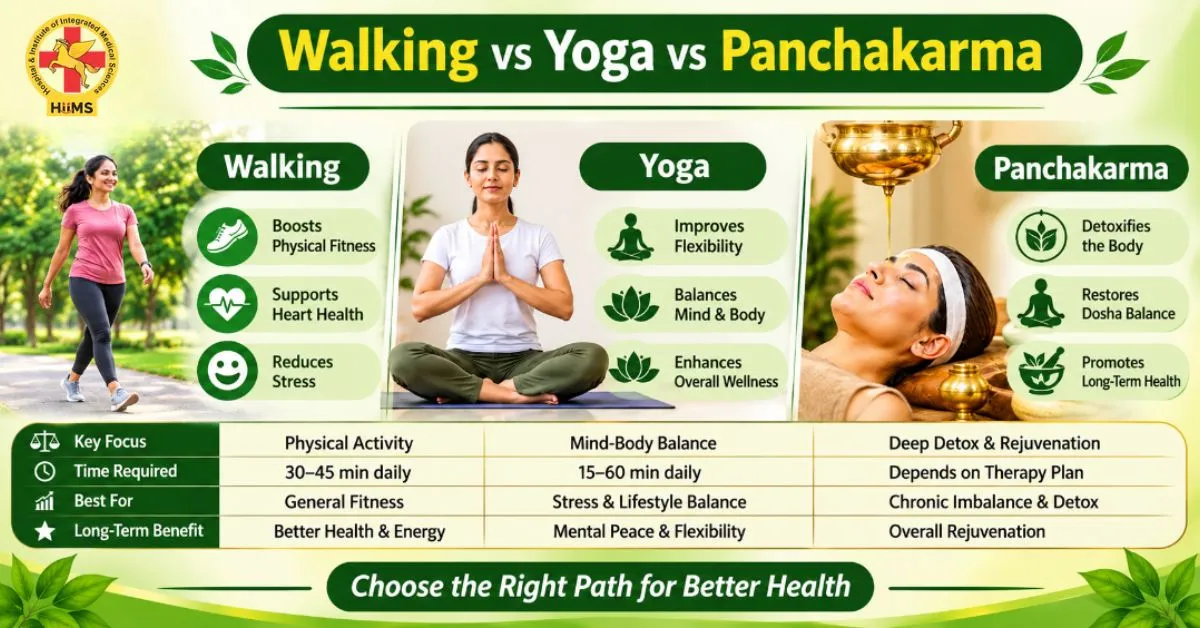
So, which one wins? Here is how they stack up on the things that matter most.
- Strength of evidence: Walking has the most research behind it. Yoga has some promising but limited studies. Panchakarma has fewer studies on fatty liver so far.
- Effect on weight and insulin sensitivity: Walking is strong. Yoga offers a smaller benefit. Panchakarma also helps in this.
- Cost and access: Walking is free. Yoga is low-cost. Panchakarma usually needs a trained practitioner and more time.
- Safety: Walking is safe for most people. Yoga is generally safe with guidance. Panchakarma needs careful medical assessment.
- Personalised, supervised care: Panchakarma is the best choice here. It is planned around your reports, your body type and your doctor’s guidance, which walking and yoga alone do not offer.
For personalised, doctor-guided care, Panchakarma comes out on top. For daily habit and everyday strength, walking is the foundation, and yoga supports stress and consistency. The strongest routine combines all three, with diet doing a large share of the work.
If you would like to know whether Panchakarma suits your liver reports, speak to the Jeena Sikho HiiMS team before you start.
The Missing Piece: What You Eat Matters Just as Much
No exercise plan can fully work if the diet keeps feeding the problem. For most people, food is where fatty liver reversal is truly won or lost.
What to cut back on
- Sugary drinks, including packaged juices, colas and sweetened tea or coffee
- Sweets and bakery items, such as mithai, biscuits, cakes and pastries
- Refined carbohydrates, like white bread, maida-based foods and instant noodles
- Deep-fried snacks, such as samosas, pakoras, chips and namkeen
- Excess saturated and trans fats, found in processed meats, margarine and partially hydrogenated oils
- Alcohol, which is best limited or avoided, and your doctor can guide you here
What to add
- Vegetables and fruits in generous portions, especially green leafy vegetables, tomatoes, carrots and seasonal fruit
- Whole grains, such as oats, brown rice, millets, bajra and whole wheat
- Protein from plants and lean sources, including dal, chana, rajma, sprouts, curd and eggs if you eat them
- Healthy fats, from nuts, seeds, olive or mustard oil in sensible amounts, and fatty fish if you eat fish
- Plenty of water throughout the day
Many doctors point to a Mediterranean-style eating pattern for fatty liver, and the same principles fit an Indian kitchen well: more vegetables, legumes and whole grains, healthy fats in moderation, and far less sugar and processed food. You do not need to eat foreign foods. You need to eat more real food.
A few guardrails matter too. Avoid crash diets, extreme fasting and fad plans like very high-fat diets, since these can raise liver enzymes or cholesterol in some people. Aim for steady, sustainable weight loss, and speak to a dietitian if you have diabetes or other conditions.
A Realistic Weekly Plan You Can Actually Follow
Here is a simple template that blends all three ideas without turning your life upside down. Adjust it to your fitness level and your doctor’s advice.
- Monday, Wednesday, Friday: Brisk walking for 30 to 40 minutes plus a 15-minute walk after dinner
- Tuesday and Thursday: 30 minutes of yoga including Surya Namaskar and breathing exercises
- Saturday: A longer walk, cycling or swimming for 45 to 60 minutes or a family outing that keeps you moving
- Sunday: Rest, gentle stretching and meal planning for the week
- Every day: 7 to 8 hours of sleep, enough water, and no sugary drinks
This plan reaches the 150 minutes of weekly activity that guidelines recommend, builds in recovery, and adds yoga for stress and flexibility. If you are interested in Panchakarma, discuss it with a qualified practitioner and your doctor, so it supports this routine instead of replacing it.
Common Mistakes That Slow Down Fatty Liver Reversal
- Chasing quick detoxes. Juice cleanses, herbal “liver flushes” and extreme fasting are not proven and can do more harm than good.
- Relying on one method. Only walking, only yoga or only a therapy rarely gets the full result.
- Ignoring diet. Exercise helps, but food habits carry a lot of weight.
- Losing weight too fast. Rapid loss can increase stress on the liver.
- Skipping follow-ups. Without repeat tests, you cannot tell whether things are improving.
- Self-medicating with supplements. Some herbal and over-the-counter products can themselves harm the liver. Always check with a doctor.
- Giving up too soon. Real change takes weeks to months. Consistency matters more than intensity.
How to Know If It Is Working
Fatty liver rarely causes symptoms, so you cannot rely on how you feel. Your doctor may track progress with:
- Liver function tests (ALT, AST) to check for liver stress
- Blood sugar, HbA1c and lipid profile to track metabolic health
- Ultrasound to see the amount of fat in the liver
- FibroScan or other elastography tests to measure liver stiffness and fat
- Waist size and weight, which are simple, useful markers at home
Repeat testing is usually done every few months at first, then less often as things improve. Your doctor will tell you what schedule suits you.
When to See a Liver Specialist?
Do not wait if you notice any of the following, as they may point to more advanced liver trouble:
- Persistent pain or heaviness in the upper right abdomen
- Yellowing of the eyes or skin (jaundice)
- Swelling in the legs or abdomen
- Unexplained weight loss, extreme tiredness or loss of appetite
- Dark urine or very pale stools
- Vomiting blood or black stools, which need emergency care
You should also see a specialist if you have diabetes, very high cholesterol, long-standing abnormal liver enzymes, or a family history of liver disease, because you may need closer monitoring. Fatty liver in the setting of these risks is worth taking seriously, even if you feel perfectly fine.
Conclusion
So, walking, yoga or Panchakarma: which is the best choice? If you must pick one place to begin, start with walking and a cleaner diet, because that is where the strongest evidence lies. Add yoga to support stress, sleep and consistency. Consider Panchakarma only as an optional, supervised addition, never as a stand-alone cure.
Fatty liver reversal is not about a dramatic detox or a secret remedy. It is about steady, ordinary choices repeated for months: a walk after dinner, one less sugary drink, a little more sleep, and a follow-up scan on schedule. Those small habits add up, and your liver is remarkably good at recovering when you give it the chance.
If you have been diagnosed with fatty liver, do not wait for symptoms to appear. Speak to a qualified liver specialist, get the right tests, and build a plan that fits your body and your life. And if you want a personalised, holistic approach that looks at your diet, digestion and routine together, connect with Jeena Sikho HiiMS to begin the conversation.
FAQs
1. Can fatty liver be completely reversed?
In many people, yes, particularly in the early stages. Fat in the liver can reduce significantly or clear with weight loss, a healthier diet and regular exercise. Scarring that has already developed may be harder to undo, which is why early action matters.
2. How long does fatty liver reversal take?
Some people see improvement in liver enzymes and liver fat within about three months of consistent changes, while others need six months or longer. Progress depends on your starting point, how much weight you lose and how steady your habits are.
3. Is walking enough to cure fatty liver?
Walking is one of the best starting points, but it works best alongside a healthier diet. On its own, it may not be enough if your food habits keep driving fat into the liver.
4. Is yoga good for fatty liver?
Yes, as a supportive practice. It can help with stress, flexibility and consistency, and early studies show some benefit, but it should not replace aerobic exercise and diet changes.
5. What foods are best for fatty liver?
Vegetables, fruits, whole grains, legumes, nuts, seeds and lean protein are good choices. Limit sugar, refined carbs, fried food, processed meats and alcohol.
Ayurvedic Liver Care Products
100% natural, certified Ayurvedic formulations crafted for targeted liver wellness.


Disclaimer: The information provided on this blog is for general educational and informational purposes only. It is not intended to replace professional medical advice, diagnosis, or treatment. Always consult a qualified healthcare professional before making any changes to your diet, lifestyle, or treatment plan. Individual results may vary.