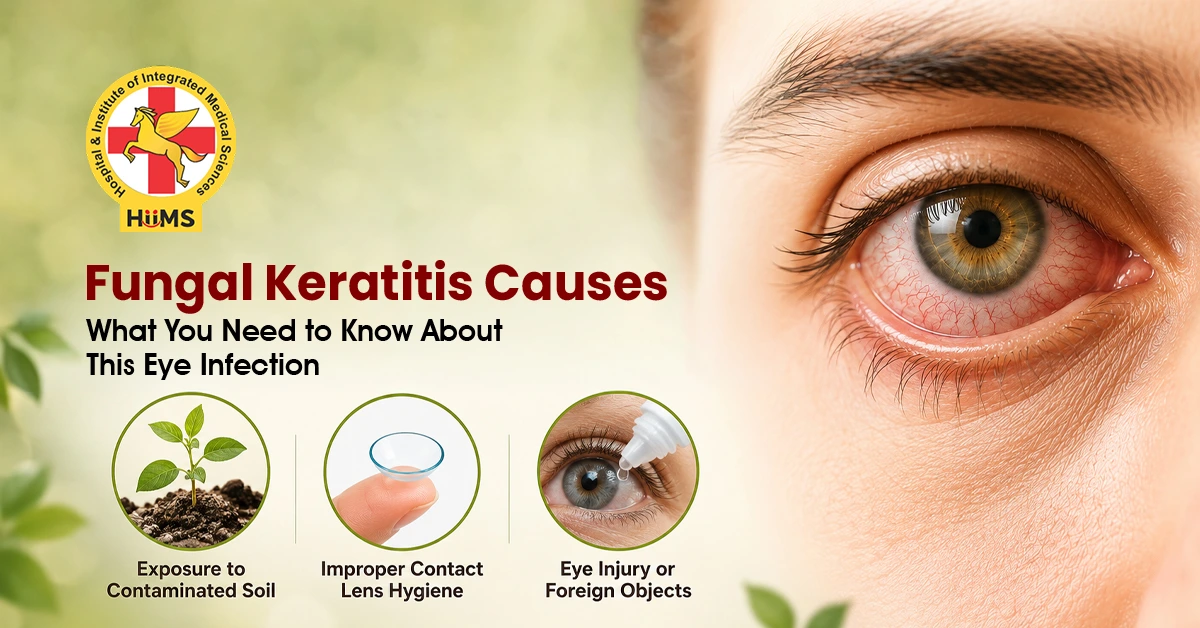

Fungal keratitis is an eye problem in which a fungus affects the cornea, which is the clear layer present at the front of the eye. Since the cornea helps us to see clearly, an infection in this part of the eye should not be ignored. Fungal keratitis can sometimes develop slowly, and in the beginning its signs may look similar to other eye infections. Knowing the fungal keratitis causes is therefore useful, mainly for people who often work with plants, soil, dust, or other materials that can accidentally enter the eyes.
An injury to the eye, problems related to contact lenses, some existing eye conditions, and the use of steroid eye drops without proper advice can increase the risk. In countries such as India, fungal infections of the cornea are seen more commonly. A small injury from a leaf, twig, thorn, or other plant material may give fungi a chance to enter the cornea. Knowing about its causes and early signs can help a person take the right care at the right time and avoid further eye problems.
What Exactly Is Fungal Keratitis
Keratitis is inflammation or infection of the cornea (the clear front of the eye. If the infection is caused by fungi, it is called fungal keratitis or mycotic keratitis. Different fungi can be involved in a fungal eye infection. Fusarium and Aspergillus are commonly seen in tropical regions, while Candida may also cause such infections. The infection usually begins when the natural protective surface of the cornea is damaged. Once this protection is disturbed, fungi may enter the deeper tissues of the cornea and multiply. The condition can then lead to inflammation and damage to the clear corneal tissue.
Common Fungal Keratitis Causes You Should Know
There is not just one single reason behind this infection. Several situations in daily life can lead to it. Let us look at the most common fungal keratitis causes one by one.
- Injury from plant material – A scratch in the eye from a leaf, branch, or straw while working in a field or garden is one of the common causes, mainly seen in farmers and people involved in agricultural work.
- Contact lens use – Wearing lenses for too long, sleeping with them on, or not cleaning them properly allows fungus to grow and enter the eye easily.
- Dust and soil particles – Fine sand or soil getting into the eye, particularly in dry and windy regions, can carry fungal spores along with it.
- Long use of steroid eye drops – If steroid eye drops are used for many days or weeks without a clear medical reason, the eye may become less able to protect itself. In such cases, fungal growth can become easier.
- Weak immunity – People with low immunity, due to any health condition, find it harder to fight off fungal growth once it enters the eye.
- Humid and tropical weather – Warm and moist weather gives fungus a suitable place to grow. Because of this, the infection is seen more often in tropical countries like India, mainly in the southern parts.
Knowing these fungal keratitis causes can help you remain careful and take simple precautions before the eye gets damaged.
What Are the Signs to Look For?
Fungal keratitis symptoms may appear differently depending on the person and the condition of the eye. At times, the infection starts slowly, and its early signs can easily be taken as a minor eye problem. Common signs may include:
- Redness in the eye
- Watering or discharge
- Blurred or reduced vision
- Eye irritation
- Sensitivity to light
- Pain or a feeling that something is stuck in the eye
- A white or grey spot on the cornea
Some fungal infections may have a slower course than other corneal infections. The pain may also be less than expected in some cases. This does not mean that the condition is mild.
Why This Infection Should Be Taken Seriously?
Fungal eye infection causes are often linked with outdoor work, farming, and contact with soil or plants. The infection may develop slowly, so many people ignore the early discomfort and wait for it to settle on its own. However, this delay can allow the infection to move deeper into the cornea. An eye fungal infection should not be left unattended, as it can sometimes cause scarring of the cornea and trouble with vision. Fungal keratitis symptoms may include eye redness, irritation, and pain, which should be given attention after working with plants, soil, or wood.
A Natural Approach Towards Healing and Care
When it comes to fungal keratitis treatment, most people are told only about medicines and drops, but our bodies and eyes also respond well to gentle, natural ways of healing when guided properly.
Ayurveda has always given great importance to eye health, and it believes that the strength of our eyes depends a lot on our overall body balance, our diet, and our daily habits.
Natural and Ayurvedic care aims at cleansing the body from within, improving immunity, and supporting the eyes through herbal remedies that remain gentle yet effective.
Instead of only treating the infection on the surface, this method focuses on building a stronger defence system within the body, helping the eyes recover in a more balanced and lasting way.
Simple lifestyle changes, proper diet, and traditional herbal care, when practised under the right guidance, can support the healing process naturally and beautifully while avoiding any extra burden on the body.
Healthy Habits for Stronger Eye Protection
Simple eye-care habits can help reduce the risk of irritation, infection, and other avoidable eye problems.
- Wear protective glasses while working in fields, gardens, or with wood and plants.
- Never sleep with contact lenses on, and always clean them with proper solution.
- Avoid using steroid eye drops without proper guidance.
- Keep hands clean before touching your eyes.
- Do not ignore redness, pain, or blurred vision, even if it seems minor at first.
Following these simple habits can help protect your eyes and support better eye health while reducing the risk of avoidable complications.
Conclusion
Understanding fungal keratitis causes can help people take better care of their eyes, especially after an injury involving plants or soil. Clean habits, proper contact lens care, eye protection, balanced food, and timely attention to unusual eye symptoms are useful steps. Natural and Ayurvedic approaches may support overall wellbeing. But a suspected corneal infection should not be managed only with home remedies. For suitable guidance, Jeena Sikho HiiMS can provide consultation through its VOPD consultation service. Early attention is important when vision or the cornea may be at risk.

FAQs
Q1. What is fungal keratitis?
It’s a fungal infection of the cornea, the clear front layer of the eye.
Q2. What causes fungal keratitis?
It’s usually caused by an eye injury from plant material, contaminated contact lenses, dust, or prolonged steroid eye drop use.
Q3. Who is most at risk of fungal keratitis?
Farmers, gardeners, and people who work regularly with soil, wood, or plants.
Q4. What precautions can prevent fungal keratitis?
Wearing eye protection, proper contact lens hygiene, and avoiding unsupervised steroid drop use.
Q5. When should someone see an eye doctor?
As soon as redness, pain, or blurred vision appears after any eye injury or lens-related discomfort.

Disclaimer: The information provided on this blog is for general educational and informational purposes only. It is not intended to replace professional medical advice, diagnosis, or treatment. Always consult a qualified healthcare professional before making any changes to your diet, lifestyle, or treatment plan. Individual results may vary.