

Most people don’t think twice about their kidneys until a routine blood test flags something off. Chronic kidney disease creeps up slowly, often over years, without much to show for it in the early days. By the time someone actually notices something’s wrong, it’s usually already moved past the early stages. According to the CDC, roughly 1 in 7 US adults lives with some form of Chronic kidney disease , and most don’t even know it yet.
This blog breaks down the five stages, what symptoms actually show up when, and what treatment looks like at each point, including where Ayurveda fits in for people wanting a more integrated approach.
Table of Contents
What is Chronic Kidney Disease, Exactly?
Your kidneys are supposed to filter waste and extra fluid out of your blood, day in, day out. Chronic kidney disease is what happens when that filtering ability starts breaking down and stays that way for three months or longer.
Doctors track this mainly through a number called eGFR, estimated glomerular filtration rate, which is basically a measure of how well your kidneys are still filtering. A urine test, uACR, checks for protein leaking into your urine and is used alongside it to fill in the rest of the picture.
If you are unsure which stage you might be at or just want a proper reading of your reports, talk with Jeena Sikho HiiMS doctors now and get your case reviewed by our team before things go any further.

What Are the Causes of Kidney Disease?
Knowing the causes of kidney damage explains a lot about why prevention gets talked about so much. The usual suspects:
- Diabetes that isn’t well controlled, since high sugar levels quietly damage the tiny blood vessels in the kidneys
- High blood pressure, which keeps the kidneys under constant strain
- Kidney infections or stones that keep coming back
- Smoking, low water intake, or a diet that’s consistently unhealthy
- Genetic conditions like polycystic kidney disease, in some cases
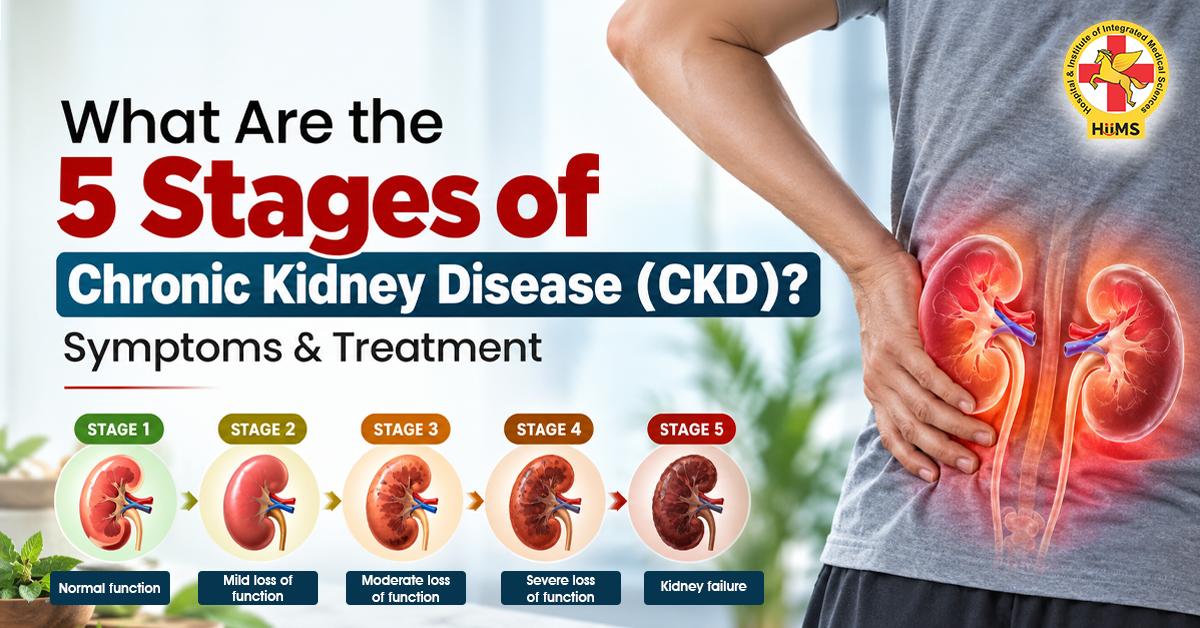
What Are the 5 Stages of Chronic Kidney Disease?
Doctors break CKD into five stages, and eGFR is what determines which one you’re in:
| CKD Stage | eGFR Range |
What It Means |
| Stage 1 | 90 or above | Kidneys are still working well, but there may be early signs of kidney damage, such as protein in urine. |
| Stage 2 | 60–89 | Mild loss of kidney function, usually without obvious symptoms. |
| Stage 3 (3a & 3b) | 30–59 | Moderate loss of kidney function; symptoms may start appearing. |
| Stage 4 | 15–29 | Severe loss of kidney function and usually requires closer monitoring. |
| Stage 5 | Below 15 | Kidney failure; dialysis or kidney transplant may need to be discussed. |
What Symptoms Show Up at Each Stage?

Here’s where a lot of people get blindsided. Stages 1 and 2 don’t really announce themselves; most people feel completely fine, and the only clue is an abnormal lab result. Things start changing around Stage 3, when people begin noticing:
- Swelling in the hands, feet, ankles, or around the eyes
- Fatigue that sticks around no matter how much rest you get
- Urination that’s changed, either in frequency or appearance
- Blood pressure running higher than it used to
Stages 4 and 5 make it a lot harder to ignore: significant swelling, loss of appetite, nausea, and noticeably different urination patterns tend to show up together.
When Should You Actually See a Kidney Doctor?
Got diabetes, high BP, or a family history of kidney trouble? Seeing a kidney doctor for yearly testing is usually recommended even before anything feels wrong. And if you’re already noticing early signs like swelling or unexplained tiredness, don’t sit on it; getting checked sooner really does make things easier to manage later.
How is Kidney Disease Treatment Usually Approached?
Kidney disease treatment looks pretty different depending on which stage someone is at. Early on, it’s mostly about managing whatever’s driving the damage, keeping blood sugar and blood pressure under control, and adjusting diet to take pressure off the kidneys.
Later stages need tighter monitoring, medication changes, and eventually, conversations around dialysis or transplant if function keeps dropping. But there are many side effects of dialysis; that’s why people are moving forward to natural Ayurveda treatments.

What Should You Actually Look for in a Kidney Hospital?
A decent kidney hospital doesn’t just run a panel of tests and send you off with a prescription. You’d want ongoing monitoring, someone actually explaining what your stage means for you specifically, and a plan that shifts as your situation does. That matters even more if you’re leaning toward integrated care that blends regular monitoring with lifestyle and Ayurvedic support.
How Does Ayurveda Look at Chronic Kidney Disease?

At Jeena Sikho HiiMS, care built around chronic kidney disease usually brings Ayurveda, diet correction, and lifestyle changes together, working alongside your existing medical monitoring rather than swapping it out. Here we focus on treating the root cause of the problem.
- Our GRAD system combines hot water immersion therapy, head-down tilt therapy, and our pH-balanced diet, aimed at supporting circulation and easing the toxin load your kidneys are dealing with.
- We also use Zero-Volt therapy, a kidney-cleanse blend developed under Acharya Manish Ji using things like corn silk, ajwain, and fennel, plus guidance on circadian rhythm, yoga, and daily routine.
Conclusion
Chronic kidney disease can be managed at any stage, but what actually helps depends a lot on where you currently stand. Catching it early through routine testing, paired with the right mix of lifestyle and medical guidance, genuinely shapes how things go from here.
If you’d like a proper assessment or want to explore an integrated approach alongside whatever you’re already doing, you can book a VOPD consultation with Jeena Sikho HiiMS and go through your specific case with our team.

FAQs
1) Can CKD show up before symptoms even start?
Yes, blood and urine tests can pick up early-stage CKD well before you’d feel anything, which is exactly why regular testing matters for anyone at higher risk.
2) Does Stage 1 always lead to the later stages eventually?
Not necessarily. Plenty of people with early-stage CKD keep things stable for years just through proper monitoring and lifestyle changes.
3) Is dialysis really the only route at Stage 5?
No. There are some Ayurvedic treatments present at Jeena Sikho HiiMS for chronic kidney disease. The results depend on the person’s overall health and what our doctor recommends.
4) Does changing your diet actually slow CKD down?
Yes, cutting back on sodium, watching protein intake, and avoiding heavily processed food are commonly recommended and do help ease the load on your kidneys.
5) Can I combine Ayurvedic support with my regular CKD treatment?
A lot of people do; just make sure your treating doctor knows what else you’re doing so everything stays properly coordinated
Ayurvedic Kidney Care Products
100% natural, certified Ayurvedic formulations crafted for targeted kidney wellness.



Disclaimer: The information provided on this blog is for general educational and informational purposes only. It is not intended to replace professional medical advice, diagnosis, or treatment. Always consult a qualified healthcare professional before making any changes to your diet, lifestyle, or treatment plan. Individual results may vary.





2 comments