
In daily life, we use our eyes almost every second. Phones, laptops, sunlight, and dust, everything passes through them. Still, we don’t really think much about eye health until something starts to feel wrong. A little redness, slight itching, or watery eyes, most people ignore it, thinking it will settle on its own.
But the truth is, many common eye infections don’t just go away like that. Some stay mild, yes, but some slowly get worse if ignored. And by the time you realise, the discomfort is already too much. This blog is written to help you understand different types of eye infections, their signs, and what you should do. Not in a complicated way, just simple, real understanding, so you don’t overlook something important.
What is an Eye Infection?
An eye infection happens when harmful microorganisms like bacteria, viruses, or fungi affect any part of the eye. It can involve the surface, inner layers, or even the surrounding area. Sometimes it spreads easily, especially in the case of a contagious eye infection and sometimes it develops slowly due to poor hygiene or weak immunity.
Eye Infection Symptoms You Should Notice
Before knowing the types, it’s important to catch the eye infection symptoms early.
- Redness in the eye.
- Itching or irritation.
- Watering or discharge.
- Swelling around the eyes.
- Blurred vision (in some cases).
- Sensitivity to light.
People often ignore these, thinking it’s just tiredness, but repeated symptoms mean something else is going on.
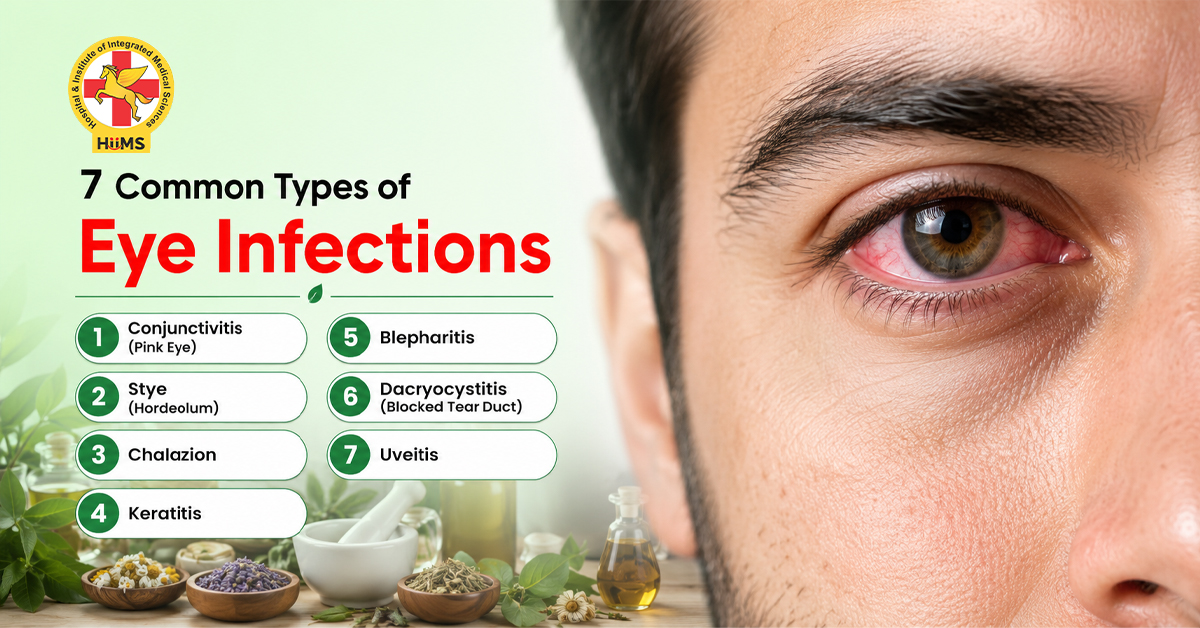
7 Common Types of Eye Infections
1. Conjunctivitis (Pink Eye)
This is probably the most common one. The white part of the eye becomes red and irritated.
It can be viral or bacterial, and yes, it spreads easily. That’s why it is known as a contagious eye infection. Symptoms include redness, sticky discharge, and constant irritation.
2. Stye (Eye Boil)
A stye looks like a small, painful bump on the eyelid. It forms due to infection in the oil glands. It’s not very serious, but it can be uncomfortable. Sometimes people keep touching it again and again, which only makes it worse.
3. Keratitis
This involves the cornea of the eye. The cornea is the transparent thin covering on the front of the eye. Contact lens overwear or infection can lead to this. Symptoms include pain, redness, and blurred vision.
4. Blepharitis
This overproduces lipids on the eyelids, which leads to inflammation. It can lead to itchy, sore, or flaky skin around the eyelashes. It’s not the worst form of dry eye, but it can recur if not managed properly.
5. Uveitis
This one affects the middle layer of the eye. It is less common but more serious than others. It can cause pain, redness, and vision issues. This is something you should not ignore at all.
6. Dacryocystitis
This infection occurs in the tear duct (a long canal that runs from the corner of the eye to the nose). If tears have difficulty draining, it can cause swelling and infection around the inside corner of the eye. It can cause pain and discharge.
7. Fungal Eye Infection
Infections of the wounds (not very common but can occur), especially after injury, exposure to contaminated water or soil. They may require extensive attention and time to heal.
Eye Infection Treatment – What Actually Helps
Treatment depends on the type of infection. There is no single solution for all.
- Bacterial infections may need prescribed medication.
- Viral infections usually settle with time and care
- A warm compress helps with a stye.
- Proper hygiene is a must in all cases
But one thing is clear: self-medication or ignoring symptoms is not a good idea.
Simple Habits for Eye Care Naturally
If you want better eye infection treatment results, daily habits matter a lot.
- Wash your hands before touching your eyes.
- Avoid rubbing your eyes frequently.
- Keep the personal items like towels separate.
- Limit screen exposure when eyes feel strained.
- Maintain overall hygiene.
These small things actually make a difference, even if they look basic.
Natural and Holistic Eye Care Approach
There are many health centres where people learn about eye infection types and care methods. One such place is Jeena Sikho HiiMS. Here, the focus stays on natural healing methods. Instead of only managing symptoms, they try to understand the root cause through Ayurveda and lifestyle changes.
In some cases, guided programmes and health camps are also conducted where people get a better understanding of their condition and how to manage it in daily life. The approach is simple: support the body naturally so it can recover better.

Conclusion
Eye infections may start small, but ignoring them is where the real problem begins. When you notice early symptoms and take basic care, most issues can be managed without complications. Having knowledge of different types of eye infections makes you alert and enables you to act at the right time. Easy lifestyle tips, clean habits, and proper awareness make much difference in maintaining your eyes healthy.
FAQs
Q1. What are the most common eye infections?
Other common ones include conjunctivitis, stye, and blepharitis.
Q2. Are eye infections contagious?
Certain diseases, such as conjunctivitis, are highly contagious.
Q3. Can eye infections go away on their own?
Mild ones may get better; some may not. Keep a good track of your symptoms and see your Dr.
Q4. How can I prevent eye infections?
Clean hands, Hygiene’s friends, and reduce touching your eyes frequently.
Q5. When should I see a doctor for an eye infection?
Seek medical attention if pain, redness, or changes in vision persist. Do not delay seeing your doctor.
Disclaimer: The information provided on this blog is for general educational and informational purposes only. It is not intended to replace professional medical advice, diagnosis, or treatment. Always consult a qualified healthcare professional before making any changes to your diet, lifestyle, or treatment plan. Individual results may vary.