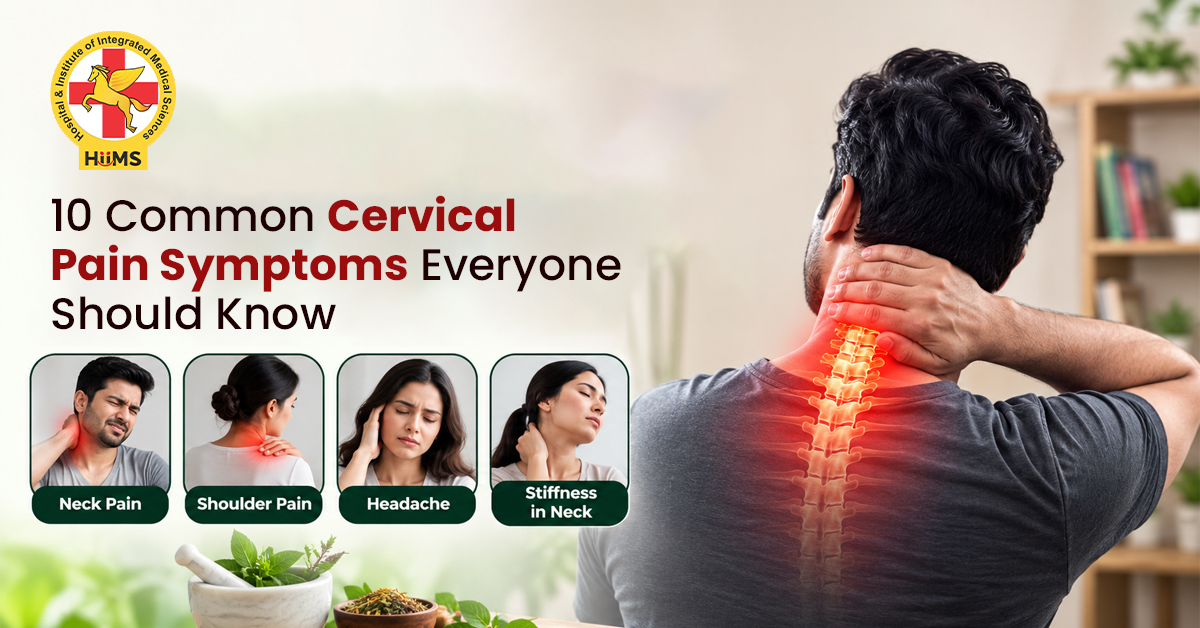

Neck pain has become so common these days that many people stop taking it seriously. They continue with work, thinking it will disappear after a little rest. Sometimes it does, but sometimes the pain keeps returning for a reason. Persistent discomfort, stiffness, or difficulty moving the neck may point towards the changes in the cervical spine. Understanding help you recognise these signs at the right time.
Everyday habits like sitting for long hours, poor posture, stress, and very little movement often add to the problem without us noticing. At Jeena Sikho HiiMS hospital, Ayurvedic care focuses on understanding the body as a whole while encouraging the healthy lifestyle choices. In this article, we will look at the symptoms that deserve your attention.
What Is Cervical Pain?
The cervical spine forms the upper part of the spine and supports the weight of the head throughout the day. It also helps you bend, turn, and move your neck with ease. When the tissues around this area become affected, the cervical pain can occur. It is not necessary that everyone experiences it in the same way.
Some people may only feel stiffness after hours of work, while others may feel pain, limited movement or discomfort that slowly becomes more noticeable.
10 Common Cervical Pain Symptoms Everyone Should Know
Recognising the early neck pain symptoms can help you take timely steps. Here are the 10 most common signs.
1. Stiffness of Neck
This is the most common symptom of neck pain. Tightness in the neck and difficulty moving it, especially after waking up or sitting for the periods of time.
2. Pain While Turning the Head
If turning your head left or right causes sharp pain, this is the clear signs of cervical pain.
3. Pain in the Shoulders
Many people feel that the pain travels from the neck down to the shoulders. This is a common symptom of cervical spondylosis symptoms.
4. Headache
Cervical pain often causes headaches that start from the back of the head and move towards the forehead.
5. Numbness in the Arms
When nerves in the neck get pressed, a person may feel numbness or tingling in the arms and fingers. This is one of the signs that may indicate cervical spine pain.
6. Weak Grip Strength
Sometimes the grip becomes weak, and holding the small things becomes difficult. This happens due to nerve pressure in the neck.
7. Dizziness
Some people feel dizzy or lightheaded when they move their neck suddenly. This is a lesser-known but real sign among cervical pain symptoms.
8. Clicking Sound in the Neck
A clicking or grinding sound while moving the neck can be one of the early symptoms of cervical pain.
9. Trouble Sleeping
Neck pain and stiffness can cause difficulty in finding a comfortable sleeping position leading to the poor sleep.
10. Pain That Increases with Bad Posture
Sitting with a bent neck for long hours, like while using a phone, makes the pain worse. This is one of the most common cervical neck pain symptoms seen in young people today.
What Can Increase the Risk?
There are many cervical pain causes behind this problem. Some common reasons include:
- Sitting with a bad posture for long hours
- Using phones and laptops with a bent neck
- Sleeping in the wrong position
- Old age, which causes wear and tear in the neck bones
- Old injuries or accidents
- Lack of physical activity and weak muscles
Knowing the exact causes helps in choosing the right way to treat the problem.
How it can be Diagnosed?
For cervical pain diagnosis, Ayurveda believes that every person should be assessed as a whole. In Ayurveda, your symptoms are not looked at alone. An Ayurvedic practitioner may ask about your diet, sleep, work routine, and the daily habits. They may also examine the posture, neck movement, and dosha balance before suggesting the personalised wellness plan.
Natural Ways to Support Neck Health
Many people look for natural ways to improve neck comfort along with professional guidance. Some healthy habits include,
- Maintain good posture while sitting and standing.
- Take short breaks during the long working hours.
- Sleep with the proper neck support.
- Practice gentle stretching and cervical pain exercises after consulting a qualified expert.
- Eat a balanced diet that supports the overall bone and the muscle health.
- Manage stress through yoga, meditation, and deep breathing.
- Stay physically active every day.
According to Ayurveda, good health comes from the balanced food, healthy daily habits, and natural therapies. These practices may also support cervical pain relief while promoting the healthy movement and overall well being.
When Should You Seek Medical Advice?
Do not ignore neck pain if it continues for the several weeks or keeps returning. Seek professional guidance if you notice:
- Severe pain after an injury
- Weakness in the arms or hands
- Numbness that does not improve
- Difficulty controlling the hand movements
- Fever along with the severe neck pain
- Loss of balance or repeated dizziness
Early attention to these symptoms can help you understand the possible cause and take the right steps.
Conclusion
The earlier you recognise cervical pain symptoms, the easier it becomes to make small changes that support your neck health. Everyday habits, whether good or bad, often have a bigger effect than we realise. Sitting correctly, taking short movement breaks, and maintaining a balanced lifestyle may all be helpful over time. Ayurveda encourages this practical approach towards the overall wellness. At Jeena Sikho HiiMS, every individual receives guidance based on the personal health needs and the possible root cause. If your neck pain continues, you can book a Virtual OPD (VOPD) consultation to get the personalised Ayurvedic guidance.

FAQs
1. What are the common cervical pain symptoms?
Neck stiffness, headache, shoulder pain, numbness in arms, and dizziness are common cervical pain symptoms.
2. Can bad posture cause cervical pain?
Spending long hours with your neck bent can be the common cause of cervical pain
3. Can cervical pain cause headaches?
Yes, cervical pain often leads to the headaches that start from the back of the head.
4. How is cervical pain diagnosed?
Cervical pain diagnosis includes checking neck movement, posture, and daily lifestyle habits.
5. Can Ayurveda help with cervical pain?
Yes, Ayurveda focuses on the root cause and supports natural healing for cervical pain.

Disclaimer: The information provided on this blog is for general educational and informational purposes only. It is not intended to replace professional medical advice, diagnosis, or treatment. Always consult a qualified healthcare professional before making any changes to your diet, lifestyle, or treatment plan. Individual results may vary.