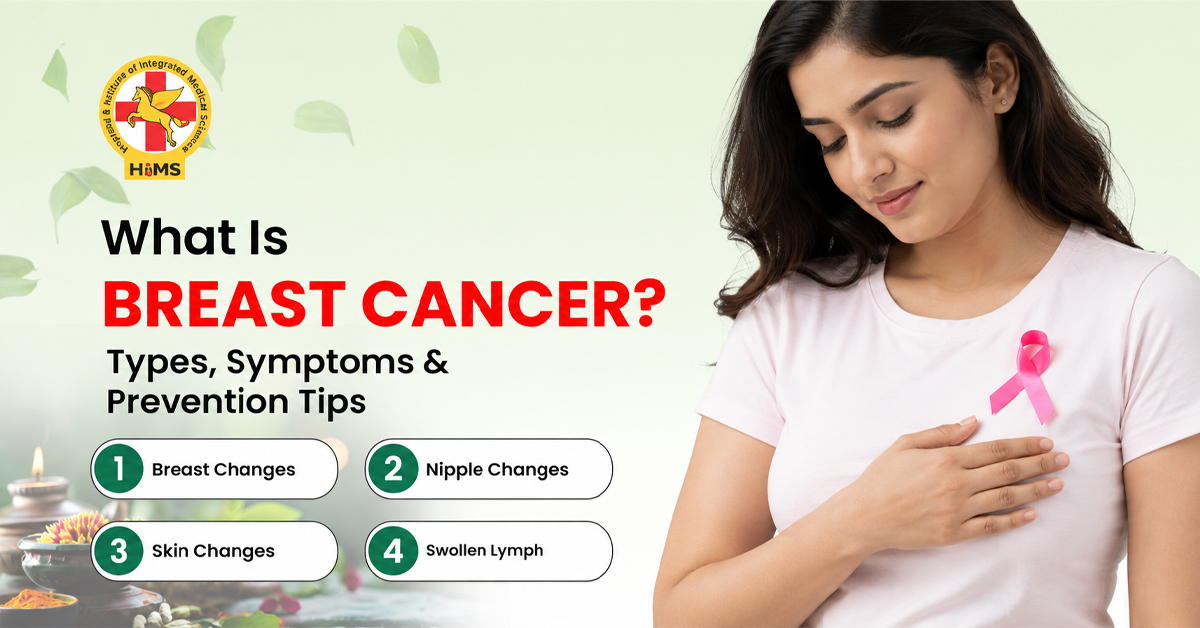
Some health problems enter life very quietly. No loud warning. No sudden pain. Breast cancer can begin like that, too. A tiny lump. Slight skin change. Maybe a little heaviness that feels easy to ignore at first. That’s one reason why learning what is breast cancer actually matters more than people think.
This condition develops when certain breast cells start growing in an unusual way and slowly form a tumour. Sometimes the growth stays inside the breast for a long time. In some people, it spreads further. Breast cancer is most common in women, especially after age 50, but younger women and even men can get it.
Understanding what breast cancer is, spotting changes in the body early and taking symptoms seriously can help patients get the correct care at the right time, and on schedule.
What Is Breast Cancer and Why Does It Develop?
To explain what is breast cancer in simple words, it happens when breast cells stop growing normally and begin multiplying too fast. Over time, these cells collect together and form a lump or tumour.
Doctors still study the exact trigger behind these cell changes. Still, several breast cancer causes are commonly linked with this condition. Family history plays a role in some cases. Hormonal imbalance, smoking, obesity, alcohol intake, radiation exposure, and inherited gene mutations may also increase the risk gradually.
Age matters too. Many cases appear after 50, though younger people are not completely safe from it either. Honestly, lifestyle quietly affects health more than most people realise. Daily habits slowly build long-term impact inside the body.
Different Types of Breast Cancer Doctors Commonly See
There isn’t just one form of breast cancer. Different types of breast cancer behave differently inside the body.
Invasive Ductal Carcinoma
This is the most common among all types of breast cancer. It begins inside milk ducts and later spreads into nearby breast tissue.
Lobular Breast Cancer
It begins in milk-producing glands, called lobules. In some persons it spreads to other tissue over time.
Ductal Carcinoma In Situ
In this stage, abnormal cells stay limited inside the ducts and do not spread outside initially.
Triple Negative Breast Cancer
Doctors often consider this form more aggressive because it may grow and spread faster compared to some other types.
Inflammatory Breast Cancer
This rare type may not always form a clear lump. Instead, redness, swelling, warmth, or skin irritation may appear first.
Common Breast Cancer Symptoms People Ignore Early
Many people delay attention because symptoms feel small in the beginning. That happens a lot. Some common breast cancer symptoms include:
- A lump in the breast
- Swelling near the underarm
- Skin dimpling
- Nipple discharge
- Changes in breast shape
- Redness or irritation
- Persistent heaviness
Sometimes breast lump symptoms feel completely painless. That’s why people often ignore them for weeks or even months.
The early signs of breast cancer may look different in every person. Some notice skin texture changes. Others feel thickening near the breast or underarm. Not every lump means cancer. Still, repeated changes should never be ignored casually.
Understanding Breast Cancer Risk Factors
Doctors connect several conditions and habits with increased risk. Some common breast cancer risk factors include:
- Breast cancer family history
- Tobacco
- Drinking alcohol
- Overweight
- Hormone replacement treatment
- Exposure to radiation
- Genetic mutations of BRCA1 and BRCA2
Having one or more risks does not guarantee cancer. However, knowledge about your body helps to recognise any strange changes at the earliest. In fact, stress, unhealthy eating habits, lack of sleep, and sedentary lifestyle even impact your overall health slowly but surely.
What Are the Different Breast Cancer Stages?
Doctors use stages to understand how far cancer has spread.
Stage 0
Abnormal cells do not spread beyond the milk ducts.
Stage 1 and 2
Cancer begins affecting nearby tissue and sometimes nearby lymph nodes.
Stage 3
The disease has invaded deeper into the surrounding tissue and neighbouring lymph nodes at this stage.
Stage 4
This is the most advanced of all breast cancer stages, where the disease has progressed to organs like the bones, lungs, liver or brain.
Early detection often improves treatment planning and recovery support.
Why Do Many Families Choose Jeena Sikho HiiMS for Breast Cancer Wellness Support?
Breast cancer often affects physical strength, emotions, digestion, appetite, sleep, and overall daily comfort together. Because of this, many families now look for supportive wellness approaches that focus on the whole body instead of symptoms alone.
At Jeena Sikho HiiMS, some people also explore supportive approaches such as Golden Therapy and Cancer Detox Juice alongside proper medical guidance for overall wellness, recovery support, and internal balance.
The overall focus is usually on helping the body feel lighter, more balanced, emotionally stronger, and better supported naturally through guided Ayurvedic wellness care.
Prevention Tips That May Help Long Term
No method promises complete prevention. But good behaviours might help the body more in the long run. Sometimes simple everyday practices help:
- Regular exercise
- Healthy body weight
- Less processed food
- Avoiding smoking
- Reducing alcohol intake
- Regular screenings
- Stress control
- Better sleep routine
Consistency matters more than short-term health trends.
Conclusion
Learning what is breast cancer helps people notice warning signs earlier instead of delaying care for too long. A lump, swelling, skin changes, nipple discharge, or unusual heaviness should never be ignored repeatedly. Among different types of breast cancer, some grow slowly while others spread faster if left untreated. Which is why awareness, early testing, regular screening and prompt medical guidance are so important.
Today, many people also pursue supportive wellness routines in conjunction with medical therapy to promote general comfort and healing.
If you still feel unsure about which direction may suit your condition better, you can also go for a VOPD consultation with the doctors at Jeena Sikho HiiMS and better understand your health situation before deciding your next step.

FAQs
1.What is breast cancer in simple language?
It is a condition in which breast cells grow abnormally and form tumour within breast tissue.
2. What are common breast cancer symptoms?
Common indications include lumps, swelling, nipple discharge, redness, skin changes and heaviness of the breast.
3. What are the major breast cancer causes?
Smoking, being overweight, having a family history of the disease, hormonal changes, drinking alcohol, and genetic mutations are some factors linked with an increased risk.
4. Which are the most common types of breast cancer?
Invasive ductal carcinoma and lobular breast cancer are the most frequently diagnosed types of breast cancer.
5. Can early diagnosis improve recovery chances?
Typically, identifying the disease at an early stage allows medical practitioners to handle many breast cancer patients more efficiently before the cancer spreads further.