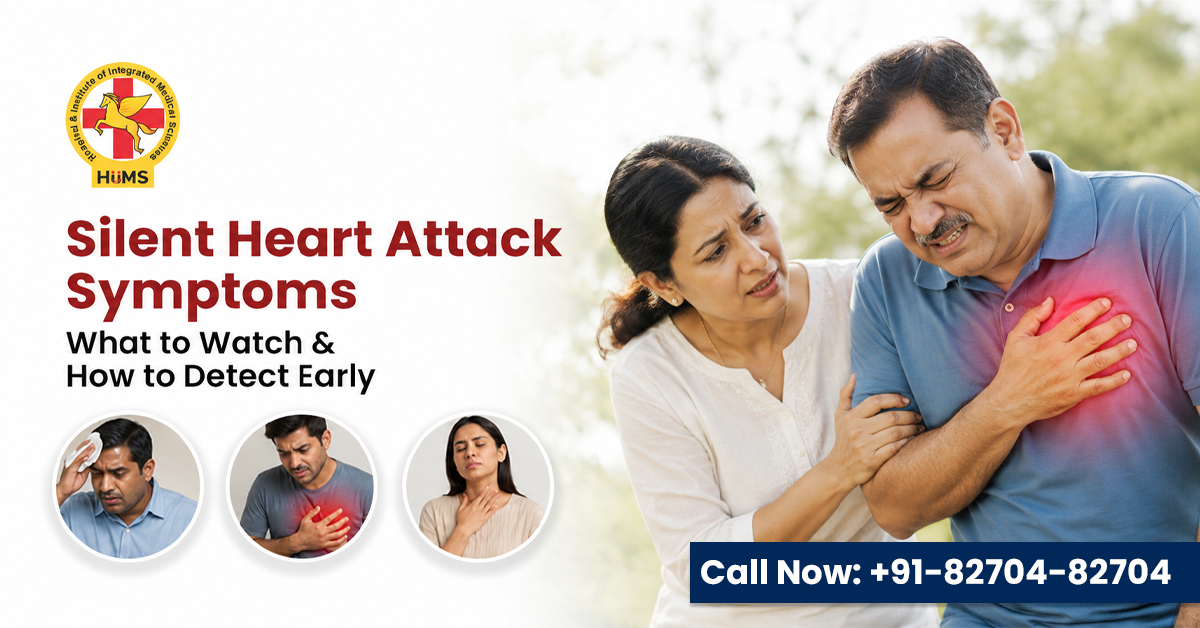

Many people still expect that a heart attack starts with sharp chest pain, but the first signs are often softer and easier to ignore. A person may feel unusually tired, a little breathless, or slightly uneasy, or notice a light pressure in the chest and still continue the day, telling themselves it is only acidity, stress, or poor sleep.
That delay is significant because a silent heart attack can cause damage even when the warning signs look ordinary from the outside. With diabetes, high blood pressure, smoking, poor eating habits, and long stretches of stress becoming more common, these small changes deserve careful attention.
In this blog, you will understand silent heart attack symptoms, the signs people often miss, the checks that help detect them early, and the simple habits that can push someone toward timely care before the problem grows.
What Is a Silent Heart Attack?
A silent heart attack happens when blood flow to part of the heart gets blocked, but the body does not send a strong alarm. The discomfort may stay mild, confusing, or spread out in a way that feels easy to explain away. Some people only notice weakness, a strange pressure, or a tired feeling that does not match their routine.
A heart attack can involve chest discomfort, shortness of breath, upper-body pain, sweating, nausea, or lightheadedness, and those symptoms may appear with or without clear chest pain.
Why It Is Called “Silent”
The word “silent” does not mean the heart is fine. It means the signs are easy to ignore. A person may feel chest tightness, nausea, lightheadedness, or unusual tiredness and assume it is a stomach problem or a rough day at work. That is where the danger starts to arise, because the heart keeps struggling while the person waits for the feeling to pass. Many heart attack warning signs can also show up as discomfort in the arms, back, neck, jaw, or stomach, which is one reason people delay care.
Signs That Should Not Be Ignored
The body often gives small hints before the condition becomes clearer. Common silent heart attack signs include mild chest pressure, tightness instead of sharp pain, sudden weakness, shortness of breath during normal activity, cold sweating, nausea, lightheadedness, and discomfort in the jaw, neck, back, shoulder, or arms. Some people also feel a dull heaviness in the upper body that comes and goes. These symptoms line up with the warning patterns described by major heart-health sources, especially when they appear without a strong reason.
Symptoms People Often Misread
These signs are commonly blamed on gas, acidity, muscle strain, or simple tiredness after a long day. A person may keep saying the discomfort will settle on its own, but the same feeling may return again and again. That is why early heart attack symptoms should never be ignored just because they sound mild. In women, heart attack symptoms may also show up as indigestion-like discomfort, upper back strain, fatigue, or flu-like uneasiness, which makes the overall picture even more confusing.
Silent Heart Attack Symptoms Without Chest Pain
Not every heart attack starts with chest pain, and that is where many people get misled. Some people mainly notice unusual fatigue, disturbed sleep, anxiety, dizziness, breathlessness, or discomfort across the upper body.
These are also warning signs of a silent heart attack, even when they do not feel severe enough to alarm the person. The important point is simple: a heart problem does not always arrive with severe pain. Sometimes it sits behind daily tiredness, a strange heaviness, or a feeling that something is just not right.
Why Silent Heart Attacks Often Go Undetected
One reason is simple: the symptoms do not look threatening or serious at that time. Another reason is human nature, because many people deny heart trouble until the signs feel impossible to ignore. Busy routines, self-medication, and the habit of linking chest or stomach discomfort with acidity also delay care.
The risk is higher in people with diabetes, high blood pressure, high cholesterol, obesity, smoking habits, little physical activity, or a family history of heart disease. In such cases, small changes deserve a closer look. Diabetes can also reduce the body’s pain response, which is one reason some heart events are noticed late.
How to Detect a Silent Heart Attack Early
Regular screening is the safest way to catch the problem before it becomes bigger. A doctor may advise ECG or EKG, blood pressure monitoring, cholesterol testing, blood sugar testing, a stress test, or echocardiography when needed.
These checks can show hidden stress even when the person feels mostly fine. A timely visit to a heart hospital can make a real difference, because early testing often turns a hidden risk into a manageable plan. Heart attacks are medical emergencies, and the sooner they are evaluated, the better the chance of preventing more damage.
When Should You Consult a Doctor?
Repeated symptoms should not be ignored, even if they seem small in the beginning. Constant tiredness, shortness of breath, chest discomfort with sweating, sudden weakness, or dizziness that returns again and again needs proper attention. People living with diabetes, BP problems, or a family history of heart disease need to stay more careful about such changes. Mild symptoms can still point toward a heart problem, and the earlier they are checked, the better the chance of recovery. Heart attack symptoms can come and go, but that does not make them harmless.
Conclusion
A silent heart attack can conceal itself behind ordinary-looking symptoms, which is exactly why people need to pay attention to tiredness, breathlessness, stomach discomfort, and pressure in the upper body. The body usually gives smaller clues first, and those clues deserve a serious look when they repeat or feel unusual. Learning silent heart attack symptoms can help a person act early, get tested on time, and avoid bigger damage later.

If any symptom keeps returning, do not wait for it to become stronger. You can also opt for an online video consultation (VOPD) for your health issue with expert doctors at Jeena Sikho HiiMS.
FAQs
What are the early signs of a silent heart attack?
Early signs often include tiredness, breathlessness, mild chest pressure, dizziness, or discomfort in the jaw, arms, or back.
Can a silent heart attack happen without chest pain?
Some people mainly feel fatigue, nausea, sleep trouble, or shortness of breath instead of clear chest pain.
Who should be more careful about silent heart attack symptoms?
People with diabetes, high BP, cholesterol issues, smoking habits, obesity, or family history should stay more alert.
Which test can help detect a silent heart attack?
ECG, blood pressure checks, cholesterol tests, blood sugar tests, and stress tests often help doctors spot hidden heart issues.
When should someone visit a doctor for heart symptoms?
A doctor should be consulted when symptoms repeat, become unusual, or appear with sweating, weakness, or breathing trouble.
Ayurvedic Heart Care Products
100% natural, certified Ayurvedic formulations crafted for targeted heart wellness.



Disclaimer: The information provided on this blog is for general educational and informational purposes only. It is not intended to replace professional medical advice, diagnosis, or treatment. Always consult a qualified healthcare professional before making any changes to your diet, lifestyle, or treatment plan. Individual results may vary.