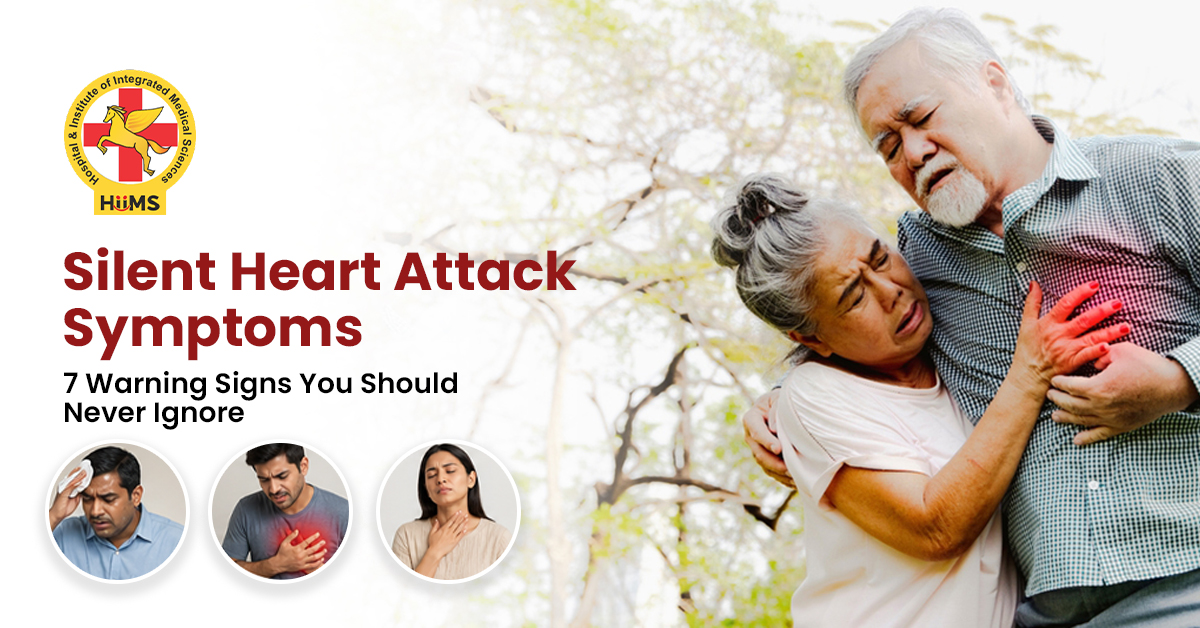

A heart problem does not always start with a dramatic scene or severe chest pain that forces a person to stop everything at once. Many times, the body gives smaller signals first, and those signals are easy to put aside because they feel familiar.
A little chest heaviness after lunch, strange tiredness even after rest, breathlessness while climbing stairs, or a vague feeling of uneasiness may look harmless in the beginning. That is exactly how a silent heart attack passes by unnoticed. People often confuse and call it gas, stress, weakness, or just a tough day, and the real issue keeps moving quietly in the background.
Understanding the early symptoms of silent heart attack is important because those small changes may be the first sign that the heart needs care. This blog walks through the warning signs, the people who need extra caution, and the moments when medical help should not be delayed.
Table of Contents
What Is a Silent Heart Attack?
A silent heart attack happens when blood flow to part of the heart gets reduced or blocked, but the body does not respond with the kind of pain most people expect. Instead, the symptoms may feel mild, dull, mixed up with digestion trouble, or simple body fatigue. The person may still talk, walk, work, and manage the day, which is why the problem often stays hidden for some time. In many cases, the damage is found later during an ECG or other heart tests, after the event has already passed.
The reason it gets missed is simple and that is the warning signs look ordinary. A person may think it is acidity, poor sleep, muscle strain, or ageing. That is why the silent heart attack signs should never be dismissed only because they are not severe.
7 Silent Heart Attack Signs You Should Never Ignore
1. Mild Chest Pressure Or Tightness
Not every heart-related symptom feels like intense pain. Sometimes a person only feels pressure, heaviness, squeezing, or a tight sensation in the chest that comes and goes. It may not stop daily work, so it gets ignored, yet it remains one of the most important signs of heart attack you might ignore.
2. Unusual Tiredness That Does Not Make Sense
One of the most common early symptoms of silent heart attack is a heavy, draining fatigue that appears without a clear reason. The person may feel worn out after doing normal household chores, walking a short distance, or simply getting through the morning. Even proper rest may not bring the energy back the way it usually does.
3. Breathlessness During Simple Activity
A person may suddenly feel short of breath while climbing stairs, walking a little faster, or even speaking continuously. Many people put this down to weakness, poor fitness, or age, but when it appears without a reason, it deserves notice. This can be one of the quieter mild heart attack symptoms that people overlook until the discomfort keeps returning.
4. Pain In The Jaw, Neck, Shoulder, Or Back
Heart discomfort does not always stay in the chest. It can spread to the jaw, upper back, shoulders, or neck and feel like a dull ache rather than a clear pain. Women often report these silent heart attack signs, though men can experience them too. Because the feeling can resemble muscle pull or sleeping in the wrong position, many people never connect it with the heart.
5. Acidity, Heaviness, Or Burning In The Upper Stomach
Many heart symptoms are mistaken for digestion trouble, especially when they begin after meals. A person may feel burning, fullness, bloating, or discomfort in the upper abdomen and keep using home remedies for acidity. When that sensation keeps returning, it may actually be one of the signs of heart attack you might ignore rather than a simple stomach issue.
6. Sudden Sweating Without Heat Or Effort
Cold sweats or sudden clammy sweating can arrive without exercise, heat, or any obvious reason. The skin may feel damp, the body may feel uneasy, and the person may not know what changed. This symptom may come quietly and leave just as fast, which is why it is easy to miss.
7. Dizziness, Nausea, Or An Odd Feeling Of Weakness
Some people experience lightheadedness, nausea, or a strange sense that something is off in the body. It may not look severe, but when it happens along with chest pressure, fatigue, or breathlessness, it should not be ignored. These are also among the mild heart attack symptoms that often get mistaken for acidity, dehydration, or low sugar.
Who Is More at Risk of a Silent Heart Attack?
People with diabetes, high blood pressure, high cholesterol, smoking habits, obesity, or a family history of heart disease need to pay closer attention to these warning signs. In diabetes, pain signals may not feel as strong, so a silent heart attack may go unnoticed for longer.
Older adults may also dismiss symptoms as part of ageing, while women may feel more fatigue, nausea, jaw pain, or back discomfort than chest pain. Because of this, the silent heart attack signs in these groups often get missed until the condition becomes more serious.
A Simple Support Option for Daily Routine
Along with these, Jeena Sikho HeartJS Drops may be included as part of a daily heart care routine under proper guidance. They are often used to support circulation and overall heart function in a gentle way.

They contain Crataegus Oxy, Aurum Muriaticum, and Convallaria Maj, and the usual guidance is 15 drops with water twice a day, or as advised by the physician.
When Should You Seek Immediate Medical Attention?
If chest discomfort keeps returning, if breathlessness comes with normal activity, if dizziness happens more than once, or if pain starts to spread toward the arm, jaw, neck, or back, medical attention should not be delayed. A person does not need to wait for a major collapse to take the symptoms seriously.
A silent heart attack can still damage the heart muscle, and early action often makes a real difference. The early symptoms of silent heart attack may look small on the surface, but the body is hardly random when it keeps sending the same message again and again.
Conclusion
A silent heart attack often becomes dangerous because the signs feel ordinary enough to ignore. Mild chest pressure, unusual tiredness, breathlessness, sweating, dizziness, or acidity-like discomfort may not seem alarming at first, but repeated symptoms deserve proper attention.
So that’s why listening to the body early can help protect heart health before the problem grows deeper. The main thing to remember is simple, when the same discomfort keeps returning, it should not be dismissed as routine weakness or gas.

If you or someone you know is facing any kind of health-related issues you can opt for a VOPD consultation for your health issue with expert doctors at Jeena Sikho HiiMS.
FAQs
What are the common silent heart attack symptoms?
Common symptoms include chest heaviness, tiredness, breathlessness, nausea, sweating, and discomfort in the jaw, neck, back, or shoulder.
Can a silent heart attack feel like acidity?
It can feel similar to acidity or indigestion, especially when there is burning, heaviness, or upper stomach discomfort.
Who is more likely to get a silent heart attack?
People with diabetes, high blood pressure, high cholesterol, smoking habits, and a family history of heart disease may face higher risk.
Why do some heart attack signs get ignored?
They often look like everyday issues such as stress, weakness, gas, muscle pain, or poor sleep, so people do not take them seriously.
When should medical help be taken for heart-related symptoms?
Medical help should be taken when symptoms repeat, spread to other areas, or appear with breathlessness, dizziness, sweating, or chest discomfort.

Disclaimer: The information provided on this blog is for general educational and informational purposes only. It is not intended to replace professional medical advice, diagnosis, or treatment. Always consult a qualified healthcare professional before making any changes to your diet, lifestyle, or treatment plan. Individual results may vary.