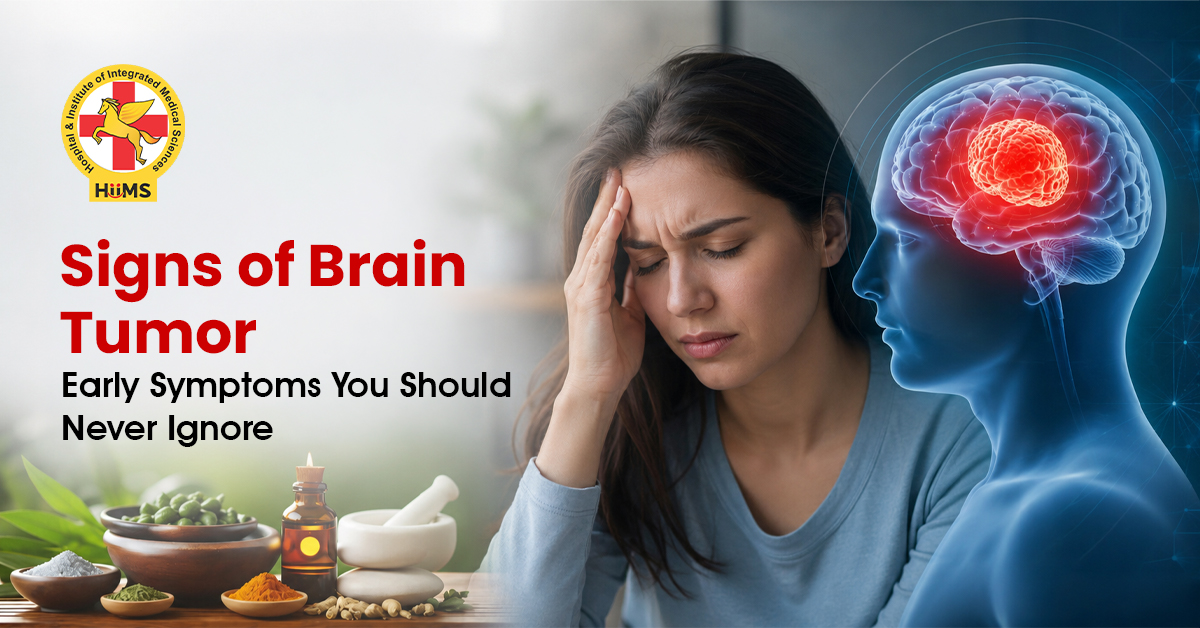

The signs of brain tumor are often easy to miss at first because they can look like everyday health problems. A headache, feeling tired all the time, or occasional dizziness may not seem serious in the beginning. These changes in many people happen slowly, sometimes over weeks or even months. It usually depends on where the tumor is present in the brain and how it affects normal brain function. That is why paying attention to unusual changes in your body is important instead of brushing them aside.
At Jeena Sikho HiiMS, health is approached in a natural way by giving importance to daily lifestyle, balanced eating, yoga, and Ayurveda. This blog explains the common brain tumor symptoms, possible causes, diagnosis, and situations where medical guidance should not be delayed.
Table of Contents
What Is a Brain Tumor?
A brain tumor develops when cells in or around the brain begin to grow in an unusual and uncontrolled way. Some tumors are non-cancerous (benign), while others may be cancerous (malignant). A tumor can affect the normal working of the brain by putting pressure on nearby tissues, nerves, or blood vessels. Because the brain controls almost every function of the body, the symptoms can vary from person to person.
Common Signs of Brain Tumor
Recognising the signs of brain tumor early can help avoid delays in health care evaluation. Some common warning signs include:
Frequent or Unusual Headaches
Headaches are one of the most common symptoms. They may:
- Become more frequent over time
- Feel worse in the morning
- Increase while coughing, bending, or lying down
- Not improve with usual pain medicines
A headache alone does not always mean a brain tumor, but a new or changing pattern should not be ignored.
Seizures
A seizure can sometimes be the first sign of a brain tumor, especially in the people who have never had one before. It may involve shaking, loss of awareness, staring spells, or the unusual body movements.
Vision Problems
Some patients may experience blurred vision, double vision or loss of peripheral vision. These changes happen if the tumour is in the part of the brain which controls vision.
Weakness or Numbness
Weakness or numbness on one side of the body, along with the poor balance, can make normal daily activities more difficult. Walking or holding everyday items may take extra effort.
Memory and Thinking Problems
Some people also have problems such as difficulty remembering things, confusion, poor concentration or finding the right words.
Early Signs That Should Not Be Ignored
The early signs of brain tumor may be mild at first and are often mistaken for the stress or tiredness. These may include:
- Ongoing dizziness
- Nausea or vomiting without a clear reason
- Sudden mood or personality changes
- Trouble speaking clearly
- Hearing changes
- Poor coordination while walking
If these are persistent or getting worse, they may be brain cancer symptoms, so it’s important to seek the medical advice rather than waiting for them to improve on their own.
Factors That Affect Brain Tumor Symptoms
Not everyone experiences the same brain tumour symptoms. The symptoms depend on,
- The location of the tumor
- Its size
- How fast it is growing
- Which area of the brain is affected
For example, a tumor near the vision centre may mainly affect eyesight, while one near the speech centre may cause difficulty speaking.
Types of Brain Tumors
There are different types of brain tumors, including:
- Benign brain tumors, usually grow slowly and do not spread to the other parts of the body.
- Malignant brain tumors are cancerous and may grow faster.
- Primary brain tumors start in the brain.
- Secondary brain tumors begin in the another part of the body and spread to the brain.
Each type needs proper medical evaluation and a proper brain tumor diagnosis to understand the best care approach.
Can Lifestyle and Ayurveda Support Overall Brain Health?
In Ayurveda, staying healthy is closely linked to the balance of the body, mind, and daily lifestyle. Ayurveda does not look only at the symptoms. Ayurveda encourages better digestion and a healthy routine because both are believed to support the natural healing process of the body and general health. Some simple practices that may help include,
- Eating fresh and balanced meals
- Getting enough sleep
- Practising yoga and meditation
- Managing stress
- Staying physically active
- Following a healthy daily routine
Practising these habits regularly may support overall health and the natural balance of the body.
When Should You See a Doctor?
You should not ignore symptoms if you have,
- Headaches that become more frequent or severe
- A first time seizure
- Sudden vision or hearing problems
- Weakness on one side of the body
- Difficulty speaking or understanding words
- Repeated vomiting without a known cause
- Continuous balance or coordination problems
Many of these symptoms may be caused by conditions other than a brain tumor, but they still need proper healthcare evaluation.
Conclusion
The signs of brain tumor are not always easy to recognise. Many of them can also happen due to other health conditions. Headaches, seizures, vision changes, memory problems, or weakness that continue for a long time deserve the proper medical attention rather than being ignored.
At Jeena Sikho HiiMS, the approach is simple. It focuses on Ayurveda, healthy food choices, yoga, and the balanced lifestyle habits to support overall well being. If you feel you need proper guidance, you can book a VOPD consultation with the qualified professionals.
FAQs
- What is a brain tumor?
It is a lump formed when the brain cells grow in an unusual, uncontrolled way.
- Are all brain tumors cancerous?
No, some are benign (non-cancerous) and grow slowly without spreading.
- Do all headaches mean a brain tumor?
No, most headaches are harmless and caused by the everyday reasons like stress or tiredness.
- Can a seizure be a sign of a brain tumor?
Yes, especially if it happens for the first time in someone who never had one before.
- Can lifestyle habits support brain health?
Yes, good sleep, fresh food, yoga, and stress management support the overall brain health.
Disclaimer: The information provided on this blog is for general educational and informational purposes only. It is not intended to replace professional medical advice, diagnosis, or treatment. Always consult a qualified healthcare professional before making any changes to your diet, lifestyle, or treatment plan. Individual results may vary.