

Most of us barely think about our kidneys. But the moment something feels even slightly off, that’s when it hits you—these things were doing way more for you than you realized. They don’t complain, don’t ache loudly, and don’t demand attention like a headache or a stomach issue. They just… do their job. Until they can’t keep up anymore.
And when that happens, the body doesn’t always send a big alarm. It starts with small, almost forgettable things. A little swelling, maybe. A strange tiredness you blame on stress. You know how it goes—we all tend to ignore the first signs of kidney failure, telling ourselves it’ll pass.
This blog has one purpose—to make you aware of the early changes your body tries to warn you with. When you recognize the signs early, you can take the right steps at the right time and prevent the problem from getting worse. Awareness is the first step toward healing, and this guide is meant to help you understand those signals clearly and simply.
What Actually Is Kidney Failure?
Kidney failure, in simple terms, is when the kidneys are no longer able to do the basic jobs they’re supposed to do—filtering waste, balancing fluids, and keeping your body’s internal chemistry steady.
Normally, your kidneys quietly remove toxins from the blood and send them out through urine. But when they become damaged or weakened over time, they start losing this ability. Waste begins to build up, fluid stays in the body, and different organs start feeling the impact. And signs of kidney failure start to show up.
Causes of Kidney Failure
If you’re thinking about what causes kidney failure, it usually doesn’t happen suddenly. Kidney function declines slowly in most people. It doesn’t usually happen overnight—kidney function declines slowly in most people.
- Diabetes that slowly wears out the filters
- Blood pressure that keeps pushing harder than it should
- Kidney infections that repeat themselves
- Polycystic kidneys that change the organ’s shape
- Urine blockages—you’d be surprised how much they affect things
- Medicines taken for too long without realizing the side effects
- Low blood supply to the kidneys during illness, dehydration, etc.
What Are Kidney Failure Symptoms?
1. Swelling in Feet, Ankles, or Face
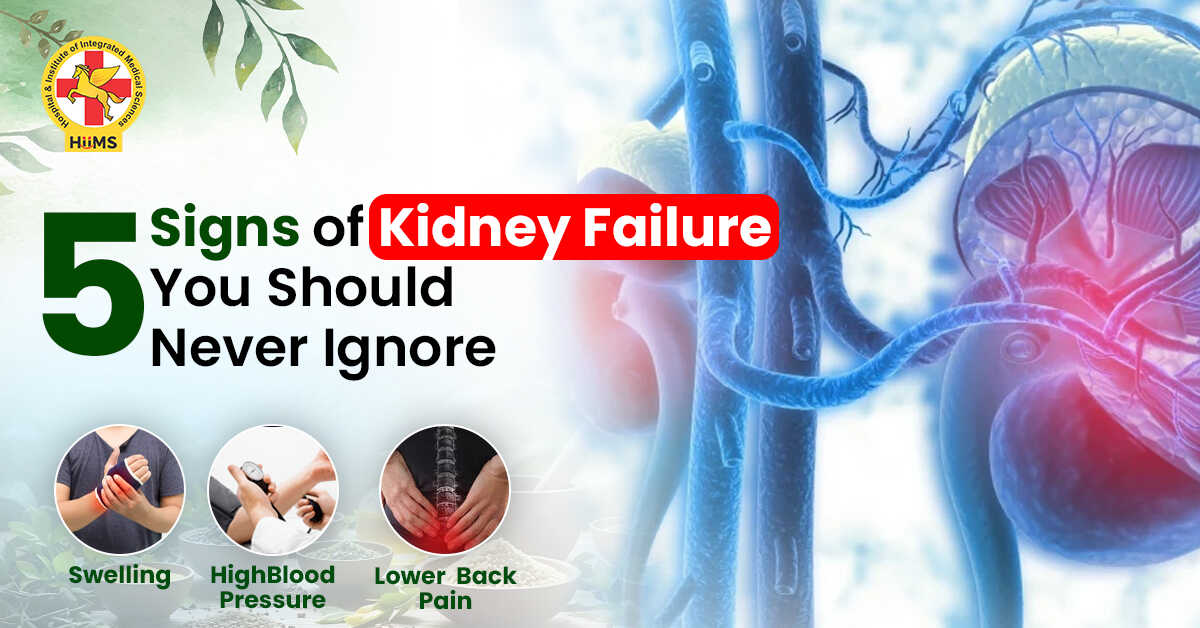
Maybe your shoes feel tight. Maybe the spot under your eyes looks puffier than usual, but you tell yourself you didn’t sleep well. But if the swelling keeps showing up—or doesn’t go away as fast as it used to—it could be one of the early signs of kidney failure, because your kidneys might be struggling to move excess fluid out.
2. Changes in Urine: Things Worth Noticing
- Bubbles or foam that linger
- Very dark or unusually pale urine
- Blood (even a slight tint is serious)
- Going to pee often during the night
- A sharp drop in how much you urinate
These changes are also common signs of kidney failure if they continue for days or weeks.
3. Persistent Tiredness or Weakness
You feel slow, foggy, and maybe even unusually sleepy. When the kidneys aren’t clearing waste properly, your whole system feels heavy—almost like your energy tank has a leak. This kind of constant tiredness is often an early signs of kidney disease, especially when it doesn’t improve with rest of your body pain.
4. Shortness of Breath or Chest Tightness
Fluid doesn’t always stay where you expect it. Some of it can collect around the lungs, making even small activities feel tiring. Climbing stairs, carrying groceries, and even lying down can feel uncomfortable. Alone, this symptom is confusing. But with others, it’s a pretty strong sign of kidney failure that your body is struggling to manage excess fluid.
5. Loss of Appetite, Nausea, or Vomiting
When toxins hang around in the bloodstream, the stomach notices. People usually lose interest in food first. Then the nausea starts. Some describe a weird metallic taste in the mouth. If this becomes frequent, it’s worth getting checked—long-lasting nausea isn’t normal and can be a subtle signs of kidney disease.
Kidney Failure Stages (Quick Breakdown)
Doctors classify kidney function into stages:
Stage 1: Very mild issues
Kidneys work almost normally, but early signs of damage are starting.
Stage 2: Slight decrease
There’s a mild drop in kidney function, usually without obvious symptoms.
Stage 3: Moderate loss; symptoms may appear
Kidney function falls noticeably, and symptoms like fatigue or swelling may appear.
Stage 4: Serious decline
Kidneys are severely damaged and struggle to filter the waste properly.
Stage 5: Very low kidney function
Kidneys are barely functioning, and the body cannot manage waste or fluids on its own.
Kidney Failure Treatment
Jeena Sikho HiiMS Goa Way of Supporting Kidney Health is a mix of diet, detox tools, and lifestyle that feels doable and grounded.
GRAD System
Head-Down Tilt Therapy:
Where the patient is made to lie down at 5, 10, or 15 degrees, where the head is positioned downwards and the legs upwards.
This therapy improves the functioning of the kidneys, and patients’ urine output increases.
Hot Water Immersion Therapy: The patient is made to sit in a therapeutic tub filled with hot water (temperature varies as per the patient’s condition, Standard 42).
DIP Diet:
The idea is to give the body gentle fuel so digestion doesn’t use up all the energy. Jeena Sikho HiiMS Hospital consists of a plant-based diet including fruits, vegetables, and millets. A pattern is followed, i.e., of plate 1 and plate 2:
Breakfast (7:00 AM – 9:00 AM)
- Plate-1: Includes a meal of body weight × 10 g of Seasonal Fruits (3–5 types)
- Plate-2: Any normal home meal or millet recipes—poha, daliya, upma, etc.
Lunch (1:00 PM – 2:00 PM)
- Plate-1: Body Weight × 5g Seasonal Vegetable Salad (3–5 types)
- Plate-2: This includes your normal home meal or millet recipes—khichadi, chapati, dhokla, and daliya.
Dinner (Before Sunset)
Plate-1: Includes a meal of body weight × 10g of seasonal fruits & vegetable salad (3–5 types).
(Without Dinner) (With Dinner)
- Plate-1: Includes a meal of body weight × 5 g of seasonal fruits & vegetable salad (3–5 types).
- Plate-2: Homemade Vegetable Soup
Read More Info: Best Ayurvedic Hospital for Kidney Treatment in Goa
Conclusion
If you notice swelling that stays longer than it should, or your urine keeps changing in ways you can’t explain, don’t brush it aside. That deep, heavy tiredness—the kind that sticks around even after a full night’s sleep—can also be your body trying to tell you something. These are often early signs of kidney failure, and they don’t show up without a reason. Instead of waiting for things to get worse, it’s safer to listen to these signals. A quick visit to a kidney specialist doctor can give you clarity, comfort, and the right direction before the problem becomes bigger. Jeena Sikho HiiMS Goa treats kidney disease with an integrated natural approach (DIP diet, GRAD system, Panchakarma, etc.). If you need guidance or want to understand your condition better, you can contact Jeena Sikho, HIIMS Goa, at +91-97305-80710 or email care@jeenasikho.com

FAQs
1. Can early kidney issues improve with lifestyle changes?
If caught early and carefully handled with the help of holistic practices, positive changes can be seen.
2. Is swelling always related to the kidneys?
Persistent or unexplained swelling should never be ignored, as it can be problematic.
3. What are the early signs of kidney problems that people usually miss?
Early signs may include mild swelling in the feet or under the eyes, frequent tiredness, changes in urine color, or needing to urinate more or less than usual.
4. Should I get checked even if I feel mostly normal?
If you have diabetes, high BP, or a family history, you can get yourself checked.