
Polycystic ovary syndrome (PCOS) is a condition that many women face, but few fully understand. It happens in the reproductive years, usually after puberty, and can affect a woman’s periods, hormones, and even chances of becoming pregnant.
PCOS affects the ovaries, which are the organs that store and release eggs each month. When a woman has PCOS, the ovaries often do not release eggs regularly. This results in irregular or missing periods and other problems. But PCOS is not just about periods. It also changes hormone signals inside the body, leading to many different signs that women may notice over time.
Knowing What Causes PCOS and the early signs helps women recognise the condition sooner. Early identification guides them to seek help, manage their health better, and avoid long‑term issues like infertility or diabetes. This guide will explain the PCOS reasons in females and the common signs every woman should know in simple language that is easy to follow.
What Is PCOS?
PCOS stands for polycystic ovary syndrome. It is a hormonal condition that affects the ovaries and the reproductive system. In PCOS, hormone levels become unbalanced.
This can lead to irregular periods, higher levels of male-type hormones, and sometimes small fluid-filled cysts in the ovaries. These changes may prevent eggs from developing or releasing normally each month. These issues are among the main causes of PCOS, and women with the condition may also experience problems with weight, skin, and hair.
What Causes PCOS?
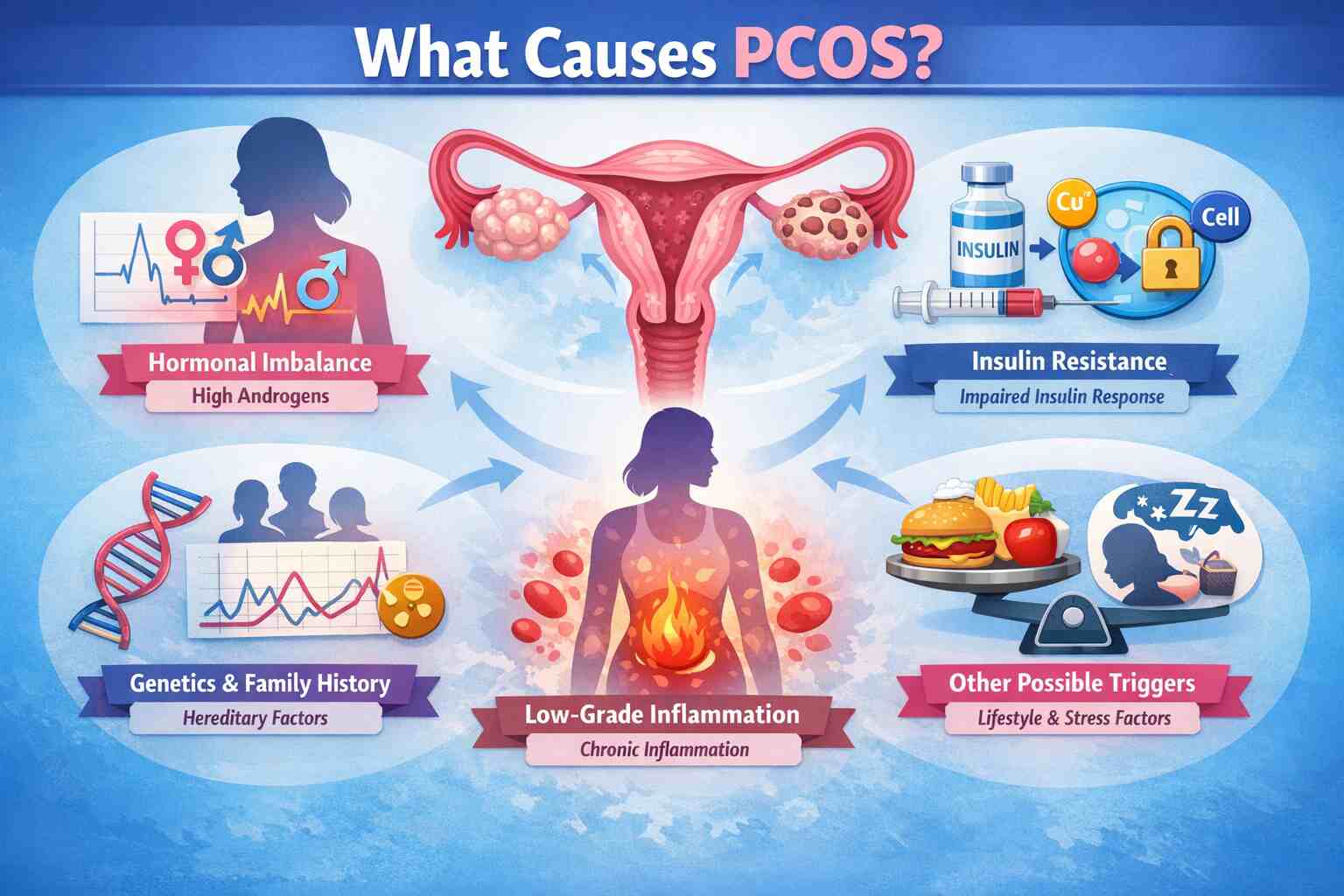
Many women want to know the exact answer to what causes PCOS. There is no single reason to explain it, but several factors combine and result in the condition, including:
1. Hormonal Imbalance
One of the main PCOS causes in women is a disturbance in hormone levels. Many women with PCOS have higher-than-normal levels of male-type hormones, known as androgens. These hormones interfere with the normal release of eggs.
2. Insulin Resistance
Many women with PCOS become insulin-resistant, in which the cells are unable to use insulin properly.
3. Genetic and Family Factors
Genetic and family factors are one of the common reasons for the PCOS problem.
4. Low‑Grade Inflammation
Some women with PCOS also have mild inflammation in the body, which can affect normal hormone balance over time. These reasons for PCOS problem can stimulate the ovaries to produce more androgens, adding to PCOS symptoms and related health issues.
5. Other Possible Triggers
Other possible reasons include environmental and lifestyle triggers such as weight gain, lack of physical activity, unhealthy eating, and stress. These may worsen symptoms and make the hormonal imbalance more noticeable.
All these factors together help explain PCOS reasons in females, though the exact cause is still not completely known.
Early Signs Every Woman Should Watch
PCOS does not appear suddenly. Changes happen slowly over time. Women should watch for these early signs:
1. Irregular or Missed Periods
Periods may become irregular or absent because eggs are not released regularly.
2. Excess Hair Growth
Women with PCOS start noticing excess hair growth on the face, chest, or back.
3. Acne and Oily Skin
Increased production is one of the hormonal causes of PCOS resulting in acne on the face or body.
4. Weight Gain or Trouble Losing Weight
Many women with PCOS gain weight easily around the belly area.
5. Dark Patches of Skin
Some women may develop darker skin patches around the neck or armpits.
These early signs are often easy to miss. But if they appear together, they can show the hormonal causes of PCOS.
How PCOS Affects the Body
PCOS does more than just affect periods. Hormone imbalance can stop the ovaries from releasing eggs properly. This makes it harder to know the best time for pregnancy. PCOS can also increase the risk of other health problems later, like diabetes, high blood pressure, and heart issues.
Daily Prevention Habits for PCOS Support
Following simple daily habits can prevent Women from developing PCOS. These include:
- Eating a proper meal of fresh vegetables and whole grains.
- Avoid the sugary and processed foods.
- The regular habit of walking or exercising.
- Maintain a healthy weight.
- Monitoring the blood sugar levels.
These small steps balance the hormones and improve the health of the reproductive system.
Conclusion
PCOS can affect a woman’s health in many ways. Knowing the main causes of PCOS and noticing the early signs can really help. Hormones, daily habits, and family history may all play a part. Signs like irregular periods, extra hair, acne, or feeling tired should not be ignored. Seeing a doctor early can make things easier. Simple changes, healthy food, and some exercise can make a big difference. Learning about PCOS and acting on it can improve health, mood, and confidence. Being aware is the first step toward managing PCOS successfully.

FAQs
Q1: What causes PCOS?
Hormonal imbalance, insulin resistance, family history, and lifestyle factors.
Q2: What are the symptoms of PCOS?
Weight gain, excess hair growth, or irregular or missed periods.
Q3: Who can get PCOS?
Any woman who has started her period can get PCOS.
Q4. Can lifestyle changes improve PCOS?
Healthy dietary habits, regular exercise, and a proper sleep routine can help in managing PCOS.
Q5. Can exercise help PCOS?
Regular exercise helps control weight, insulin, and hormone balance.
