
Eye cancer does not always show itself clearly. In many people, it begins quietly and stays unnoticed for some time. Early signs are often small. A little change in vision, mild irritation, and sometimes a spot that looks unusual but does not hurt. These things are commonly ignored. Most people connect them with tired eyes, age, or long screen exposure. The eyes also adjust on their own, slowly, which makes early warning signs feel less serious at first. Because of this, attention is often delayed. Over time, vision and general eye health can be affected.
Daily life may start changing in small ways. Reading may feel uncomfortable on some days. Vision may not feel as clear as before. One eye can start feeling different from the other, without any clear reason. In a few cases, changes appear on the eyelid or the eye surface. Pain is not always present. This is one reason why medical help is often taken late. Knowing eye cancer symptoms helps people understand when waiting is not a good idea.
This blog is written for readers who want practical information. It explains how eye cancer develops, which signs need attention, and how treatment planning is usually done under medical guidance.
Table of Contents
How Eye Cancer Develops
Eye cancer starts when cells in or around the eye begin to grow in an unusual way. This growth may involve the eyeball, retina, eyelid, or nearby tissues. Normally, damaged cells are repaired or removed by the body. When this process becomes weak, abnormal cells may continue to grow instead of stopping. Many factors influence this change:
- Long-term inflammation.
- Reduced immune response.
- Genetic tendencies.
- Exposure to harmful radiation.
In the early stages, these changes often remain limited. Progress is slow. Because the eye adjusts well, symptoms may stay unclear for a long time.
Common Eye Cancer Symptoms to Watch For
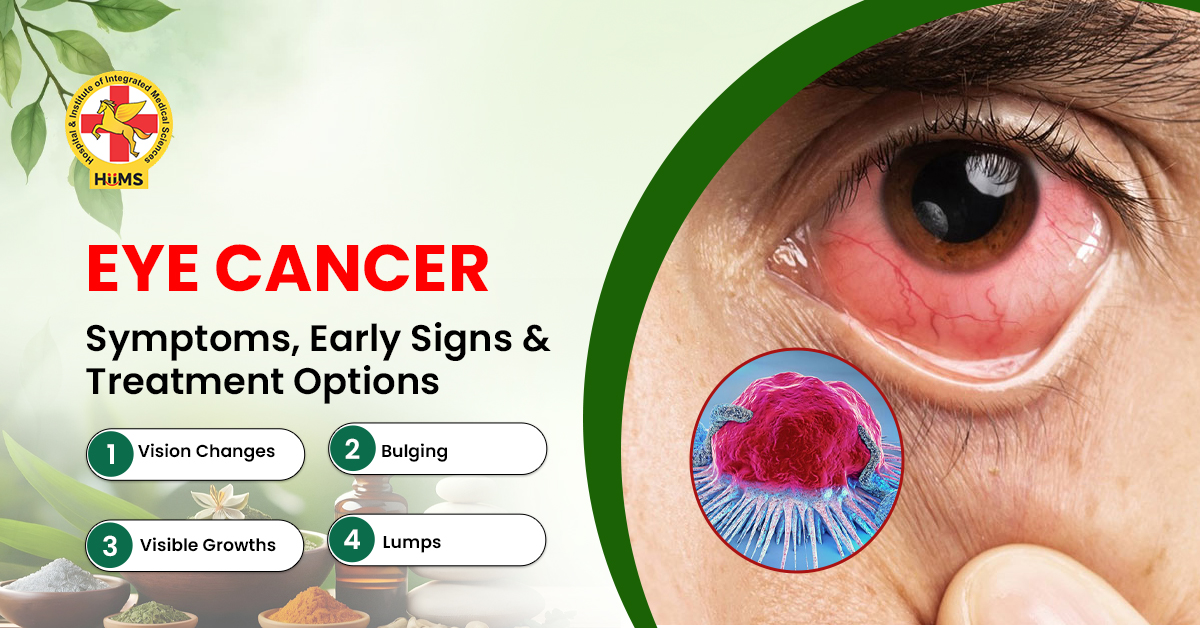
Eye cancer symptoms can vary. It depends on the area involved and the stage. Early signs are usually mild and gradual.
Some commonly noticed symptoms are:
- Vision is becoming blurred without a clear reason.
- Dark spots, shadows, or flashes in vision.
- Redness or irritation that does not settle easily.
- A lump or thickened area on the eyelid or eye surface.
- Change in eye position or shape.
- A feeling of pressure inside the eye.
These symptoms do not always mean something serious. But when they continue, ignoring them is not advised.
Role of a Cancer Doctor in Eye Cancer Care
A cancer specialist is important in evaluating eye-related changes and planning care. When eye cancer is suspected, symptoms, eye examination findings, and diagnostic reports are reviewed together. This helps in understanding whether the growth is limited or needs closer observation.
Based on this, the cancer doctor looks at the stage and how the disease is moving. Treatment planning takes into account the size of the growth, its effect on vision, and the overall health of the patient. In early cases, only regular monitoring may be suggested. In advanced cases, medical treatment is usually needed.
In more advanced situations, medical treatment may be required.
Follow-up visits help track changes over time. Decisions are reviewed and adjusted when required. This avoids rushed steps and unnecessary interventions.
Eye Cancer Care Approach at Jeena Sikho HiiMS Hospitals
Eye cancer care begins with a detailed evaluation, as follows, at many of the best cancer hospitals. Doctors review the type and stage of cancer, its effect on vision, and whether surrounding tissues are involved. Along with medical reports, digestion strength, immunity, daily routine, and lifestyle patterns are also considered. Care is planned individually, keeping safety and comfort in mind.
In suitable cases, Ayurvedic methods are included only as supportive care, and always under professional supervision. Therapies are chosen after proper assessment and adjusted through regular monitoring. Attention is also given to diet regulation, eye protection, stress control, and maintaining routine discipline.
Supportive Ayurvedic Practices
Golden Therapy: Golden Therapy is a non-invasive external method used in selected cases for detox support.
It uses banyan leaves, bitter gourd, guava leaves, neem leaves, peepal leaves, doob grass, and raw turmeric. Prepared herbs are gently pressed using the soles of the feet. The method works through skin contact, not intake. It is chosen only when advised.
Ayurvedic Detox Juice: This is taken as part of a regulated routine. Not used alone.
Ingredients include: selected leaves, green vegetables, raw turmeric, ginger, amla, beetroot, and water. It is prepared fresh, blended, unstrained, and usually taken in the morning. Traditionally, it is used for internal cleansing and digestive balance.
Outcomes differ for each individual. Any therapy or dietary change is advised only after professional review and follow-up.
Conclusion
Eye cancer usually progresses slowly. Because of this, early awareness matters. Recognising symptoms, possible risk factors, and seeing a cancer doctor on time all help in getting an evaluation done without delay. Care planning depends on proper assessment, regular follow-up, and guided medical support, not guesswork. It is not based on urgency or assumptions.
Early attention helps bring a clearer understanding and steadier management of the condition.
For further guidance or information on care options, call +91 82704 82704.
You can also write at care@jeenasikho.com
FAQs
Q1. What are common eye cancer symptoms?
Blurred vision, dark spots, irritation, and visible lumps are commonly noticed.
Q2. When should I consult a cancer doctor?
If eye symptoms continue or worsen without a clear reason, consult a cancer doctor.
Q3. Are all eye tumors cancerous?
Some growths are benign and need proper evaluation.
Q4. Can lifestyle habits affect eye cancer risk?
Certain habits may influence immunity and cell repair.
Q5. Is Ayurvedic care used alone for eye cancer?
It is generally used as guided supportive care.
Ayurvedic Cancer Care Products
100% natural, certified Ayurvedic formulations crafted for targeted cancer wellness.


Disclaimer: The information provided on this blog is for general educational and informational purposes only. It is not intended to replace professional medical advice, diagnosis, or treatment. Always consult a qualified healthcare professional before making any changes to your diet, lifestyle, or treatment plan. Individual results may vary.