Kidney problems are becoming quite common these days. It is not even known by many people at the start. Perhaps aching feet, reduced urine, or constant fatigue. Then there is one day when something serious, such as chronic kidney disease (CKD), is reported.
Fear sets in when kidney doctors talk of dialysis. It is as though life is going to change entirely. Admittedly, dialysis is not an effortless task. It is time-consuming and energy-consuming, and it has a significant impact on the daily routine. Due to this reason, many individuals begin seeking alternatives. The question is, is there an inborn way? Would it be possible to control renal conditions without dialysis?
It is at this point that Ayurveda and natural approaches are mentioned. There are other healthcare facilities, such as Jeena Sikho HiiMS, that take another route. They attempt to treat the body in a natural, progressive manner. It is not a quick solution but a gradual process. In this blog, you will learn about kidney failure treatments without dialysis.
What is kidney failure?
Kidneys aid the process of blood filtration. They also maintain the body fluid and minerals. This constant loss of the ability to do so in the kidneys is referred to as kidney failure or chronic kidney disease. It does not typically occur overnight. It develops in stages.
CKD Stages
The stages of chronic kidney disease are 5 stages according to the level of kidney functioning (GFR level). This grading system helps determine the severity of the situation.
Stage 1 (GFR 90 or above)
- Kidney functioning is generally healthy.
- Very mild signs
- Often no symptoms
Stage 2 (GFR 60-89)
- Slight decrease in function
- May had not yet much changed.
Stage 3 (GFR 30-59)
- Moderate damage
- Symptoms can begin to manifest themselves such as fatigue, swelling.
Stage 4 (GFR 15-29)
- Severe damage
- The body begins to accumulate waste.
- Preparation for dialysis may be recommended by a kidney specialist.
Stage 5 (GFR below 15)
- Kidney failure stage
- Generally, dialysis or transplant is recommended.
- It is significant to understand this stage system. Due to a change in approach to treatment at every level.
Medical Causes of Kidney Disease
Kidney disorders normally occur gradually. Some common reasons are:
- Long-term diabetes
- High blood pressure
- Excess use of painkillers
- Unhealthy lifestyle and diet.
- Smoking and alcohol
- Family history
There are cases when several factors are combined.
Symptoms of Kidney Problems
When it is at an early stage, the symptoms are very mild. That is why numerous cases are identified at a late stage.
Some signs include:
- Swelling in feet or face
- Foamy or reduced urine
- Weakness and low energy
- Nausea or loss of appetite
- Trouble sleeping
- Muscle cramps
These may be severe in the long run if neglected.
Ayurvedic Treatment of Kidney Disease
Ayurveda in Jeena Sikho HiiMS has a different perspective of kidney issues. It relates them to body system imbalance, particularly in the case of toxins and fluid metabolism. It is not just about kidneys but the entire body. At Jeena Sikho HiiMS, it is not only a matter of a single treatment. It is a blend of various natural techniques. They attempt to find out the underlying cause and then proceed step by step.
1. Herbal Approach
Some of the herbs used are traditional:
Punarnava is commonly applied in kidney-related diseases.
Varun is associated with urinary well-being.
Gokshura—usually taken to support the kidney and urinary bladder.
Giloy—Ayurvedic balance.
These are administered as certain combinations depending on the patient.
2. Detox and Body Cleansing
According to Ayurveda, toxins (Ama) are one of the causes of disease.
There are certain treatments applied to purify the body slowly. These can be light detoxification or Panchakarma, depending on the level and severity of the patient.
3. The GRAD System: CKD Treatment in the Absence of Dialysis.
4. Hot Water Immersion: Warmth Helping the Body Settle.
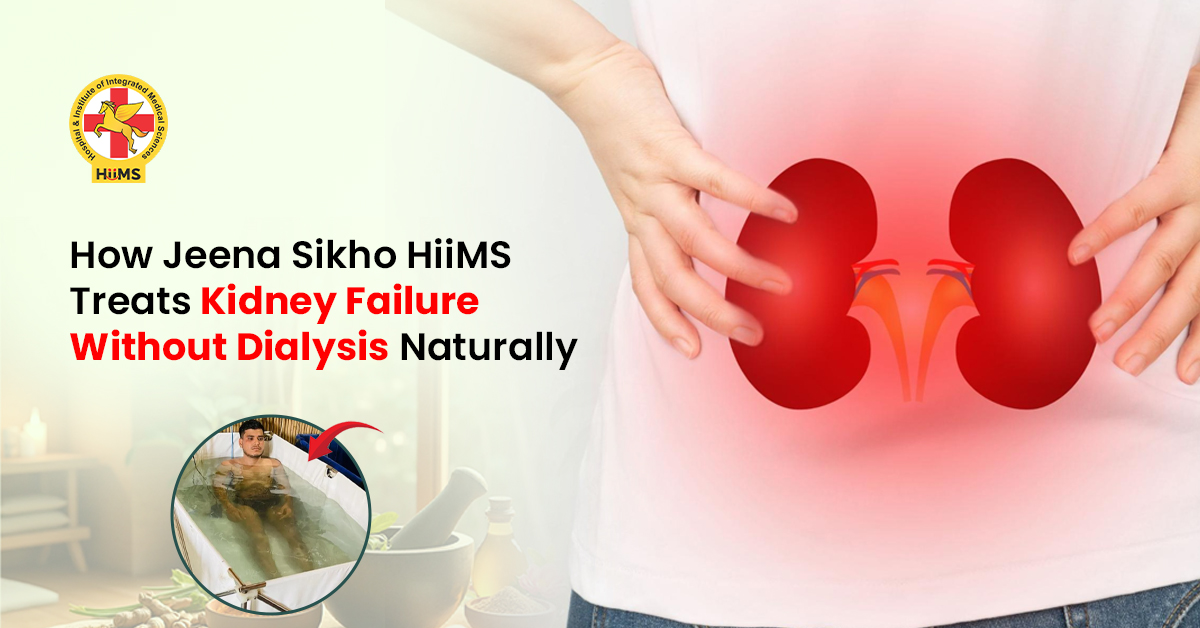
Hot water immersion is performed by sitting in warm water up to the navel. The temperature of about 42°C mildly dilates the vessels and facilitates the flow of blood. The body relaxes, the muscles relax, and some waste is expelled through the skin. Many people feel lighter after this step, making it a viable alternative to kidney dialysis.
How it’s done:
Put some warm water (approximately 42°C) into a tub.
Water level up to the navel
Sit calmly for 20-30 minutes
Keep the body relaxed
- Head Down Tilt: A Gentle Gravity.
This procedure is the head-down tilt, and it is performed on a flat surface with the legs slightly elevated. A cushion or block of a small size forms a mild angle that directs more blood to the kidney area. The ability to remain in this position for 10-15 minutes helps to maintain the body in a stable position and allows the body to undergo natural filtration.
How it’s done:
Lie on a bed or mat
Elevate legs with a block or pillow.
Hold the head below the legs.
Remain in the position for 10-15 minutes.
Take your time and keep calm.
- The DIP Diet:
Kidneys are highly dependent on food. The DIP Diet at Jeena Sikho HiiMS is patterned with the first plate being made of raw fruits or vegetables. These foods assist in maintaining the openness of the vessels and the free flow of blood. The second plate is plain and stomach-friendly.
Breakfast (7-9 AM)
Plate 1: Fruits = Body weight 10 g (3-5 varieties)
Plate 2: Home meals or millet meals like Poha, Daliya, and Upma.
Lunch (1-2 PM)
Plate 1: Salad = Body weight x 5 g (3-5 types).
Plate 2: Basic home meal or millet foods such as Khichdi, Chapati, Dhokla, and Daliya.
Dinner (Before Sunset)
If having dinner:
Plate 1: Fruits + salad = BW 5g.
Plate 2: Light homemade vegetable soup.
If skipping dinner:
Plate 1: Fruits + salad = Body Wt x 10 g.
It is important to note that Plate 2 has to be consumed without delay after Plate.
Conclusion
Kidney failure is serious, and it does not imply that there are no alternatives. Through proper guidance, changes in lifestyle, and natural techniques, most individuals attempt to control their condition in a more positive manner. Ayurveda is not about fast results but gradual and progressive change.
In case you are researching natural care and kidney failure treatment without dialysis, it is preferable to consult a person who is already in this sphere.
+91 82704 82704
care@jeenasikho.com.

FAQs
1. Would it be possible to treat kidney failure in the absence of dialysis?
In other instances, particularly during the initial stages, it can be treated with due attention. However, it is dependent on the condition.
2. What is the natural cure for kidney disease?
It typically involves lifestyle changes, herbs, and diet.
3. Is Ayurvedic treatment safe for kidney patients?
When properly supervised by an expert physician, it can be safe.
4. How do I know my CKD stage?
A blood test (GFR) is useful in determining the stage. Your doctor can guide you.
5. When is dialysis necessary?
Typically at an advanced stage (Stage 5), as kidney functioning is extremely low.