
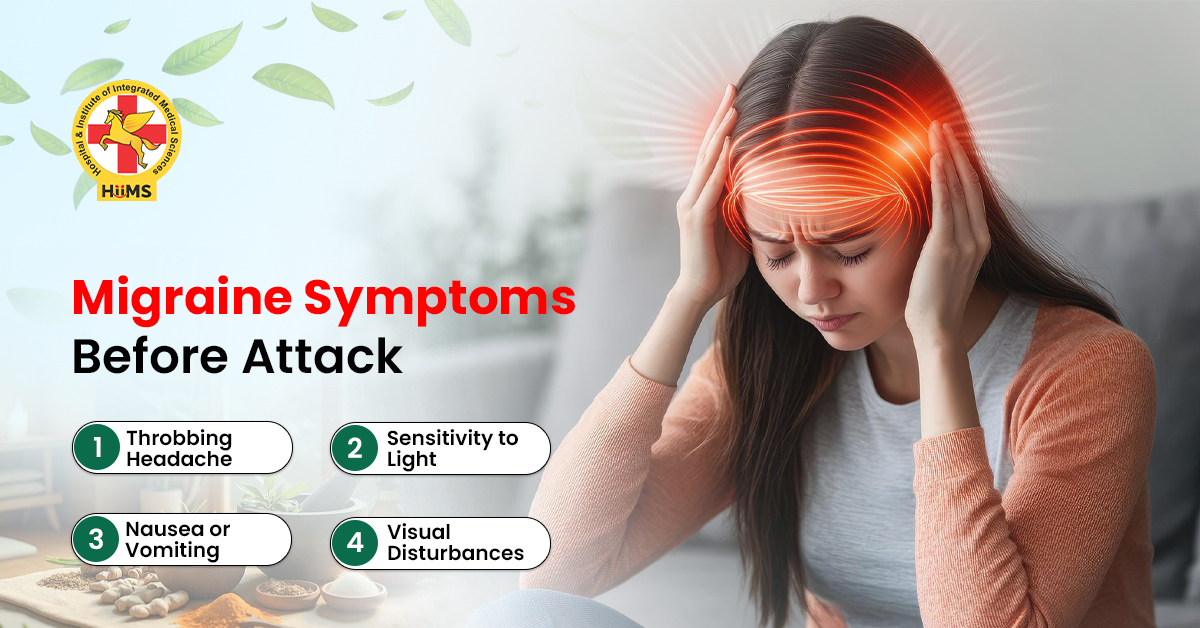
Migraines are more than just a headache. They can start hours, or even a few days, before the pain really hits. Many people feel confused and don’t quite understand what their body is trying to say. Knowing the early migraine symptoms is really important. It can help you take action before the headache gets worse.
At Jeena Sikho HiiMS, we often see patients who ignore the first signs and then suffer more when the pain starts. The early signs are usually very small. Feeling tired, moody, or noticing changes in appetite or sleep can all be warning signals.
Some people notice changes in vision. Others feel neck stiffness or digestive problems. Understanding these small warnings is the first step to managing migraines better. If you pay attention to your body, you can take small steps or even get proper treatment of migraine before the pain becomes strong.
What is a Migraine?
A migraine is not just a normal headache. It is usually a strong, throbbing pain, often on one side of the head. Migraines come with other symptoms too. Nausea, sensitivity to light or sound, and mood changes are common. They can last for hours or sometimes a few days. Migraines can really affect daily life if not treated early. Understanding what a migraine is can help you notice the first signs. And if you catch it early, you can prevent the attack from becoming worse.
What Causes Migraine?
Doctors are not completely sure why migraines happen. But they think it involves changes in the brain and nerves. Some common causes are:
- Changes in brain chemicals like serotonin
- Overactive nerves sending pain signals
- Family history – migraines can run in families
- Hormonal changes, mostly in women
Knowing these causes can help you reduce attacks and manage migraine symptoms better.
What Triggers Migraine?
Many things can trigger a migraine. Triggers can be different for everyone. Common ones include:
- Stress or anxiety
- Certain foods like chocolate, cheese, or processed snacks
- Skipping meals or not drinking enough water
- Poor sleep or irregular sleep patterns
- Bright lights, loud noises, or strong smells
Finding your triggers can help prevent migraines. It can also make migraine headache treatment work better.
What Are the Stages of a Migraine?
Migraines usually happen in stages. Knowing the stages helps you notice early warning signs. And you can manage the attacks better. The stages are:
- Prodrome Phase (Early Warning Signs): Small changes in mood, energy, or appetite
- Aura Phase (Visual and Sensory Changes): Seeing flashes, tingling, or trouble speaking
- Headache Phase (Migraine Attack): Strong headache with nausea or sensitivity
- Postdrome Phase (After the Headache): Feeling tired, moody, or hard to focus
Each stage has its own symptoms of migraine. Noticing them early can help you take action faster.
Migraine Symptoms at Different Stages
1. Prodrome Phase (Early Warning Signs)
This phase happens hours or even a day before the headache. Early symptoms of migraine may include:
- Feeling moody, irritable, or anxious
- Being very tired or low in energy
- Craving certain foods or losing appetite
- Trouble focusing or thinking clearly
- Neck stiffness or tight muscles
Noticing these signs can let you take small steps or start migraine headache treatment early.
2. Aura Phase (Visual and Sensory Changes)
Not everyone experiences this phase. Common signs are:
- Seeing flashing lights, zigzag lines, or blind spots
- Tingling or numbness in face, hands, or arms
- Trouble speaking clearly or finding words
Recognizing the aura can warn you that the headache is near. Acting early can reduce the pain.
3. Headache Phase (Migraine Attack)
This is when the main migraine hits. Symptoms during this stage include:
- Moderate to severe headache, often on one side
- Sensitivity to light, sound, or smells
- Feeling nauseous or vomiting
- Feeling very tired or moody
- Blurred vision
During this phase, timely migraine treatment can ease pain and shorten the attack.
4. Postdrome Phase (After the Headache)
Even after the headache ends, you may still feel:
- Tired and weak
- Moody or low in energy
- Trouble focusing or thinking clearly
This phase is sometimes called the “migraine hangover.” It can last a few hours or even a day.
Common Early Symptoms to Watch For
Even before the stages fully happen, early warning signs include:
- Mood and Energy Changes: Feeling very tired, restless, or moody
- Appetite Changes: Craving certain foods or losing appetite
- Sleep Disturbances: Trouble sleeping or sleeping too much
- Sensitivity to Light and Sound: Lights or noises feel too strong
- Neck Stiffness and Muscle Tension: Tight or sore neck and shoulders
- Digestive Changes: Nausea, bloating, or frequent urination
- Visual and Cognitive Changes: Blurred vision, trouble focusing, or finding words
Spotting these early symptoms can help you take preventive steps and get proper migraine headache treatment.
When to Seek Migraine Treatment
If you notice these symptoms often, it’s important to see a doctor. Early detection and proper migraine treatment can reduce pain and make life easier. Doctors may suggest:
- Medicines to relieve pain
- Preventive treatment to reduce attacks
- Lifestyle changes like diet, sleep, and stress management
Tips to Manage the Symptoms of Migraine
- Keep a Diary: Track your symptoms, triggers, and sleep
- Avoid Triggers: Stress, certain foods, and poor sleep can start migraines
- Drink Enough Water: Staying hydrated is very important
- Relaxation: Yoga, meditation, and deep breathing can help
- Follow Doctor’s Advice: Take prescribed medicines for the treatment of migraine headache.
Conclusion
Knowing migraine symptoms at every stage can help you handle attacks better. Early detection and proper treatment of migraine can prevent strong headaches and make life easier.
At Jeena Sikho HiiMS, we help patients notice the body’s warning signs and manage symptoms safely. Listening to your body is the first step toward a healthier, headache-free life.
FAQs
Q1. What is a migraine?
A migraine is a strong headache that often comes with nausea and sensitivity to light or sound.
Q2. Are migraines different from normal headaches?
Migraines are usually more painful and last longer than regular headaches.
Q3. What are early symptoms of migraine?
Tiredness, mood changes, neck stiffness, and food cravings are common early signs.
Q4. Can a migraine start before the headache?
Symptoms can begin hours or even days before the pain starts.
Q5. What triggers migraine attacks?
Stress, poor sleep, certain foods, dehydration, and strong smells can trigger migraines.
