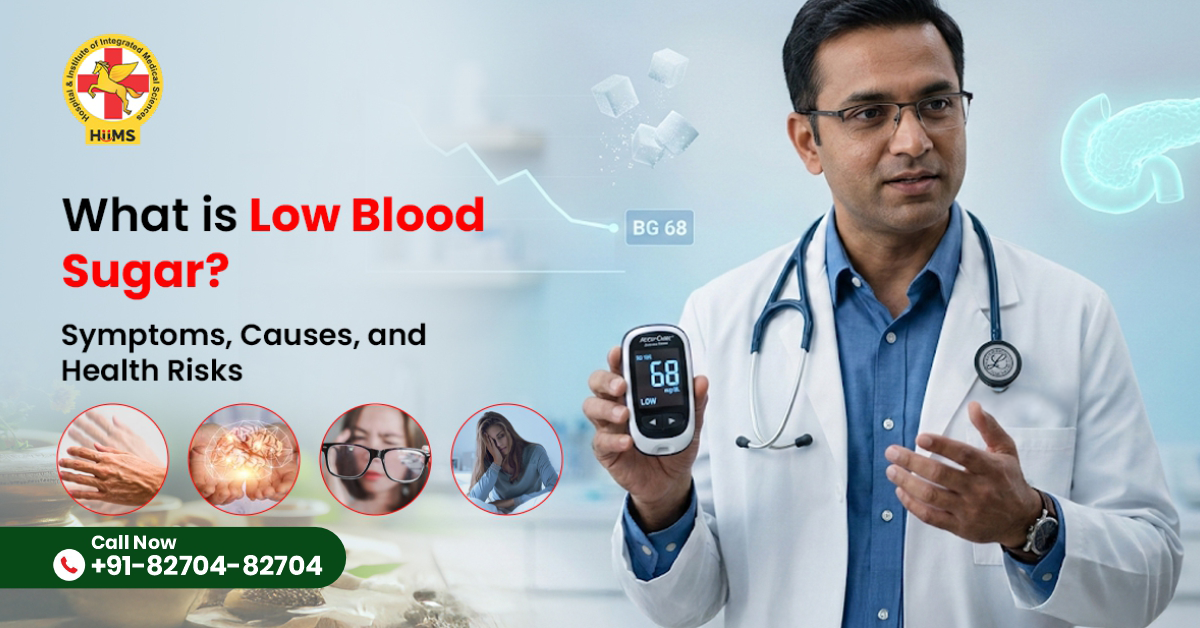

Low blood sugar is a condition that occurs when the level of glucose in the blood drops below what the body needs to function properly. Glucose acts as the main source of energy for the brain and muscles, and when its level falls, the body begins to show noticeable warning signs.
Many think of this as a problem only seen in reports or limited to those on diabetes medicines, yet anyone with irregular meals, long workdays, or strict eating patterns can feel the same symptoms. When glucose dips, the body sends clear signals because the brain and muscles need steady fuel; noticing those signals and responding calmly prevents unnecessary worry later.
This blog explains how low blood sugar affects daily life, what typical warning signs to watch for, why such drops happen, and simple steps to maintain normal levels.
What Is Low Blood Sugar?
In medical terms, low blood sugar is also known as hypoglycemia. When people speak of low blood sugar, they mean a level of glucose in the blood that falls below what the body needs for steady activity, commonly under 70 mg/dL. Glucose provides quick energy for muscles and the brain; when it goes down the first reactions are physical and mental.
The body attempts to restore balance by releasing hormones and prompting hunger; these reactions explain the immediate sensations many notice.
Low Blood Sugar Symptoms You Should Not Ignore
Early Signs of Low Blood Sugar
The early signs of low blood sugar are clear but often overlooked. Hands may tremble, a sudden sweat may appear, the heart races, hunger rushes in, and a light-headed feeling can follow. These low blood sugar symptoms come on fast and usually settle after a small amount of carbohydrate.
Mental and Emotional Symptoms of Low Blood Sugar
Beyond the body, the mind also shows tiredness. A person may become unusually irritable, anxious, confused, or find it hard to focus, typical symptoms of low blood sugar that friends or colleagues sometimes misread as moodiness or fatigue. Noticing this pattern helps.
Severe Signs of Low Blood Sugar
If early indications go unchecked, more alarming signs of low blood sugar can develop such as blurred vision, slurred speech, loss of coordination, fainting or even seizures.
Symptoms of Low Blood Sugar During Sleep
Some incidents occur at night and present as cold sweats, vivid dreams, restlessness or waking disoriented; these nighttime incidents interrupt restorative sleep and affect daytime productivity.
Causes of Low Blood Sugar in Daily Life
Low Blood Sugar Causes in Diabetes
Among those on insulin or certain oral medications, a common trigger is taking too much medicine, delaying a meal after dosing, or increasing activity without adjusting intake. Such mismatches are frequent low blood sugar causes in diabetes and need careful monitoring.
Lifestyle-Related Causes of Low Blood Sugar
Modern routines contribute to causes of low blood sugar as well like skipping meals for meetings, strict calorie cutting, heavy drinking on an empty stomach, or extensive exercise without refuelling all set the stage for sudden drops.
Health Risks of Low Blood Sugar If Ignored
The health risks of low blood sugar do not stop at fainting one time. When these drops keep happening, a person may become more likely to fall or meet with accidents, may find it harder to focus or remember things clearly, and in serious situations the heartbeat can become irregular or the person may remain unconscious for a longer time. Taking action as soon as the sugar level falls helps avoid these problems and reduces the damage that repeated episodes can cause over time.
Immediate Care: What to Do When Sugar Drops Suddenly
Take a fast carbohydrate such as a small glass of fruit juice, a spoonful of honey in water, or a glucose tablet, then rest and recheck after fifteen minutes. Avoid greasy, heavy meals at first since they delay recovery; once steady, follow with a small, balanced meal to maintain sugar levels.
Conclusion
Low blood sugar does not just make you feel tired; it can affect how you think, how you feel, and how safely you do your daily work when it happens again and again. By learning to recognise early signs of hypoglycemia, noting common triggers and responding quickly with a small fast carbohydrate, most people restore balance without panic.
Simple habits like consistent meal timing, balanced meals combining whole grains with proteins and healthy fats, adequate sleep and calm stress management help reduce repeated incidents of the problem and protect long term function.
When episodes repeat or reach frightening intensity, seek structured care that combines healthcare evaluation with lifestyle and digestive support. For personalised guidance, you can contact Jeena Sikho HiiMS at +91 82704-82704 or email care@jeenasikho.com today.

FAQs
1. What are the first signs someone might feel during a low-sugar episode?
Shakiness, sudden sweating, strong hunger, and a feeling of light-headedness usually appear first, and they often settle once the person eats or drinks something that quickly raises sugar levels.
2. Can skipping meals cause repeated low-sugar episodes?
Long gaps between meals combined with stress or heavy activity commonly trigger low glucose moments.
3. When should healthcare help be sought for low-sugar events?
Arrange urgent care if confusion, repeated fainting, slurred speech or inability to wake occurs.
4. Are there long-term ways to avoid frequent drops in blood glucose?
Regular meal timing, balanced meals, restful sleep and stress control reduce recurrence and support steady energy.
5. Does alcohol affect blood sugar levels overnight?
Alcohol can prevent the liver from releasing stored glucose and increase the risk of low levels during sleep.
Ayurvedic Diabetes Care Products
100% natural, certified Ayurvedic formulations crafted for targeted diabetes wellness.



Disclaimer: The information provided on this blog is for general educational and informational purposes only. It is not intended to replace professional medical advice, diagnosis, or treatment. Always consult a qualified healthcare professional before making any changes to your diet, lifestyle, or treatment plan. Individual results may vary.