
Sometimes a person sits quietly in the middle of an ordinary day and realises their body isn’t responding the way it did just a few months ago. They aren’t thinking about disease or reports at that moment, just wondering why climbing out of bed feels heavier than it should, or why a simple walk leaves them pausing for air. For someone living with CKD, these small changes slowly shape the rhythm of the day. There is no loud announcement, just a regular shift that makes them look for guidance that is gentle and not frightening.
At Jeena Sikho HiiMS, the support offered doesn’t come with pressure or complicated ideas. It comes with simple routines that match the body’s natural pace. Warmth-based methods, soft posture practices, and calm eating habits help people manage CKD symptoms without confusion or stress. The whole approach works more like guidance than treatment, and this gentle system is the reason many individuals are able to move forward while avoiding dialysis for as long as their body allows. Let’s see how this becomes possible through the methods used at this hospital.
A Different Path for CKD Patients
Most people think dialysis is the only road once the kidneys slow down. But the team at Jeena Sikho HiiMS uses a different path that focuses on gentle methods rather than forceful procedures. Their system allows the body to release its load little by little, giving space for steady improvement. This becomes especially meaningful for those looking for CKD treatment without dialysis and wanting a routine that stays manageable in daily life.
To understand this better, let’s look at the GRAD methods used at Jeena Sikho HiiMS that guide the body in a calm and natural way.
The GRAD System: A CKD Treatment Without Dialysis
1. Hot Water Immersion: Warmth Helping the Body Settle
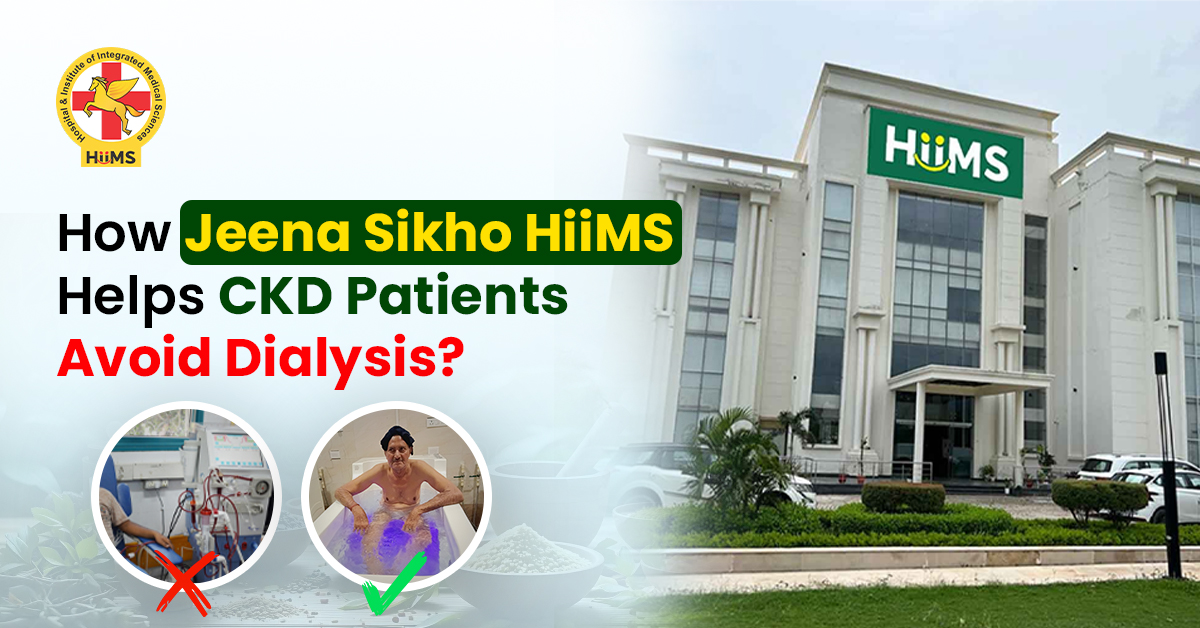
Hot Water Immersion is done by sitting in warm water that reaches the navel. The heat around 42°C gently opens the vessels and helps blood move with ease. The body settles, muscles soften, and some waste comes out through the skin. Many people feel lighter after this step, which makes it useful for those seeking an alternative to kidney dialysis.
How it’s done:
- Fill a tub with warm water (around 42°C)
- Water level up to the navel
- Sit calmly for 20–30 minutes
- Keep the body relaxed
2. Head Down Tilt: A Soft Use of Gravity
The Head Down Tilt is done by lying on a flat surface with the legs slightly raised. A small pillow or block creates a gentle angle that guides more blood toward the kidney region. Staying in this posture for 10–15 minutes keeps the body steady and supports natural filtration.
How it’s done:
- Lie on a bed or mat
- Raise legs slightly with a pillow or block
- Keep the head lower than the legs
- Stay in the posture for 10–15 minutes
- Breathe slowly and stay relaxed
3. The DIP Diet: Raw First, Light Later
Food plays a strong role in kidney balance. At Jeena Sikho HiiMS, the DIP Diet follows a pattern where the first plate is raw fruits or vegetables. These foods help keep the vessels open and the blood flowing freely. The second plate is simple and easy on the stomach.
Breakfast (7–9 AM)
- Plate 1: Fruits = Body Weight × 10 g (3–5 varieties)
- Plate 2: Home meal or millet dishes such as Poha, Daliya, Upma
Lunch (1–2 PM)
- Plate 1: Salad = Body Weight × 5 g (3–5 varieties)
- Plate 2: Simple home meal or millet dishes like Khichdi, Chapati, Dhokla, Daliya
Dinner (Before Sunset)
- If having dinner:
- Plate 1: Fruits + salad = Body Weight × 5 g
- Plate 2: Light homemade vegetable soup
- If skipping dinner:
- Plate 1: Fruits + salad = Body Weight × 10 g
Note: Plate 2 must be eaten immediately after Plate 1 without any break.
Watch the Full Patient Review on Youtube:
Kidney Detox Therapy Through Panchakarma
The centre also uses Panchakarma steps to support cleansing and lighten the overall burden. These methods form a kind of kidney detox therapy that works with the person’s condition instead of against it.
- Virechana clears waste from the liver-kidney path.
- Basti supports the colon and helps balance Vata.
- Nasya clears the head region.
- Vamana releases extra mucus.
- Raktamokshana helps clean the blood.
When these steps are chosen carefully, the body finds more harmony, and daily functioning becomes more comfortable.
A Gentle Approach for Long-Term Stability
Something special about Jeena Sikho HiiMS is that every method respects the body’s pace. Nothing is rushed or forced. People who follow these steps are more connected to their own bodies. This becomes deeply helpful for those searching for kidney health methods that are reassuring rather than overwhelming.
The system doesn’t promise sudden changes. Instead, it guides the body little by little. And these small steps often lead to steady improvements.
Conclusion
Living with CKD can be challenging, but the approach at Jeena Sikho HiiMS offers a calmer and more steady direction. With warmth-based methods, simple posture practices, light food patterns, and Panchakarma, the body gets gentle support without strain. Many individuals searching for an alternative to kidney dialysis find reassurance in these natural steps. Each method works quietly, helping the body stay balanced and steady. When the routine is followed patiently, daily life becomes easier to manage, allowing individuals to move forward with more stability and better health.
FAQs
- Is it possible to manage Chronic Kidney Disease without depending on dialysis immediately?
It depends on the stage and medical advice, under proper supervision.
- What makes HiiMS a helpful option for Chronic Kidney Disease?
It uses warmth, posture-based methods, and light food patterns to support the body. - Do the GRAD methods take a long time to show ease?
Changes appear gradually because the approach follows a steady pace. - Can the GRAD system be used along with medical treatment?
It can usually be combined, but medical advice is important. - Is the DIP Diet hard to follow every day?
It becomes easier once the raw-first meal pattern settles into a routine.