
Every single beat of your heart is a quiet reminder of how hard your body works to keep you moving. Yet, in our fast-paced daily routines, we often ignore this vital organ until it forces us to stop. Waiting for a major medical emergency before taking care of your chest can be a life-changing mistake. If you want to protect your lifestyle, learning to catch heart disease symptoms early is the most practical step you can take today.
Let’s look at this practically. Your heart isn’t an isolated machine that runs on its own; it reacts to your diet, your sleep, and how you handle daily pressures. When things start slowing down in your blood vessels, your body gives clear hints. Instead of waiting for a sudden health scare, shifting to a cleaner, more active routine helps clear out structural blocks before they cause real harm. Let us explore a simple, direct guide to reading your body’s early warnings and using ancient, natural methods to keep your system running smoothly.
Early Warnings: Major Symptoms of Heart Problems
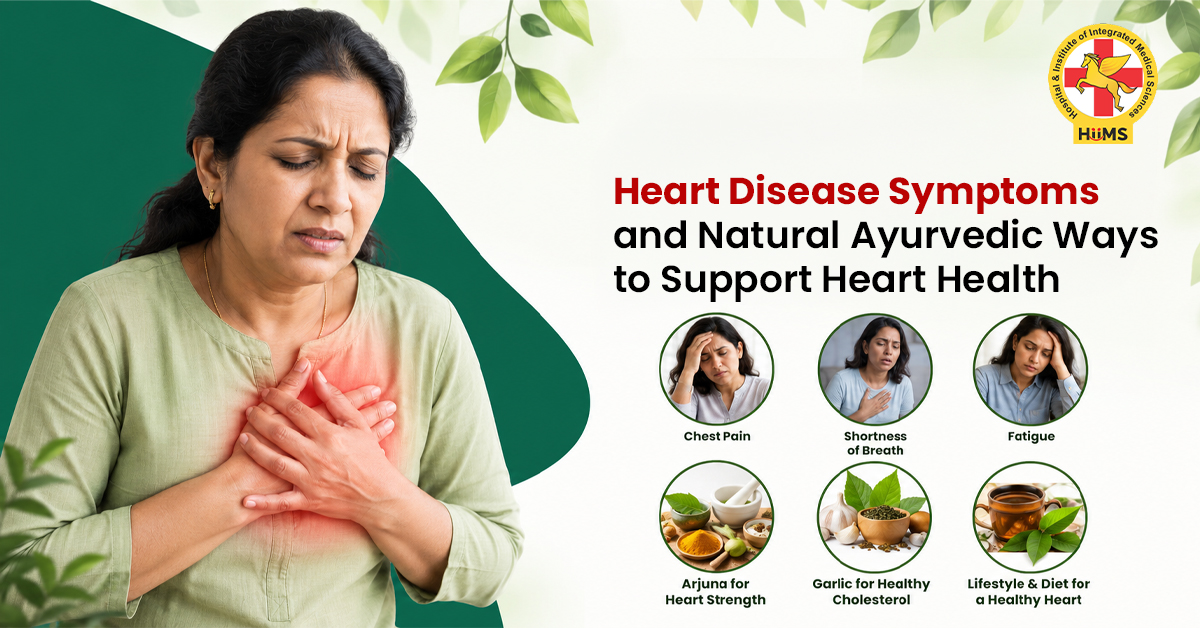
Your body has a very unique way of signalling when your circulation is hitting a wall. You should never brush off sudden physical changes such as simple office exhaustion or routine aging. Keep a close eye out for these vital symptoms of heart problems and red flags:
- Chest Discomfort
- Radiating Pain
- Shortness of Breath
- Unusual Fatigue
- Swelling (Edema)
- Heart Palpitations
- Dizziness or Lightheadedness
- Unexplained Sweating
Paying attention to these early signs of heart disease gives your system the exact space it needs to recover before things go downhill.
The Holistic Path: Ayurveda for Heart Health
Ancient healing wisdom looks at your vascular system as a network of flowing channels that require perfect balance. When you choose Ayurveda for heart health, the goal is to clear deep metabolic waste (Ama), eliminate internal blockages, and restore your Vata, Pitta, and Kapha energies to a steady rhythm.
At Jeena Sikho HiiMS, this old Ayurveda philosophy is applied through targeted physical therapies that treat your body as a single, connected unit:
- Hridaya Basti: This is a very soothing treatment where a wall of natural dough is constructed over your chest area and filled with warm medicated plant oils. This directly soothes your nerves, relaxes tight chest muscles and nourishes your heart tissues.
- Panchakarma Detox: Specialised internal cleansing steps, such as Virechana and Basti, are used to remove deep-seated metabolic toxins and wash your arterial pathways clean.
This deep-cleaning focus makes natural therapies an excellent foundation for anyone looking for a reliable heart hospital alternative that values long-term lifestyle recovery over chemical dependency.
Herbs Support: Ayurvedic Remedies for Heart Disease
Nature has provided an incredible selection of roots, barks, and kitchen spices to help keep your blood channels flexible and clear. Incorporating authentic Ayurvedic remedies for heart disease helps support your cardiovascular system organically:
- Herbs like Arjuna serve as premier organic heart boosters, enhancing your muscle strength and helping your body naturally regulate fluid pressure.
- Natural ingredients like Guggulu act as deep-cleansing agents, sweeping away arterial deposits and maintaining a healthy cholesterol balance.
- Adaptogens like Ashwagandha lower high cortisol levels, which takes direct mechanical pressure off your pumping muscles.
- Plants like Brahmi and Sarpagandha soothe an overactive nervous system, encouraging smooth blood flow and stabilising sudden pressure shifts.
- Adding fresh ginger, garlic, and turmeric to your meals supports nitric oxide production, fights internal inflammation, and boosts microcirculation throughout your limbs.
Simple Nutritional Habits for a Healthy Diet for Heart Safety
Reclaiming your vitality shouldn’t feel like a strict medical punishment. Long-term cardiovascular restoration is built directly on what you pick to put on your plate every single day. Building a clean, healthy diet for heart wellness can be achieved by following a natural DIP Diet and making smart lifestyle adjustments:
Prioritise Living Foods
Fill your kitchen with clean, plant-based items. Focus on fresh raw fruits like amla and pomegranate, green leafy vegetables, water-rich veggies, and unprocessed whole grains to nourish your arteries.
Remove Circulatory Sludge
Avoid refined white sugars, oily junk foods, harmful trans fats, excess sodium and refined oils. They harden your blood arteries and produce fast blockages.
Rhythmic Daily Movement
Incorporate gentle yoga postures, such as Tadasana or Setu Bandhasana, into your morning routine. Pair these with regular pranayama breathing exercises to increase your blood oxygen levels and naturally stabilise your pulse.
Conclusion
Taking care of your chest shouldn’t be a journey of fear, restrictions, or dependency on heavy chemical tablets. By learning to catch early heart disease symptoms and updating your everyday kitchen and lifestyle habits, you can keep your heart muscles strong for decades.

If you are doing your best but still feel winded or tired, getting a professional health assessment can change your life. You can consult the expert medical team at Jeena Sikho HiiMS via (VOPD) video consultation to receive a personalised wellness routine tailored to your body type.
FAQs
What are the most critical heart disease symptoms I should look for?
Major symptoms include chest discomfort, radiating arm pain, shortness of breath and abrupt ankle swelling.
How can early indications of heart disease manifest in our regular routines?
You may find yourself totally fatigued, or even out of breath after climbing a few simple steps.
Why is Ayurveda for heart health effective for long-term recovery?
It clears the clogged arteries, clears the deep-seated metabolic waste and restores your internal energy balance, naturally.
What are the best Ayurvedic remedies for heart disease available in nature?
Herbs like Arjuna, Guggulu, and Ashwagandha are excellent for boosting muscle strength and lowering cholesterol.
What should I include in a healthy diet for heart safety?
Focus heavily on raw fruits, leafy green vegetables and completely eliminate trans fats and processed sugars.
Ayurvedic Heart Care Products
100% natural, certified Ayurvedic formulations crafted for targeted heart wellness.



Disclaimer: The information provided on this blog is for general educational and informational purposes only. It is not intended to replace professional medical advice, diagnosis, or treatment. Always consult a qualified healthcare professional before making any changes to your diet, lifestyle, or treatment plan. Individual results may vary.