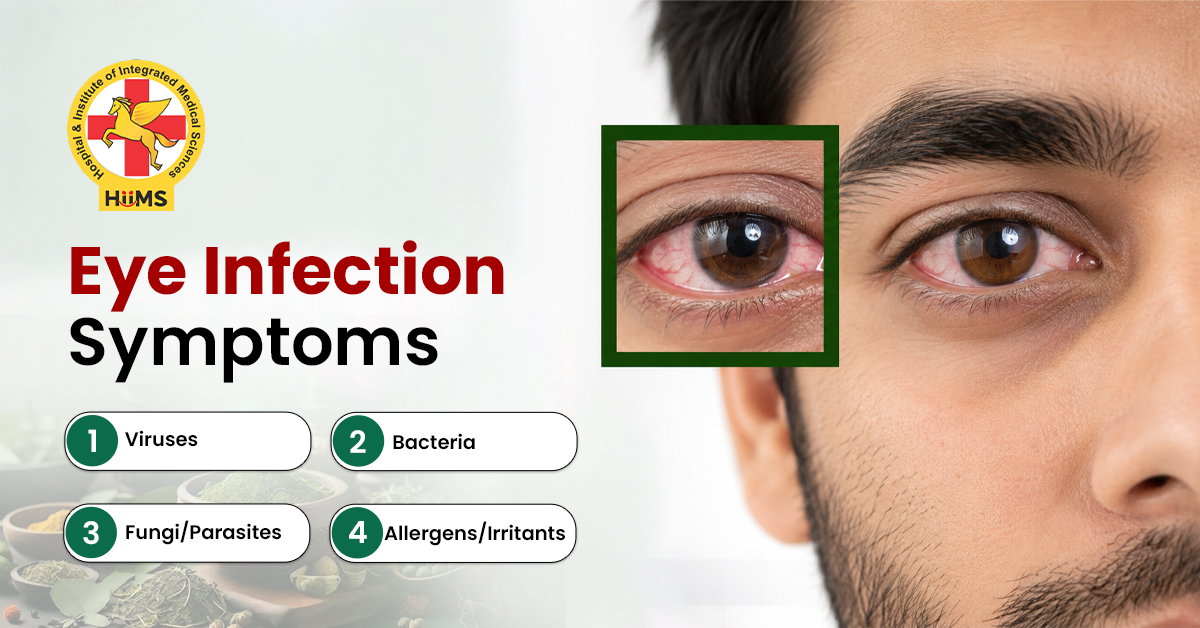

Most people ignore eye irritation at first. A little redness, slight itching, or watering feels like something that will go away on its own. Maybe it is dust; maybe lack of sleep. But when the discomfort stays or keeps coming back, it usually means something more is going on.
Red itchy eyes are one of the most common early signals that the eyes are not okay. It may be an allergy, an infection, or even the strain of excessive computer work. The challenge lies in the fact that individuals attempt self-medication without knowing the cause of the issue, thus putting themselves at risk for further delay in treatment.
Such situations highlight the importance of identifying early eye infection signs. It becomes much simpler to control the situation and not spread it further, especially in conditions such as conjunctivitis.
Table of Contents
What Is an Eye Infection in Simple Terms
An eye infection happens when bacteria, viruses, or allergens irritate the eye. It affects different parts like the outer layer, eyelids, or tear ducts.
In simple words, when the eye’s natural balance gets disturbed, symptoms start showing up. These may begin mildly but can get uncomfortable if ignored.
Common Eye Infection Signs You Should Not Ignore
Recognising eye infection signs early can save a lot of discomfort later. Some common eye infection symptoms include:
- Redness in one or both eyes.
- Constant itching or burning feeling.
- Watery or sticky discharge.
- Swelling around the eyes.
- Sensitivity to light.
- Feeling like something is stuck in the eye.
- Crusting near eyelids, especially after sleep.
If more than one of these signs is present, it is better to take it seriously.
Red Itchy Eyes Are Not Always the Same
Not every case of red itchy eyes means infection. Sometimes it can be due to allergies or dryness.
Allergy-Related Eye Irritation
- Triggered by dust, pollen, or weather.
- Comes with sneezing or a runny nose.
- More itching than pain.
Infection Related Eye Problem
- May include discharge or swelling.
- Can spread from one eye to another.
- Feels more uncomfortable over time.
Understanding this difference helps in choosing the right eye infection treatment instead of guessing.
Causes Behind Itchy Eyes Infection
There can be different reasons behind itchy eyes infection. Some common causes include:
- Bacterial infection.
- Viral infection, such as conjunctivitis.
- Eye allergies.
- Poor hygiene or touching eyes with dirty hands.
- Sharing towels or cosmetics.
- Long screen exposure without breaks.
Many times, simple habits are the reason behind repeated infections.
Simple Steps for Red Eye Treatment at Home
Mild cases can sometimes be managed with basic care. Some useful steps for red eye treatment include:
- Washing eyes with clean water.
- Avoid rubbing the eyes.
- Cleaning the discharge using a clean cloth.
- Maintaining clean hands.
- Avoiding the sharing of personal effects.
- Taking breaks from screens.
These steps help reduce irritation and prevent worsening.
When You Should Not Delay Treatment
There are times when home treatment alone will not work. These include when:
- Increased redness occurs instead of decreasing.
- Yellow/green discharge becomes thicker.
- Severe pain/swelling occurs.
- Blurred vision develops.
- Symptoms spread to the other eye.
- Problem keeps coming back.
Timely care helps prevent complications.

Natural and Supportive Care Approach
Some people also look for gentle and routine-based care options. One such place is the Hospital and Institute of Integrated Medical Sciences, which works as an integrated Ayurvedic hospital.
In this case, attention is paid to the natural regulation of the disease rather than symptom management. Such methods may include:
- Correcting the diet.
- Improving the daily routine.
- Gentle therapies.
- Supporting overall immunity.
This type of care is often chosen along with regular treatment or for long-term support. It is not meant for emergency situations but for steady recovery and balance.
Conclusion
Ignoring eye infection signs can make a small issue uncomfortable very quickly. Although these symptoms might seem insignificant, they cannot be ignored if persistent.
The important thing is to know the reason behind the problem, maintain basic hygiene, and act accordingly. Eye conditions, in most cases, can be handled without much trouble if attended to early enough. You may contact us for further information or VOPD consultation.

FAQs
Q1) What are the initial symptoms of an eye infection?
Eye irritation, itching, tearing, and minor pain are common symptoms.
Q2) How to distinguish between eye infection and allergies?
Eye discharge and swelling are typical in an infection, whereas itching accompanied by sneezing and a runny nose is characteristic of an allergy.
Q3) What measures should be taken when there is a mild eye infection?
Proper hygiene and cleanliness practices are necessary.
Q4) When is a patient advised to see a doctor for their eye infection?
A doctor should be seen if symptoms persist and become severe or painful.
Q5) Are eye infections contagious?
Bacterial and viral eye infections are highly contagious.

Disclaimer: The information provided on this blog is for general educational and informational purposes only. It is not intended to replace professional medical advice, diagnosis, or treatment. Always consult a qualified healthcare professional before making any changes to your diet, lifestyle, or treatment plan. Individual results may vary.