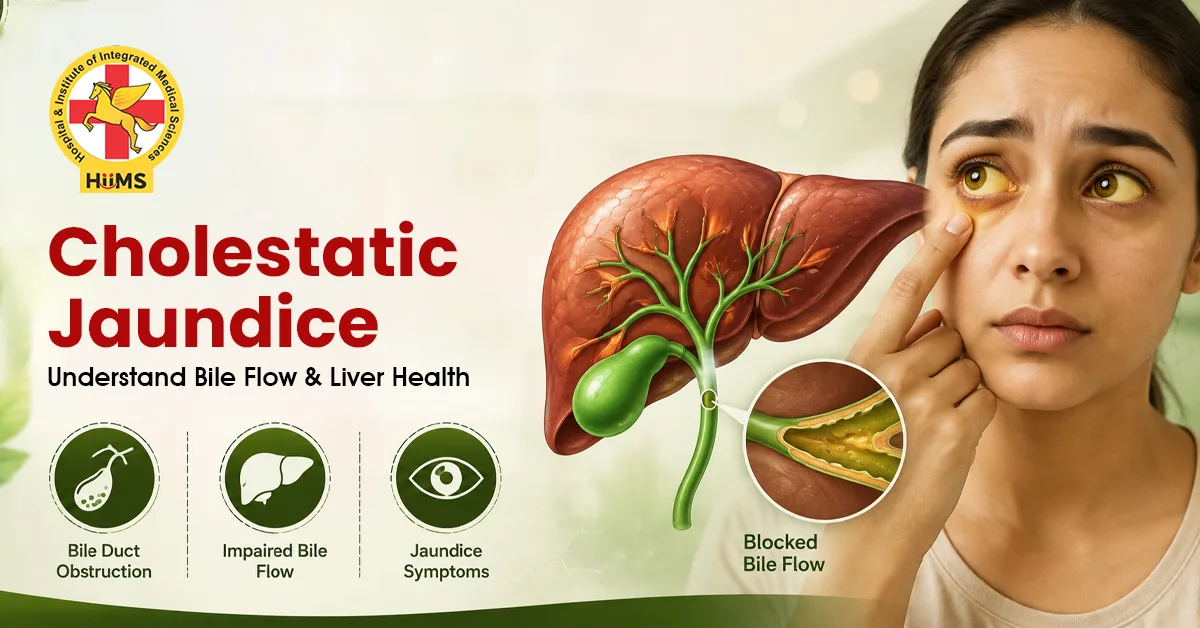

The liver cleans the blood, processes nutrients, and eliminates waste from the body. One of its primary functions is producing bile. Bile travels from liver through bile ducts to the gallbladder and small intestine. Bile helps in the digestion of fats and the elimination of metabolic wastes from body.
When bile moves freely your digestion works smoothly but if bile gets stuck inside the liver or blocked along the bile ducts it backs up into your bloodstream. This backup leads to yellowing of the skin and eyes, severe body itching, and digestive trouble.
Cholestatic jaundice occurs when bile cannot flow properly from the liver into the small intestine. Unlike simple liver cell damage this condition is caused by a slowdown or physical blockage in the bile ducts. Recognising early signs like dark urine, pale stools, and itchy skin helps you take quick action to restore normal liver function.
Table of Contents
What Causes Cholestatic Jaundice
Bile flow can slow down or stop for two main reasons. Doctors divide these causes based on whether the problem happens inside the liver or outside in the ducts.
Causes Inside the Liver (Intrahepatic)
Inside the liver tiny channels collect bile right after liver cells make it. If liver cells get swollen or inflamed, these small channels narrow down –
- Viral Hepatitis – Infections like Hepatitis A, B or C cause liver inflammation that halts bile transport.
- Medication-Induced Stress: Certain prescription antibiotics, anabolic steroids, or drugs can overload liver cell function
- Pregnancy-Induced Cholestasis: Hormonal surges during the third trimester can temporarily slow down bile secretion in susceptible women.
Causes Outside the Liver (Extrahepatic)
Outside the liver larger bile ducts carry bile down to your gut. Physical blockages in these main ducts are major bile duct obstruction causes
- Gallstones: Hardened deposits that slip out of the gallbladder and become lodged in the common bile duct.
- Bile Duct Strictures: Scarring or narrowing of the ducts due to past surgeries, trauma or chronic infection
- External Pressure: Swollen lymph nodes, cysts, or pancreatic inflammation pressing against the main bile duct from the outside.
Early Signs of Cholestatic Jaundice
Recognising the early signs of jaundice helps you address the issue before it causes deeper liver fatigue. When bile cannot enter your gut, your body sends clear warning signals through noticeable cholestasis symptoms:
Pale or Clay Coloured Stools: Bile is what gives your stool its natural brown colour. When bile drainage is blocked, your stool loses its dark pigment and turns pale, light gray, or clay-like.
Dark Tea Coloured Urine: Because trapped bile pigment cannot leave through your stool, it backs up into your blood. Your kidneys filter this extra pigment out, turning your urine dark brown or tea-coloured.
Intense Skin Itching: When bile salts build up in the bloodstream they travel under the skin irritating sensitive nerve endings. This causes intense itching that is not helped by ordinary skin cream
Yellowing of Eyes and Skin: Rising bilirubin levels in your blood cause the whites of your eyes and your skin to take on a yellowish tint.
Digestive Discomfort: Without bile to break down fats, you may experience heavy gas, bloating, floating stools, or nausea after eating fatty meals.
How Doctors Find the Cause?
If you notice yellowing of your eyes or dark urine a clear medical checkup helps pinpoint where the bile flow is getting stuck.
- Targeted Blood Tests: A liver function test for jaundice measures direct bilirubin levels alongside liver enzymes like Alkaline Phosphatase (ALP) and Gamma-Glutamyl Transferase (GGT). High levels of ALP and GGT strongly indicate that bile is struggling to drain through the bile ducts.
- Ultrasound Scan: An abdominal ultrasound lets doctors view your liver, gallbladder, and bile ducts. It instantly shows whether your bile ducts are stretched open by a gallstone or if the blockage is deeper inside the liver.
- Imaging: If the ultrasound shows a blockage doctors may suggest an MRI scan to map out your bile ducts in detail.
Natural Care at Jeena Sikho HiiMS
To treat problems with bile flow, you need to reduce the burden on your liver and help keep your bile thin. Jeena Sikho HiiMS natural care is about internal cleansing, cooling of liver heat, and holistic healing methods for the body.
- Alkaline & Hydrating Nutrition: Eating fresh raw fruits every morning until 12 PM and eating a plate of fresh raw salad before lunch and dinner thins out thick bile. Coconut water and fresh fruit juices help flush out excess pigments without putting strain on your stomach.
- Herbal Support: Ayurvedic herbs help protect liver tissue and promote smooth bile movement. The kutki stimulates bile flow, bhumi amla protects liver cells from inflammation and punarnava helps reduce tissue swelling.
- Panchkarma Detox: Under expert supervision therapies like Virechana (gentle herbal purgation) help clear trapped toxins and stagnant bile from your digestive tract that helping in managing bile flow disorders naturally.
- Reducing Liver Workload: Removing deep-fried snacks, heavy dairy, refined cooking oils, and alcohol gives your liver the rest it needs to rebuild its cellular strength
- Healthy Lifestyle Habits: Maintaining fixed meal timing, going to bed early, taking morning walks and drinking warm water throughout the day keeps your digestion smooth.
How to Prevent Cholestatic Jaundice
Preventing bile stagnation relies on simple daily habits that keep your liver healthy and your bile thin:
- Drink Plenty of Clean Water: Staying hydrated throughout the day prevents bile from becoming thick and sludge-like, reducing the chance of stone formation
- Eat a High-Fiber Diet: Whole grains, green vegetables, and fresh fruits bind to excess cholesterol in your gut, keeping your bile balanced and healthy
- Avoid Oily and Processed Foods: Deep-fried items and refined sugars force your liver to work extra hard, that increase the risk of gallbladder inflammation
- Daily Movement: Regular walking or light exercise stimulates gut contractions, which help your gallbladder empty bile regularly
- Limit Chemical Overload: Avoid taking unnecessary painkillers or unverified supplements that force your liver to filter extra toxins
Conclusion
Your liver is a resilient organ that can heal when given the right care and natural environment. Recognising early signals of cholestatic jaundice like dark urine, pale stools or itchy skin allows you to take action before minor bile slowdowns turn into serious liver trouble.
If you or a loved one are dealing with liver-related concerns, do not wait for symptoms to worsen. Visit your nearest Jeena Sikho HiiMS centre or book a VOPD (video consultation) to consult with expert natural health physicians. Experience customised diet plans, gentle detox therapies, and root-cause healing designed to help your liver recover naturally.

FAQs
Q1. What is the main difference between regular jaundice and cholestatic jaundice?
Regular jaundice happens when red blood cells break down too fast, or liver cells are damaged. Cholestatic jaundice happens when bile production slows down or bile gets trapped inside the bile ducts.
Q2. What are the most common early cholestasis symptoms I should watch out for?
The most common early cholestasis symptoms include dark tea-coloured urine, pale clay-coloured stools, intense skin itching without a rash, and yellowing of the eyes.
Q3. What are the primary bile duct obstruction causes that require medical attention?
The primary bile duct obstruction causes include gallstones in the common bile duct, surgical scar strictures, duct inflammation and external pressure from tissue swellings or cysts.
Q4. What role does a liver function test for jaundice play?
A liver function test for jaundice measures ALP and GGT helping doctors confirm whether jaundice is caused by cholestatic jaundice or a blood related condition.
Q5. What natural lifestyle shifts help in managing bile flow disorders like cholestatic jaundice safely?
Shifts for managing bile flow disorders associated with cholestatic jaundice include following an alkaline diet, staying well-hydrated, avoiding alcohol, and reducing metabolic stress on the liver.
Disclaimer: The information provided on this blog is for general educational and informational purposes only. It is not intended to replace professional medical advice, diagnosis, or treatment. Always consult a qualified healthcare professional before making any changes to your diet, lifestyle, or treatment plan. Individual results may vary.