
Though cancer is a large group of more than 100 different genetic diseases, it actually sounds like a threat. India has 1.56 million new cancer cases and 901,828 deaths in 2024, with 3.32 million people living within five years of a diagnosis. Most people think cancer is incurable. But the fact is, the cure depends upon the stage of the cancer.
Understanding Cancer stages 0 to IV is an important first step towards answering these questions. The stage of cancer helps doctors understand how far the disease has progressed and plan appropriate treatment. Alongside medical care, many patients also explore Ayurveda, nutrition, and lifestyle changes to improve their overall well-being during this challenging journey.
If the cancer is detected at an early stage, it has a higher treatment success rate. Knowing the Cancer stages 0 to IV becomes very important for cancer patients so that they can make wise decisions within the time period.
At HIIMS, the conversation around cancer management includes the importance of individualised care, dietary guidance, and supportive wellness practices. But any approach must rest on accurate medical information, realistic expectations and the safety of the patient. You can always talk to experts for precise guidance. In this blog, we will discuss the Different stages of cancer and the role of Ayurvedic support that can help in Cancer management.
Understanding the Growing Cancer Concern in India
Lifestyle patterns can contribute to certain cancer risk factors, including obesity, physical inactivity, tobacco use, and unhealthy alcohol consumption. Air pollution and some workplace exposures may also increase the risk of particular cancers.
However, it is important to understand that stress and a busy lifestyle do not directly explain every cancer diagnosis. Cancer develops through a complex combination of factors, including ageing, genetic changes, environmental exposures, infections, tobacco use, and individual medical history. Some people develop cancer despite following healthy habits.
Another concern is that people sometimes postpone medical consultations because of work commitments, fear, financial concerns, or the absence of obvious symptoms. As a result, certain cancers may be detected only after they have progressed.
Regular health check-ups when appropriate, recommended cancer screening, awareness of warning signs, and timely medical evaluation can help people take a more proactive approach to their health.
Want to understand the early warning signs of cancer? Explore our expert-written cancer awareness resources.
What Does Indian Research Tell Us About Cancer?
Cancer is a major public health problem in India and official estimates reflect the magnitude of the problem.
As per the Indian Council of Medical Research–National Cancer Registry Programme (ICMR-NCRP), India had an estimated 14,61,427 new cancer cases in 2022 as compared to 13,92,179 estimated cases in 2020. The number could rise to about 15.7 lakh cases by 2025, the programme forecast.
These are statistical estimates, not a count of each year’s individually confirmed cases. However, they do stress the need for greater awareness, early diagnosis and access to appropriate treatment.
In India, several risk factors deserve special attention:
- Tobacco use: Smoking and smokeless tobacco are important preventable causes of cancer, including lung and mouth cancers.
- Some of the chronic infections that cause cancer are Human papillomavirus and hepatitis.
- Any alcohol is unsafe. Drinking alcohol may increase your risk of cancer.
- Diet: A poor diet, obesity, and lack of exercise can increase the risk of cancer.
- Age factor- Older people are more likely to get cancer. Some people are born with genes that predispose them to developing certain types of cancer.
The practical takeaway is straightforward: cancer prevention and early detection matter, but no one should be blamed for getting the disease.
Sources: ICMR-NCRP cancer incidence estimates ICMR cancer registry reports
How Does Cancer Start and Spread?

Our body contain billions of cells that grow, divide, and replace old or damaged cells. Sometimes, changes in a cell’s genetic material cause it to behave differently from normal cells. These abnormal cells may grow and divide uncontrollably, eventually leading to cancer.
As cancer develops, it may grow into nearby tissues or spread to nearby lymph nodes. In some cases, cancer cells travel through the blood or lymphatic system to other parts of the body. This process is called metastasis.
The way cancer develops and spreads varies depending on its type. Understanding this process helps explain why doctors determine the stage of cancer before planning treatment.
What are the different stages of cancer?
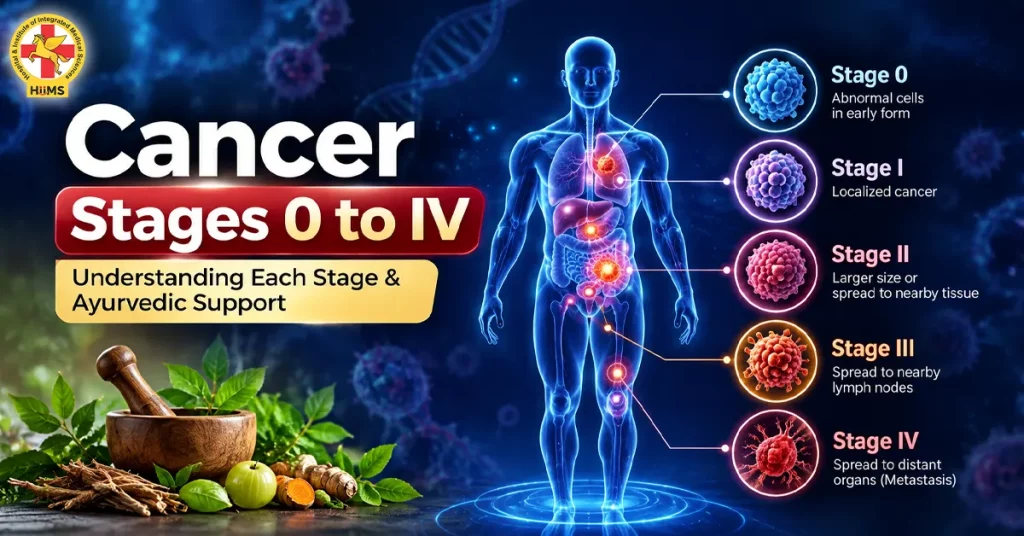
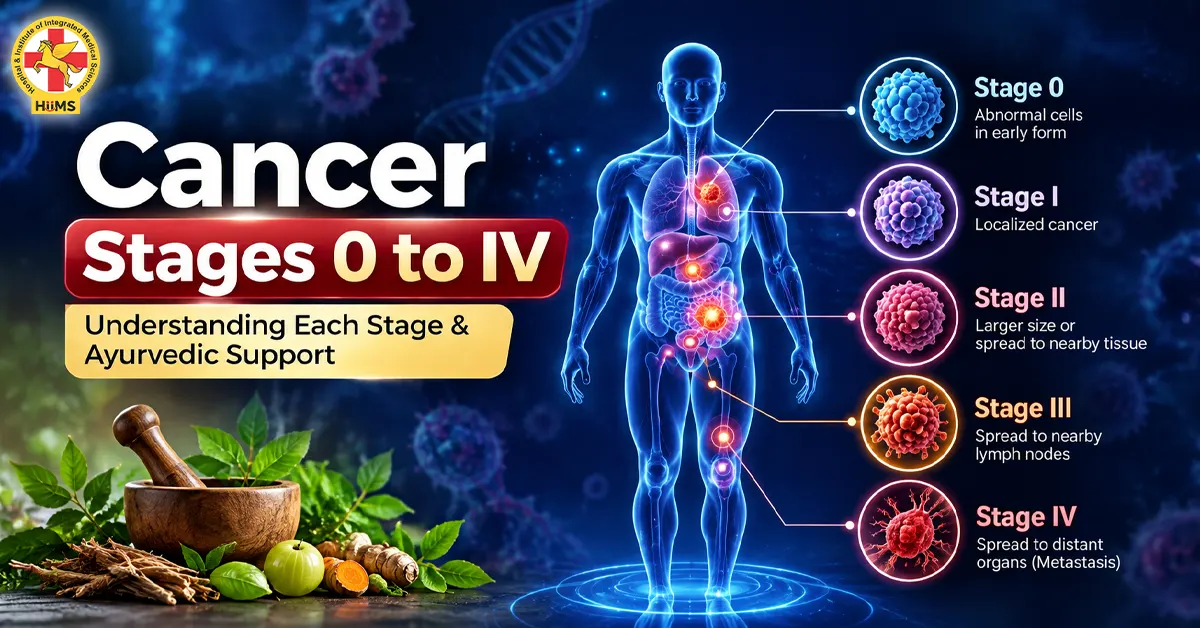
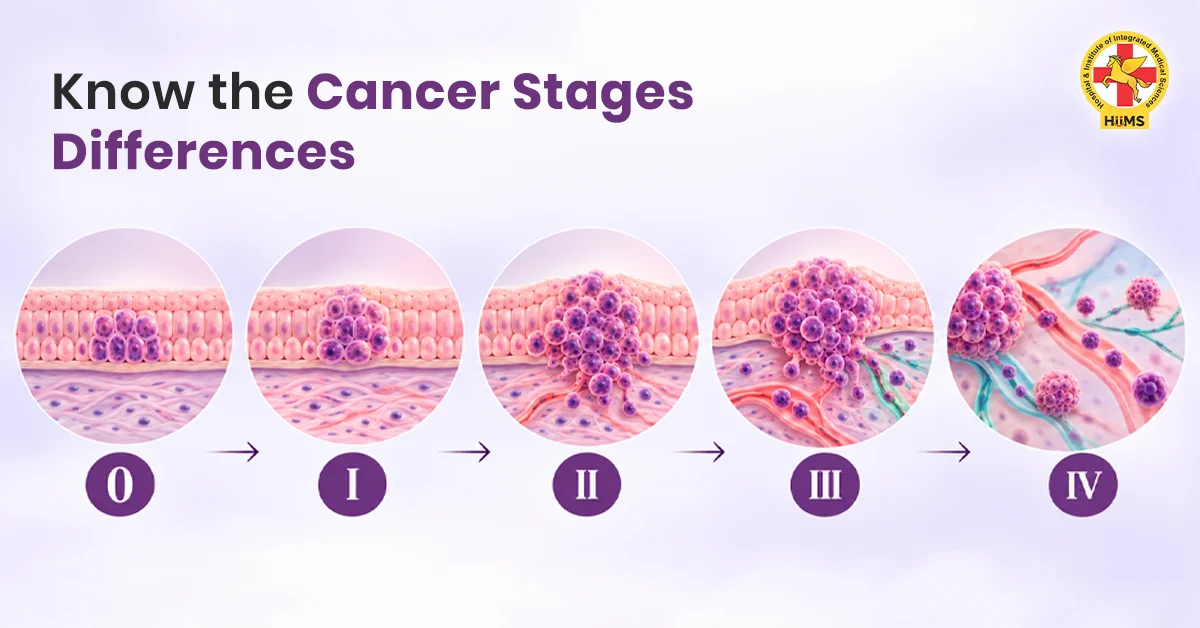
Cancer staging tells us how large a cancer has become and whether it has spread by the time it is diagnosed. Staging is used for solid tumours such as breast, bowel and lung cancers. Blood cancers, including leukaemias and lymphomas, behave differently and are classified in other ways. There are 5 different stages of cancer, typically known as Cancer stages 0 to IV.
Stage 0
In this stage, abnormal or non-invasive cells are present. Known as carcinoma, this is a condition where cells have not spread to nearby tissues. Most patients recover fully in this stage.
Stage 1
At this stage the tumour is small and localised. The cancer is limited to the organ of origin and has not spread to lymph nodes or other parts of the body. In such cases, treatment still works very well.
Stage II
In this stage, the tumor becomes large and starts moving locally. The cancer may have grown larger or started spreading into nearby lymph nodes, but it remains inside the regional area. Patients with strong body and high will power shows positive response to treatments.
Stage III
In this stage, the cancer is more expansive. The tumor has grown deeper into surrounding tissues and involves more regional lymph nodes, but it has not traveled to distant organs. There is little hope of getting fully cured.
Stage IV
This stage is known as advanced or metastatic cancer. The cancer has spread through the blood or lymph system to distant organs or remote parts of the body. Any treatment will focus on managing the disease and improving quality of life. The treatment success rate drops.
Every cancer stage requires a different approach. Speak with our experts to understand the next steps based on your condition.
What Is the Conventional Approach to Cancer Treatment?
Conventional cancer treatment is based on the type of cancer, its stage, the overall condition of the patient, and clinical evidence. Treatment may include, depending on the diagnosis:
- Surgery: If the tumor is suitable and possible, it is removed.
- Chemotherapy: This therapy uses drugs and several medicines to kill cancer cells or to stop them from growing.
- Radiation therapy uses radiation to kill the cancer cells.
- Immunotherapy: In some cancers, it works with the immune system to recognize or attack cancer cells.
- TARGETED THERAPY: Kills cancer cells by targeting specific changes in cancer cells that help the cancer grow
- Hormone therapy: Stops or blocks hormones that some cancers need to grow.
Not all patients respond to all therapies. For some cancers, surgery alone may be sufficient, while others benefit from a combination of therapies.
Some patients benefit a lot from Ayurvedic therapies before or after undergoing conventional treatment. Ayurveda helps detoxify deeply at the cellular level, so it helps generate new body cells. It works on the root cause of the disease; hence, some patients’ health responds positively to Ayurvedic treatment. Some patients who have already undergone surgeries report relief in body pain, energy level, and other side effects caused by conventional treatment, while others who reach Ayurveda at an early stage have been found to report their treatment as successful.
In such cases, it becomes very important to know broadly about Ayurveda and cancer care. We must know if there is valid Ayurvedic support for Cancer stages 0 to IV.
Is there any Ayurvedic support for cancer patients?
Ayurvedic support does not mean surgery or chemo, It works on a deeper level. It works on the root cause of the disease and helps rejuvenate mind, body, and soul. Ancient Ayurvedic manuscripts do not use a single term like “cancer”. Instead, the Sushruta Samhita and Charaka Samhita describe clinical entities that closely mirror benign and malignant tumors.
How does Ayurveda and cancer care work hand in hand?
Ayurveda works on the cellular level and helps manage cancer. It stands on four vital pillars of Aahar, Vihar, Shaman, and Shodhan. This approach works on diet, lifestyle, herbal support, and Ayurvedic therapies that help manage cancer.
Ayurvedic diet for cancer support
In Ayurveda, Ayurvedic diet for cancer support is an important part of cancer management. Everyone has a specific constitution called Prakriti (Doshas). The main three doshas are: Vata, Pitta, and Kapha. At HiiMS, the expert team of doctors knows your body’s doshas, which is essential to creating a diet plan to help avoid imbalances that could cause diseases such as cancer.
Ayurveda is all about a plant-based diet, which is nutritious, easily digestible, and helps in body detoxification. An Ayurvedic diet plan is created only after knowing the body constitution. The Ayurvedic diet plan includes-
Herbs
Many herbs/ plants contain bioactive compounds that are vastly studied for their ability to minimise cell damage, slow tumor growth, or ease treatment side effects. Some well-known herbs are: Ashwagandha, Guduchi, Amalki, and Holy Basil.
Vegetables
A high vegetable diet is one of the best ways to reduce your risk of developing cancer and support overall cellular health. Broccoli, cauliflower, Brussels sprouts, cabbage, kale, bok choy, radishes and arugula dominate the plate. Add dark green leafy vegetables, onion and garlic to it.
Fruits
Packed with vitamins, fiber, and potent antioxidants that shield cells from DNA damage and stop tumor growth, fruits cannot treat cancer on their own. Blueberries, Strawberries, Blackberries, and raspberries, which are part of the HiiMS Ayurvedic diet for cancer management, are widely considered the top choices by oncologists. Citrus Fruits like Oranges, Lemons, Limes, and grapefruits also support the immune system, lower oxidative stress, and help the liver neutralize carcinogens.
Juices
Ayurvedic Cancer Detox Juice– This Jeena Sikho HiiMS special detox juice is prepared from banana leaves, peepal leaves, guava leaves, betel leaves, mint, coriander, curry leaves, green leafy vegetables, amla, ginger, beetroot, and alkaline water. It is taken in the morning on an empty stomach. The fibre helps cleanse the digestive system. Antioxidants reduce inflammation. Digestion gets better over time, and you feel more energized.
Whole Grains and Legumes
Brown rice, whole wheat, oats and quinoa are all great sources of fiber. Fiber helps digestion, prevents constipation and supports a healthy gut microbiome. Beans, lentils and peas are plant-based proteins that fuel the body and help preserve strength. They are also rich in fibre, vitamins, and minerals.
Shaman and Shodhan
Shodhana (purification or cleansing)
- Removes accumulated, aggravated doshas (and toxins, or ama) from the body.
- Best for strong or deep-seated imbalances in people with enough physical strength.
- The classic form is Panchakarma: Vamana (therapeutic emesis), Virechana (purgation), Basti (medicated enema), Nasya (nasal administration), and Raktamokshana (bloodletting, in some traditions).
- It is usually preceded by Purvakarma (preparation: oleation and sudation) and followed by Paschatkarma (dietary and lifestyle recovery).
Shamana (palliation or pacification)
- Calms and balances the doshas without expelling them.
- Best for milder imbalances, or for people too weak, elderly, or young for cleansing.
- Methods include herbal medicines, diet, digestive stimulants (Deepana, Pachana), fasting, sunlight, exercise, and lifestyle changes.
The Ayurvedic Herbal Way for Cancer Support
Ayurvedic support for cancer patients includes therapies that can help provide both physical and emotional relief to cancer patients. Therapies like Panchakarma, hot water immersion, and other supporting therapies have shown a positive impact on the patients. Acharya Manish ji’s cancer research therapy”Golden Therapy,” has shown tremendous cell rejuvenation among many cancer patients.
Ayurveda equally emphasises emotional well-being as an essential part of holistic health. In cancer management, yoga, meditation, gentle natural therapies and emotional support can be very helpful in coping with stress, anxiety and the emotional challenges of the journey. Deep breathing, mindfulness and relaxation practices can improve sleep, promote calmness and contribute to overall quality of life. These methods should be adapted to the physical condition of the individual patient and combined with appropriate medical care. They can’t cure cancer but they can supplement conventional treatment and make patients feel more supported during their recovery.
Ayurvedic Wellness Products to Explore During the Cancer Journey
The Jeena Sikho Cancer Care Support Combo brings together six products for different aspects of everyday wellness, including digestion, nutritional intake, and vitality. Here is a quick look at each product and its intended role.
- Can Care: Formulated to complement everyday nutritional intake and cellular health.
- Gut Care: Intended to support digestive comfort and gut health.
- Sea Buckthorn Juice: Adds fruit-based nutrients to your daily diet.
- Pet Yakrit Pleeha Shuddhi Kit: Formulated for digestive, liver and bowel wellness.
- Pure Shilajit: Traditionally used in wellness routines focused on energy and vitality.
- Triphala Ras: Commonly used to support digestion and regular bowel movements.
Important: These products are not cancer treatments and should not replace prescribed care. If you are undergoing cancer treatment, consult your oncologist/doctor before using herbal products or supplements

Should Ayurvedic support be Considering during your cancer journey?
It’s an old proverb that healing begins with willpower. It is very important to maintain mental stability during any ongoing disease. Remember, Ayurveda helps strengthen willpower, manage emotional setbacks, and improve focus. Not only that, a complete Ayurvedic treatment plan works on the entire body. When an Ayurvedic diet, herbs, therapies, and lifestyle are followed with discipline, the body responds positively to natural healing. Ayurveda is all about preparing a person’s mind and body to fight back and develop strong immunity. There is no harm in considering Ayurveda support during your cancer journey because it is the safest way to holistic healing. During the early Cancer stages 0 to IV, the chances are very high of getting completely cured if proper Ayurvedic cancer care is followed. However, it is important to understand that not every plan suits everybody. It is important to get your Ayurvedic treatment from an Ayurvedic cancer expert.
Contact HIIMS to enquire about a personalised consultation. Bring any medical reports, pathology reports, current medication list and details of your treatment so that your needs can be reviewed more meaningfully.
Make your choices wisely. Make your choices based on reliable information and sound medical advice and a plan of care that emphasizes safety and well-being.”
Conclusion
Before getting cancer care support, it is very important to rule out the stage, body type, and result expectations.
Understanding Cancer stages 0 to IV can help patients and families approach a difficult diagnosis with greater clarity. It ranges from Stage 0, where abnormal cells have not spread to nearby tissue, to Stage IV, when the cancer has spread to other parts of the body. Each stage requires individualized assessment and appropriate care.
When the focus is on safe supportive practices, personalized nutrition, mental health, and improved quality of life, Ayurveda and cancer care can be looked at together. However, Ayurvedic treatment should not be promoted as a proven cure for cancer or used instead of recommended oncology treatment.”
If you are a patient who is interested in an Ayurvedic supportive-care plan, you can ask about consultation, dietary guidance and lifestyle support. Before you start any herbs or therapies, please discuss the plan you are considering with your oncology team to ensure it is appropriate for your diagnosis and treatment. Always reach out to authentic Ayurvedic centers in case you opt for Ayurvedic treatment. Ayurveda uses a multi-layered framework to restore this balance and strength. For personalized dietary, lifestyle, and Ayurvedic guidance during your cancer journey, you can book a consultation with HiiMS Cancer Experts.
FAQ’s
Q1. What are the different stages of cancer?
Cancer stages range from 0 to IV, indicating how far cancer cells have developed or spread in the body.
Q2. Can cancer be cured in the early stages?
Many early-stage cancers have effective treatment options, but outcomes depend on the cancer type and individual health.
Q3. Can Ayurveda support patients during cancer treatment?
Ayurveda may support overall well-being, but it should complement recommended cancer treatment, not replace it.
Q4. What foods are helpful for cancer patients?
A balanced diet with fruits, vegetables, whole grains, and protein-rich foods can help maintain strength during treatment.
Q5. Is Ayurvedic treatment safe during chemotherapy?
Some herbs and Ayurvedic therapies may interact with cancer medicines. Always consult your oncologist before starting them.
Ayurvedic Cancer Care Products
100% natural, certified Ayurvedic formulations crafted for targeted cancer wellness.



Disclaimer: The information provided on this blog is for general educational and informational purposes only. It is not intended to replace professional medical advice, diagnosis, or treatment. Always consult a qualified healthcare professional before making any changes to your diet, lifestyle, or treatment plan. Individual results may vary.