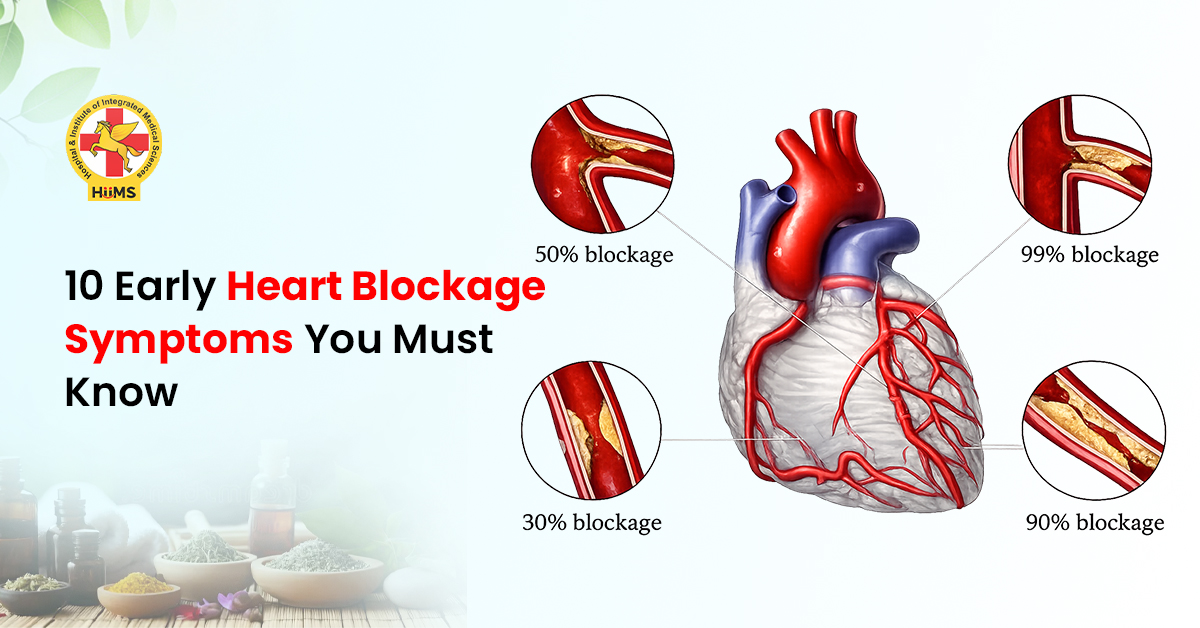

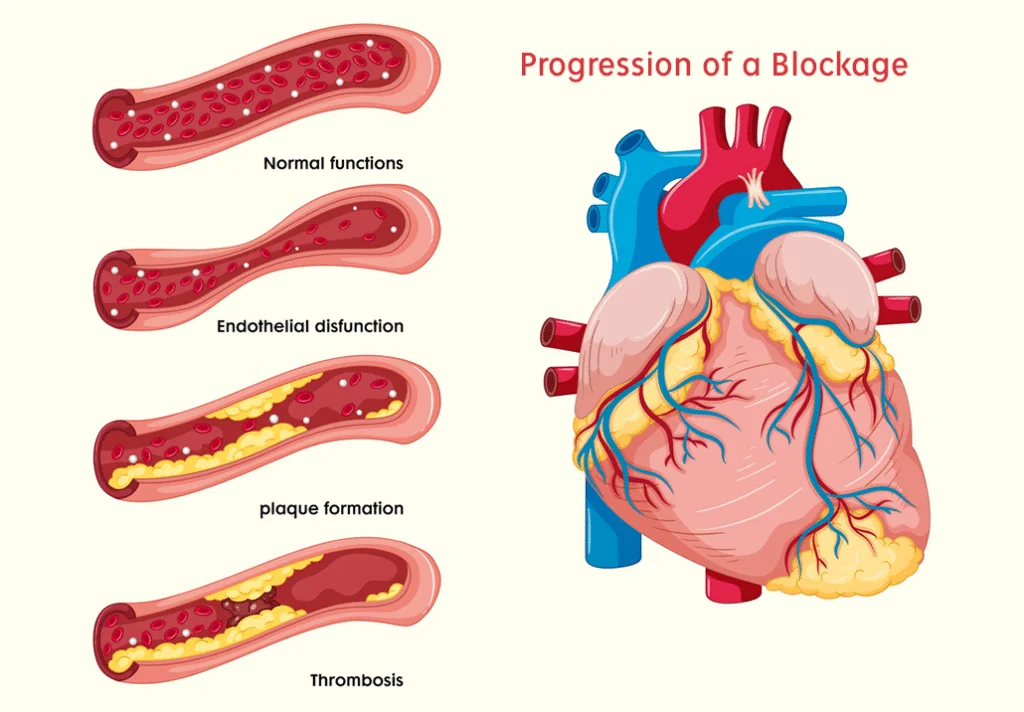
Heart blockage happens when fat and cholesterol collect inside the blood vessels that supply blood to the heart. Because of this narrowing, blood flow becomes less. The heart does not get enough oxygen. This condition develops slowly in most people. It does not show severe signs in the beginning.
Many people ignore early heart blockage symptoms because they feel small or common. Sometimes they think it is gas, weakness, age factor, or stress. But repeated symptoms should not be ignored. Early identification helps in timely heart disease treatment and reduces the chance of serious heart disease. When signs are neglected for a long time, it may result in an emergency situation requiring heart attack treatment. So it is better to understand early warning signs clearly.
1. Chest Pain or Pressure
Chest pain is common in heart blockage, but it is not always sharp pain. Many patients describe heaviness, tight feeling, or pressure in the centre of chest. It may come during walking or physical work. After resting, it may reduce. This pattern is important. If chest discomfort keeps repeating, medical check-up is needed.
2. Shortness of Breath
When blood flow to heart muscle reduces, pumping becomes less effective. Because of this, oxygen supply to the body is reduced. The person may feel breathless while climbing stairs or walking short distances. Sometimes breathlessness happens even while resting. This symptom slowly increases over time.
3. Continuous Tiredness
Unusual tiredness without heavy work can be an early sign. Due to reduced circulation, body organs do not receive proper oxygen. The person feels low energy throughout the day. Even normal activities feel difficult. This type of tiredness does not improve fully with rest.
4. Pain Spreading to Arm or Neck
Heart blockage pain can travel to the arm, neck, jaw, or back. It usually feels like a dull ache. Sometimes there is numbness or heaviness. Many people ignore this sign because pain is not directly in chest. But such spreading pain should be evaluated.
5. Sweating Without Clear Reason
Sudden sweating, especially cold sweating, can occur. It may not be related to heat or exercise. This happens when the body reacts to reduced blood supply. If you feel sweating with chest pain or weakness, it is better to get checked.
6. Dizziness or Feeling Faint
Less blood flow to the brain may cause dizziness. The person may feel light-headed while standing up. In some cases, brief fainting may occur. This shows circulation problems and should not be ignored.
7. Irregular Heartbeat
Some people feel their heartbeat is fast, uneven, or skipping beats. This condition is called palpitation. It happens when the heart struggles to pump properly. Repeated irregular heartbeat needs medical evaluation.
8. Swelling in Feet
When heart pumping becomes weak, fluid may collect in the lower part of the body. Swelling in feet or ankles may be noticed, especially in the evening. Many think it is due to standing for a long time. But if swelling continues, heart check-up is required.
9. Nausea or Upper Stomach Discomfort
Heart blockage can sometimes cause nausea or heaviness in the upper abdomen. It may look like indigestion. This is more common in elderly people and women. If it happens repeatedly, along with other symptoms, it should be checked.
10. Reduced Physical Capacity
If a person who was active earlier now feels difficulty in walking normal distance, it may be a sign of reduced heart function. Gradual decrease in stamina is an early symptom. Many ignore it thinking it is normal ageing.
Ayurvedic Support at Jeena Sikho HiiMS
At Jeena Sikho HiiMS, heart care is supported through Ayurvedic methods along with proper medical assessment. Better blood flow and proper body balance are the main goals of the treatment.
Holistic Ayurvedic Treatments & Therapies
Panchakarma includes Vamana, Virechana, Basti, Nasya and Raktamokshana. These five methods help remove toxins and support blood flow.
Hridaya Basti involves the controlled application of warm herbal oil over the chest region to promote relaxation and nourishment. Structured daily routines and seasonal regimens are also suggested to support balance and reduce stress on the heart.
Diet and Lifestyle Advice
Simple dietary habits play an important role in heart disease treatment. Fresh fruits, vegetables and whole grains are preferred. Oily and processed food should be limited. Light yoga and breathing exercises may help improve circulation when done under guidance.
Conclusion
Early heart blockage symptoms are often mild and gradual. Because they are not severe in the beginning, many people ignore them. This delay increases risk of serious heart disease. Timely medical consultation at a proper heart hospital is important. Early diagnosis reduces chances of emergency heart attack treatment.
Repeated chest discomfort, breathlessness, unusual fatigue, or radiating pain should not be ignored. At Jeena Sikho HiiMS, care is planned after proper evaluation and personalised Ayurvedic support is provided under supervision for long-term benefit.

FAQs
Q1. Can heart blockage develop slowly?
Yes, it usually develops gradually over years.
Q2. Is chest pain always severe in heart blockage?
No, it may feel like pressure or heaviness.
Q3. Can tiredness be an early symptom?
Yes, continuous unexplained tiredness can be a sign.
Q4. Is swelling in feet related to heart problems?
Yes, it may happen when pumping becomes weak.
Q5. When should I visit a heart hospital?
If the symptoms keep coming back or become stronger, it is better to get checked early.
Ayurvedic Heart Care Products
100% natural, certified Ayurvedic formulations crafted for targeted heart wellness.


Disclaimer: The information provided on this blog is for general educational and informational purposes only. It is not intended to replace professional medical advice, diagnosis, or treatment. Always consult a qualified healthcare professional before making any changes to your diet, lifestyle, or treatment plan. Individual results may vary.