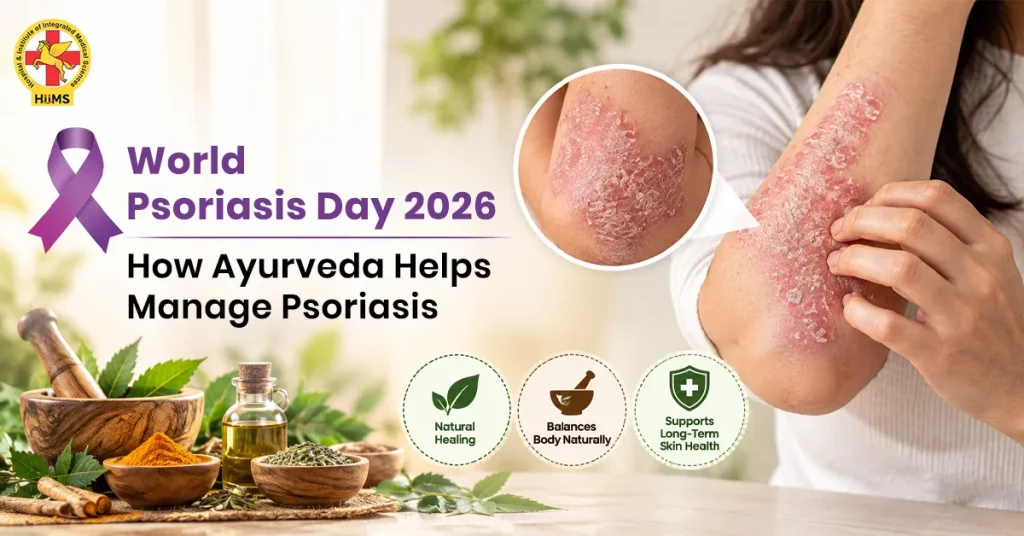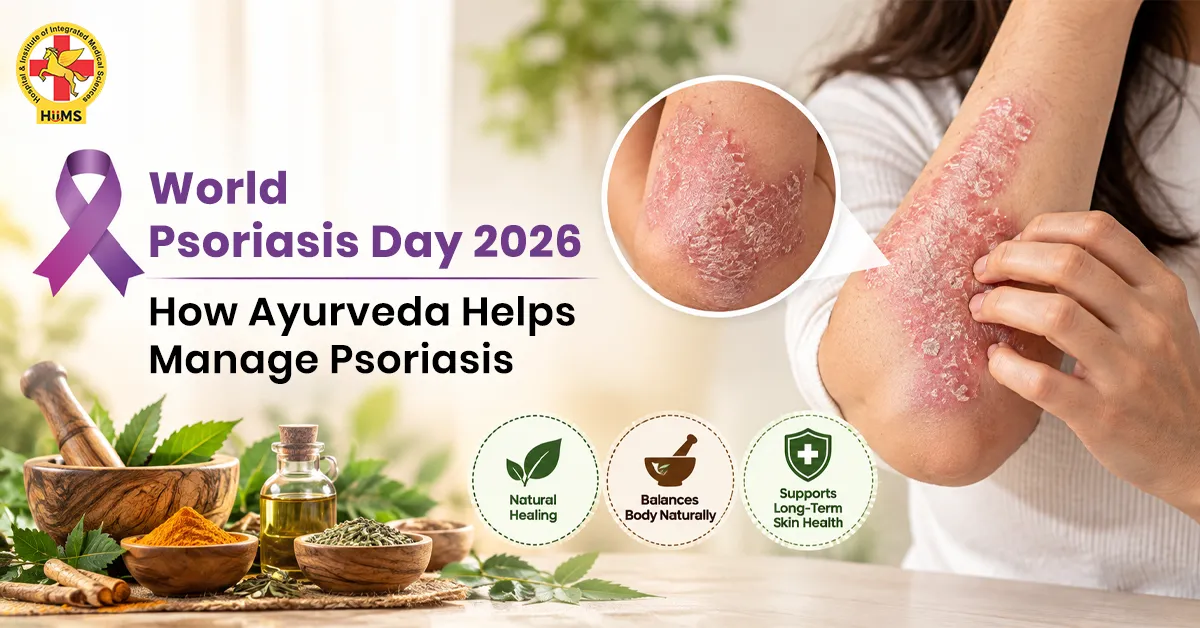

Psoriasis is more than a skin problem. It brings red patches, thick scales, and itching that can make a person feel tired and shy. Many people hide their skin and stop meeting friends. World Psoriasis Day, observed every year on 29 October, asks the world to see the person behind the patches.
This year the global theme is “Look Beyond My Skin”. It reminds us that psoriasis also affects sleep, mood, work, and family life. Young people, in particular, say they often feel alone and misunderstood.
Psoriasis is common across India, yet many patients wait too long for proper care. Some use strong creams for years. Others take powerful tablets and worry about side effects.
Ayurveda offers a gentler path. It looks at the whole body, the daily routine, the food, and the mind. In this blog, we explain the causes, the treatment options, the research and the natural care steps that may help you manage psoriasis with confidence.
Table of Contents
World Psoriasis Day: Raising Awareness About Psoriasis
World Psoriasis Day was started in 2004 by the International Federation of Psoriasis Associations. Every 29 October, people in many countries use it to share facts and fight stigma. The World Health Organization reports that psoriasis affects about 100 million people worldwide. In 2014, the World Health Assembly passed a resolution to raise awareness and reduce stigma.
What Is Psoriasis?
Psoriasis is a long-lasting inflammatory condition that may affect the skin, nails, and joints. It does not spread by touch, by sharing food, or by sitting next to someone. Every person’s psoriasis looks different, so every person needs care that fits them.
Common types of psoriasis
Doctors group psoriasis into several types, each with its own look, location, and symptoms.
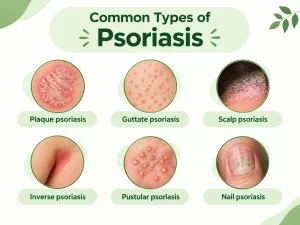
- Plaque psoriasis: Raised, scaly patches on the elbows, knees, scalp, and lower back.
- Guttate psoriasis: Small, drop-shaped spots that may appear after an infection.
- Scalp psoriasis: Itching, scaling, and thick patches on the scalp.
- Inverse psoriasis: Smooth, inflamed patches in skin folds such as the armpits and groin.
- Pustular psoriasis: Pus-filled bumps on inflamed skin.
- Nail psoriasis: Pitting, thickening, colour change or lifting of the nail.
The type, place, and severity of psoriasis help a qualified doctor choose suitable care.
Recurring skin patches or itching? Consult a qualified doctor

How Psoriasis Affects Daily Life
Psoriasis goes beyond the patches. Common psoriasis symptoms and causes show up in everyday life as:
- Dry, scaly, itchy patches
- Cracked skin
- flaky scalp
- Nail changes and
- Sometimes joint pain
On darker skin, patches may look purple, brown, or dark grey. Itching disturbs sleep, sore skin makes daily tasks harder and worry about stares can keep people away from social life. Scientists do not fully know why psoriasis starts.
Factors That May Trigger Flare-Ups
The National Institute of Arthritis and Musculoskeletal and Skin Diseases (NIAMS) says it involves a mix of genes and outside factors.
- Physical or emotional stress
- Infections, including throat infections
- Skin injury, sunburn, or repeated rubbing
- Smoking and heavy alcohol use
- Some medicines for other health problems
- Cold and dry weather
Many people notice flares after stress, poor sleep, or a change in weather.
Did You Know? Key Facts About Psoriasis
Psoriasis is more common than most people think. These numbers show how many people it affects and when it often begins.
- 125 million+ people worldwide live with psoriasis or psoriatic arthritis.
- 2 to 3 per cent of the world’s population has psoriasis.
- 0.44 to 2.8 per cent adult prevalence in India, based on hospital studies.
- Over 90 per cent of psoriasis cases are the chronic plaque type.
- Ages 15 to 25 and 50 to 60: the two peak periods when psoriasis often begins.
- 2004: the year of the first World Psoriasis Day, now joined by over 70 countries.
On World Psoriasis Day, the message is simple. Listen to people before you judge them. A kind word from family, teachers, and colleagues removes a lot of fear.
How Is Psoriasis Usually Managed?
Care depends on the type, the body area, and the severity. The aim is to calm inflammation, ease discomfort and protect the skin. Each option has benefits and risks, so a qualified doctor must choose among them.
| Treatment option | What to know |
| Moisturisers | Soften dry skin and slow moisture loss. |
| Steroid creams | Ease inflammation and itching. The American Academy of Dermatology lists thinning skin, stretch marks, and spider veins as possible effects, mainly with strong creams on thin skin or wrong use. |
| Vitamin D creams and other topical medicines | May help patches but can cause local irritation. |
| Light therapy | Uses controlled ultraviolet light. It needs supervision, because too much exposure may burn the skin. |
| Tablets and injections | Used for wider disease. An Italian review found that methotrexate side effects such as nausea, vomiting, and raised liver enzymes affect more than 10 percent of patients. |
WebMD also notes that the benefit of cyclosporine usually ends when a person stops it, and experts do not advise using it for more than a year at a time.
The Growing Interest in Natural Approaches to Psoriasis
Many people use psoriasis medicines safely under medical supervision. The concern begins when medicines are used wrongly, continued without review, or stopped suddenly. Regular blood tests, repeated relapses, and the fear of lifelong treatment also weigh on patients.
Doctors often see people start looking for gentler, supportive options at this stage. This is where a traditional approach such as Ayurveda enters the conversation. Even then, choose it with full information about the evidence and the safety of each product.
How Ayurveda Sees Psoriasis
Ayurveda describes psoriasis under Kushta, the group of skin diseases. Most experts match it with Kitibha Kushta. According to a case report in PubMed Central, Ayurvedic texts place psoriasis among the Vata and Kapha types of skin disease.
Ayurveda does not treat only the patch. It asks deeper questions.
- Is digestion weak or irregular?
- Is the blood impure because of wrong food and habits?
- Is stress disturbing sleep and mood?
- Which dosha is leading the problem?
In Ayurveda, weak digestion creates toxins called ama. These toxins disturb the doshas and spoil the blood and skin tissue. So the care plan aims to clear the toxins, calm the doshas, and rebuild the skin from the inside.
Research on Ayurvedic Treatment for Psoriasis
Modern studies on Ayurvedic treatment for Psoriasis are growing. Here is what some of them report.
- A multicentre study in the Journal of Research in Ayurvedic Sciences tested Panchakarma, Takradhara, and Rasayana in plaque psoriasis. Authors reported relief in symptoms, PASI scores (Psoriasis Area and Severity Index, a doctor’s score of severity), and quality of life.
- A two-year case report in the Journal of Ayurveda and Integrative Medicine described one person with plaque and erythrodermic psoriasis who did well with Ayurvedic medicines, a strict diet, and regular follow-up. No side effects were reported.
- A case series from the University of Colombo used Virechana, a gentle cleansing therapy, in Pitta-type psoriasis. The authors called the results promising.
Ayurvedic care should be guided by a qualified practitioner. Do not stop prescribed medicines without consulting your dermatologist.
How Jeena Sikho HiiMS Approaches Psoriasis Care
At Jeena Sikho HiiMS, care begins with a calm and detailed talk. The doctor listens to your history, your food habits, your sleep, and your stress. Then the doctor examines your skin and your digestion.
Based on this, the doctor designs a personal plan. Ayurvedic care at Jeena Sikho HiiMS usually follows three steps. First comes Shodhana, which means cleansing. Then comes Shamana, which means calming with medicines and diet. Finally, Rasayana therapy rebuilds strength.
Core therapies offered at Jeena Sikho HiiMS
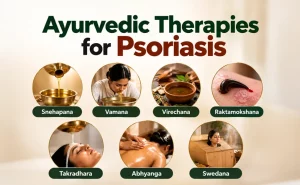
- Snehapana: The patient drinks medicated ghee in small, rising amounts to soften and loosen toxins.
- Vamana: Controlled, medicated vomiting that clears excess Kapha.
- Virechana: A gentle, medicated purge that clears excess Pitta from the gut and blood.
- Raktamokshana: A traditional method to remove impure blood. Only trained doctors perform it.
- Takradhara: A soothing stream of medicated buttermilk poured over the forehead to calm the mind.
- Abhyanga: A gentle massage with warm herbal oil to nourish the skin and calm the body.
- Swedana: A mild herbal steam that opens the skin channels and helps the body release toxins.
Our doctors choose these steps after checking your body type, your digestion, and the stage of your disease. No two people get the same plan.
The aim is simple: to treat the root cause of the disease. We work to calm the flare, support the body from inside, and help you build habits that protect your skin in the future.

Ayurvedic Remedies for Psoriasis: Herbs and Home Support
Ayurveda has used certain herbs for skin problems for centuries. Case reports in the research mention several of them.
- Neem: Traditionally used to purify the blood and soothe itching.
- Guduchi: Used to support immunity and digestion.
- Manjistha: Known as a blood cleanser in classical texts.
- Haridra (turmeric): Valued for calming swelling and redness.
- Khadira: A classical herb for many skin conditions.
- Aloe vera and coconut oil: Used on the skin to ease dryness.
Please do not self-medicate with these herbs, especially in strong forms. Some herbs do not suit every person. A qualified Ayurvedic doctor will select the right herb, form, and dose for you.
Ayurvedic Diet for Psoriasis
In Ayurveda, food is medicine. A good diet keeps digestion strong and the blood clean. Ayurvedic doctors also warn against viruddha ahara, which means food combinations that disagree with each other.
| Foods that usually help | Foods that often worsen the skin |
| Fresh, warm, home-cooked meals | Fried, oily, and very spicy food |
| Bitter greens such as bitter gourd, fenugreek, and spinach | Packaged snacks, bakery items, and sugary drinks |
| Moong dal, lauki, tori, and other light vegetables | Curd at night and sour foods in excess |
| Ghee (Desi Cow’s) in small amounts, as your doctor advises | Milk with fish, or milk with salty and sour items |
| Turmeric and cumin in daily cooking | Alcohol and tobacco |
| Plenty of warm water |
– |
No single diet suits everyone. Food triggers differ from person to person.
Consult an Ayurvedic doctor for a diet plan suited to your condition.
Natural Ways to Manage Psoriasis Every Day
Daily habits shape the skin more than most people think. The following natural ways to manage psoriasis support any treatment plan.
- Sleep on time. Try to sleep by 10 at night and wake early.
- Move your body. A daily walk or gentle yoga keeps weight and stress in check.
- Practise pranayama. Anulom Vilom and Bhramari calm the mind in a few minutes.
- Try meditation. Even ten minutes a day can ease worry.
- Quit smoking. Smoking is linked with more severe psoriasis.
- Limit alcohol. It can trigger flares and affect liver health.
- Keep a healthy weight. A 2013 study in JAMA Dermatology, reported by Healthline, found that weight loss improved psoriasis in people with obesity.
Small steps, followed every day, often bring better results than big changes that fade in a week.
Psoriasis Skin Care Tips You Can Follow at Home
Let World Psoriasis Day 2026 remind you to give your skin a little extra care. These psoriasis skin care tips are simple and gentle.
- Take short baths with lukewarm water, not hot water.
- Use mild, fragrance-free soap or an herbal cleanser your doctor approves.
- Pat the skin dry. Never rub.
- Apply an herbal moisturiser or plain coconut oil within three minutes of bathing.
- Do not pick or peel the scales. Picking can create new patches.
- Wear soft cotton clothes.
- Take gentle morning sunlight for a few minutes, but avoid harsh midday sun.
In winter, add a humidifier or keep a bowl of water in the room. Dry air can make the skin crack and itch.
Looking Beyond the Skin: Mind and Emotions
The theme “Look Beyond My Skin” has a deep meaning. Psoriasis can hurt confidence, relationships, and mental peace. Some people feel anxious in public. Others feel sad or angry for no clear reason.
Ayurveda treats the mind and body as one. Stress, anger, and worry disturb the doshas and the digestion. Calm routines, good company, yoga, and open talk with family can lift the burden.
If you know someone with psoriasis, listen with kindness. A simple “How are you feeling today?” can mean a lot.
Myths and Facts About Psoriasis
1. Myth: Psoriasis spreads by touch.
Fact: It is not contagious.
2. Myth: Only dirty skin gets psoriasis.
Fact: It is an immune- and gene-related condition, not a hygiene problem.
3. Myth: Psoriasis only affects the skin.
Fact: It can affect joints, nails, sleep, and mood.
4. Myth: One medicine works for all.
Fact: Each person needs a plan that suits their body and triggers.
Conclusion
Psoriasis is a long journey, but you do not have to walk it alone. This World Psoriasis Day, choose understanding over judgement and natural care over quick fixes. Ayurveda looks at your skin, your gut, and your mind together.
Frequently Asked Questions
1. Can Ayurveda cure psoriasis?
Psoriasis is a long lasting condition with periods of flare and rest. Ayurveda aims to control symptoms, reduce flares, and improve overall health. Results vary from person to person.
2. How long does Ayurvedic care take?
The time depends on how old and how widespread the disease is. Your doctor will explain the stages after checking you.
3. Can I stop my current medicines?
No. Speak with your treating doctors first. Any change should happen slowly and under medical guidance.
4. Is psoriasis contagious?
No. Psoriasis does not spread by touch, by sharing food, or by sitting next to someone.
5. Which Ayurvedic diet is best for psoriasis?
Fresh, warm, home-cooked meals, bitter greens, and light vegetables usually help.
Disclaimer: The information provided on this blog is for general educational and informational purposes only. It is not intended to replace professional medical advice, diagnosis, or treatment. Always consult a qualified healthcare professional before making any changes to your diet, lifestyle, or treatment plan. Individual results may vary.