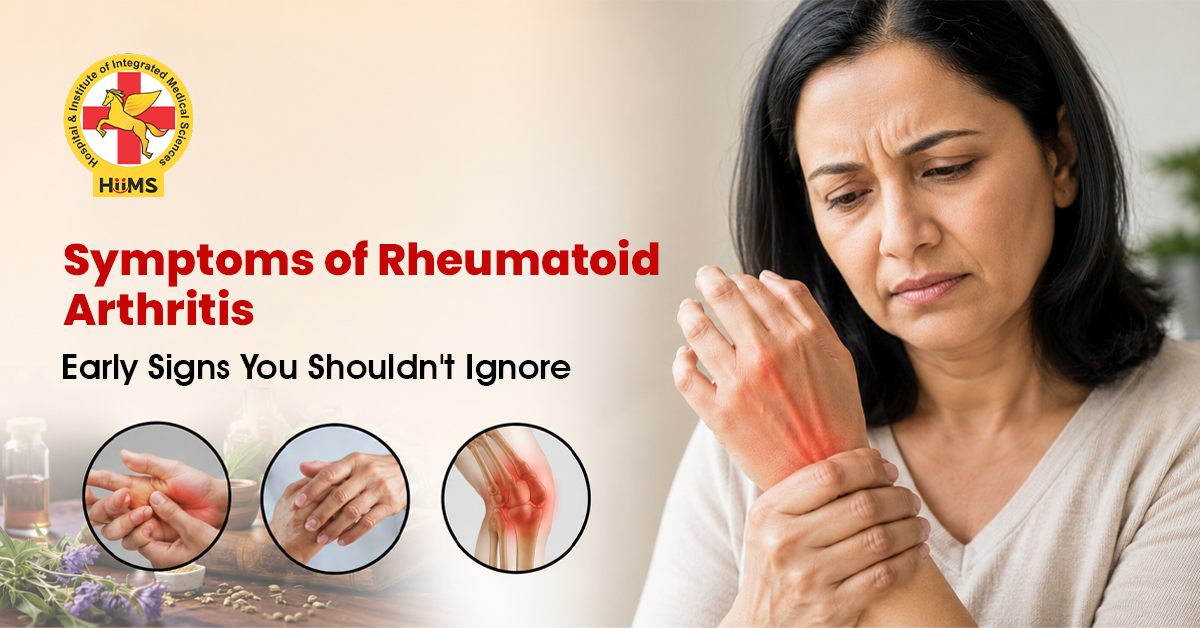

Rheumatoid arthritis is a long-term condition that slowly affects the joints and makes the daily movement difficult. Many people ignore the early changes in the body, thinking it is just normal pain or tiredness. But this can delay the proper care. Understanding the symptoms of rheumatoid arthritis at the right time can help in better management.
In many cases, the hands, wrists, and knees are the joints affected. Along with the pain, there can be swelling, stiffness, and the weakness. Slowly, it may reduce the ability to do everyday tasks.
Hospitals like Jeena Sikho HiiMS focus on understanding the body in a natural way and supporting joint health step by step. It is important to notice the small signals your body gives. These signals may look simple in the beginning, but can become serious later.
Table of Contents
What Happens in Rheumatoid Arthritis
Rheumatoid arthritis is an autoimmune condition. It means the body’s immune system starts attacking its own joints. This leads to the inflammation and damage over time.
The causes of rheumatoid arthritis are not fully clear, but some of the factors like genetics, lifestyle, and immune imbalance, may play a role. This condition is not the same as the normal joint pain. It affects both sides of the body equally in many cases.
Early Joint Symptoms of Rheumatoid Arthritis
These symptoms may seem small at first, but can indicate a deeper joint problem.
Joint Pain and Tenderness
One of the early signs of rheumatoid arthritis is pain in small joints. Fingers and wrists feel sore. Even mild contact may lead to discomfort.
Morning Stiffness
Stiffness in the morning is very common. It may remain for around 30 minutes or more. This is not like normal stiffness that goes away quickly.
Swelling in Joints
Joints may look swollen and feel warm. This swelling can stay for many days. It is one of the clear rheumatoid arthritis symptoms.
These early joint symptoms should not be ignored, as they may lead to more serious joint damage over time.
Additional Signs That Develop Over Time
As the condition progresses, these symptoms of rheumatoid arthritis start becoming more noticeable.
Fatigue and Weakness
The body may feel tired even without much work. Weakness becomes common.
Low Fever
Some people experience a mild fever. It is not always noticed, but can be present.
Loss of Appetite
Appetite may reduce slowly. Weight loss can also happen.
These are often ignored but they are important rheumatoid arthritis warning signs that should not be missed.
How Symptoms Progress Over Time
At first, symptoms may come and go, but later they become regular. The pain can increase, or movement becomes harder.
Joints may start losing their shape if not managed properly. This stage is more serious. So early attention is always better.
Ayurvedic Care for Joint Health at Jeena Sikho HiiMS
Managing this condition needs a balanced approach. Some people look for the rheumatoid arthritis treatment that not only reduces pain but also supports the long-term joint health.
Gentle Ayurvedic Approach to Joint Care
There is growing interest in therapy for rheumatoid arthritis that uses natural methods. These methods focus on reducing stiffness and improving flexibility slowly.
At Jeena Sikho HiiMS, therapies are chosen after a proper understanding of the person’s condition. The focus is not just on pain but also on movement and comfort.
Some Helpful Therapies
- Janu Basti involves applying the warm herbal oil to the knee area in a controlled way, which helps reduce the stiffness and makes movement easier.
- Nadi Swedan applies focused steam to the body, helping reduce the pain and improve the flexibility.
- Patra Pottali Swedan uses heated herbal pouches on joints to loosen tightness and relax the muscles.
- Lepam includes applying the herbal paste to reduce swelling and calm the affected area.
These therapies are planned as per the body’s condition for steady and natural joint support.
Herbal Remedies
Herbs are an important part of the Ayurvedic treatment for rheumatoid arthritis. They help reduce the inflammation and support joint strength.
Some commonly used herbs include:
- Ashwagandha for swelling
- Guggul for joint support
- Boswellia for pain relief
- Nirgundi for calming discomfort
These are used carefully based on the body’s needs.
When to See a Doctor
If joint pain stays for weeks, it should not be ignored. If you notice swelling, stiffness, and fatigue, they should be taken seriously.
Early diagnosis helps in better management. Waiting too long may increase joint damage.
Conclusion
The symptoms of rheumatoid arthritis may start small, but they carry importance. Ignoring early signs can lead to more problems later. Paying attention to the body signals is necessary. Simple pain or stiffness should not always be taken lightly.
Natural care methods, including those followed at Jeena Sikho HiiMS, focus on improving the joint health in a gradual way. This supports the long-term comfort and movement.
If you feel the regular joint discomfort or stiffness, it is better to seek the proper guidance. Early steps can make a big difference in managing the condition.
Consult our VOPD experts today for a better understanding and safe care guidance.

FAQs
1. What is rheumatoid arthritis?
It is a condition where the immune system attacks the joints and causes pain and swelling.
2. What are the initial symptoms of rheumatoid arthritis?
Joint pain, stiffness in the morning, and swelling are common early signs.
3. Which joints are mostly affected?
It usually affects the small joints like fingers, wrists, and knees.
4. Is rheumatoid arthritis a serious condition?
Yes, if not managed early, it can lead to the joint damage over time.
5. Can natural care help in managing symptoms?
Yes, natural methods may support the joint comfort and improve the flexibility over time.

Disclaimer: The information provided on this blog is for general educational and informational purposes only. It is not intended to replace professional medical advice, diagnosis, or treatment. Always consult a qualified healthcare professional before making any changes to your diet, lifestyle, or treatment plan. Individual results may vary.