
Sometimes health issues don’t show up clearly at first. Things feel slightly off, but not enough to take seriously. A little discomfort, maybe irregular bleeding, or just a feeling that something isn’t right. It often gets ignored. But when these signs repeat, concern builds. That’s usually when people start looking for the right cervical cancer Treatment .
Not everyone is only looking for strong procedures. Many people also want to understand how their bodies can be supported during this time. That’s where Panchakarma therapy for Cervical Cancer Treatment comes into the picture.
At Jeena Sikho HiiMS, we’ve seen that people don’t just want treatment; they want a better life. They want clarity. They want to feel like their body is being supported, not pushed. This is where the benefits of Panchakarma in cervical cancer care become relevant in practice.
Understanding cervical cancer and the need for proper treatment
Cervical cancer develops in the lower part of the uterus. It usually takes time to form. Cells don’t just suddenly go out of control. It usually starts quietly.
In many cases, it is linked to long-term infection or low immunity. But it’s not always just one reason. Lifestyle, internal imbalance, and overall health also play a role. That’s why Cervical cancer Treatment should not only focus on the affected area. The body as a whole needs attention.
When people search for cervical cancer symptoms and ayurvedic treatment, they are usually trying to understand both the condition and how to manage it better.
Cervical cancer symptoms and ayurvedic treatment perspective
The early signs can be easy to overlook.
- Unusual bleeding between cycles
- A dull kind of pain in the pelvic area
- Discomfort during intercourse
- Changes in discharge
- Feeling tired without a clear reason
These signs may not seem serious at first. But if they continue, they should not be ignored. From an Ayurvedic perspective, such symptoms are often linked to imbalance and toxin buildup. That is why cervical cancer symptoms and ayurvedic treatment are often discussed together.
Panchakarma therapy for cervical cancer and its role
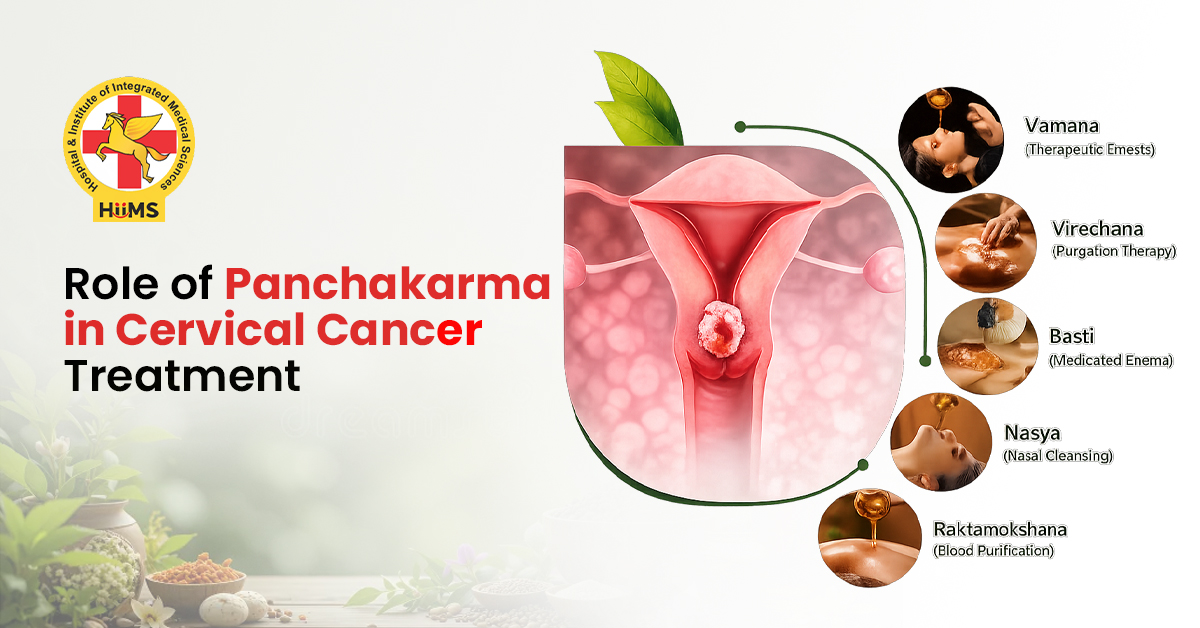
The idea behind Panchakarma therapy for Cervical cancer Treatment is not to force quick changes. It works in a slower, more supportive way. At Jeena Sikho HiiMS, therapies are selected based on the individual. There is no fixed routine for everyone.
Vamana and Virechana
- Vamana is used when there is internal heaviness or excess mucus. It helps clear the upper digestive system.
- Virechana works more deeply. The idea is to clear out what has been building up inside for a while. Some people describe a light feeling afterwards, not dramatic, but noticeable.
Both therapies support internal cleansing, which is helpful during the treatment of cervical cancer.
Basti and Nasya
- Basti mainly works on the gut. And once digestion improves, the body tends to respond better overall. It’s not immediate, but it does make a difference.
- Nasya works through the nasal passage. It helps clear blockages and supports mental calmness. Stress can affect recovery more than we realise.
These therapies together reflect the benefits of Panchakarma in cervical cancer care in a gradual way.
Raktmokshana and internal purification
Raktmokshana is used in specific situations where blood purification is required. It helps remove impurities that may contribute to inflammation. This therapy is not used for everyone and is always selected carefully.
Benefits of Panchakarma in cervical cancer care
The results are not instant, and that’s important to understand. But over time, people may notice:
- Better digestion
- Slight improvement in energy
- Reduced heaviness
- A more balanced feeling in the body
These changes may seem small, but during treatment of cervical cancer, they can make a noticeable difference.
How we approach cervical cancer treatment at Jeena Sikho HiiMS
We do not follow a one-size approach. In the treatment of cervical cancer, we first understand the body’s condition. Based on that, therapies are selected. Some people need deeper cleansing, while others need gentle support. It depends. The goal is simple: to help the body respond better without overwhelming it.
Conclusion
Dealing with something like cervical cancer is not just about the condition itself. It’s also about the confusion that comes with it. Too many options, too much information, and honestly, it can feel a bit overwhelming.
At Jeena Sikho HiiMS, we usually suggest taking things one step at a time. If you’re unsure about what direction to take, you can talk to our doctors by booking a VOPD consultation, ask questions, and understand what might actually suit your situation. That clarity often helps more than rushing into decisions.

That’s why understanding cervical cancer treatment step by step matters. Not everything has to be decided at once. Sometimes, even knowing how your body is responding is a good place to begin. When supportive methods like Panchakarma therapy for cervical cancer are considered, the focus shifts slightly. It’s not only about managing the condition but also about helping the body stay a bit more stable during the process.
FAQs
1. What role does Panchakarma play in cervical cancer treatment?
The idea is simple: help the body handle things better rather than overwhelming it. Improving digestion, reducing internal imbalance, and letting the system stabilise gradually. That’s how it fits into cervical cancer treatment.
2. Can Panchakarma therapy for cervical cancer work on its own?
Not really. It’s not meant to replace the main treatment. It’s usually considered alongside it to support the body.
3. What kind of benefits of Panchakarma in cervical cancer care are usually seen?
People often notice small changes first. Things like slightly better digestion or feeling less heavy. It’s gradual, not immediate.
4. How are cervical cancer symptoms and ayurvedic treatment connected?
In Ayurveda, symptoms are often seen as signs of imbalance. So the approach focuses on correcting that, not just calming the surface issue.
5. Is early cervical cancer treatment easier to manage?
Yes, in most cases it is. When things are caught early, they are easier to handle than in later stages.
Ayurvedic Cancer Care Products
100% natural, certified Ayurvedic formulations crafted for targeted cancer wellness.


Disclaimer: The information provided on this blog is for general educational and informational purposes only. It is not intended to replace professional medical advice, diagnosis, or treatment. Always consult a qualified healthcare professional before making any changes to your diet, lifestyle, or treatment plan. Individual results may vary.