

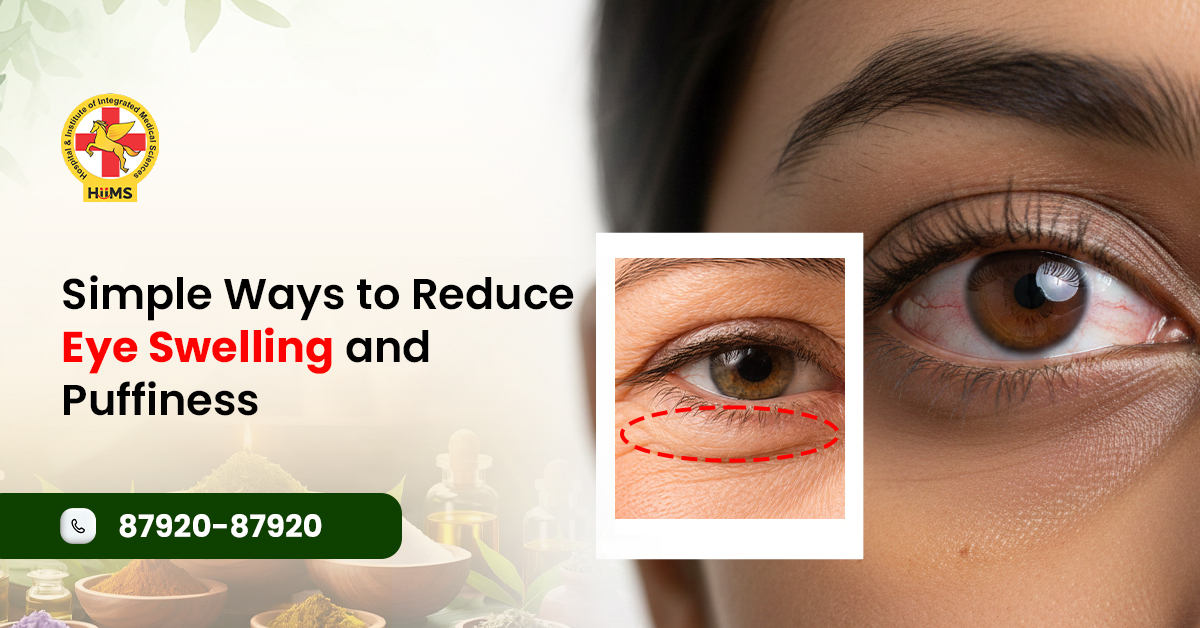
Eye swelling is a common problem. Many people see it after waking up in the morning. The eyes look puffy, slightly swollen, and sometimes feel heavy. Some people also feel light eye pain, while others just feel discomfort. This usually happens due to late sleep, too much mobile or laptop use, crying, stress, or tiredness. Sometimes eating too much salty or spicy food also affects the eyes. In some cases, swelling comes along with eye irritation or eye redness. If this keeps happening again and again, it may be a sign of an underlying eye disorder and should not be ignored. At Jeena Sikho HiiMS, such early eye discomfort is often evaluated from a whole-body perspective to prevent long-term eye disorders.
The good part is, simple daily care can help a lot. Ayurveda focuses on cooling, nourishing, and calming practices for eye health. These methods are gentle and practical. You may notice relief slowly, but it is more stable and long-lasting.
Why Eye Swelling Happens
Eye swelling does not come from one single cause. Often, it is a mix of small daily habits. Lack of sleep, excess screen time, stress, salty food, dehydration, and rubbing the eyes can lead to puffiness. Heat in the body also plays a role. When internal balance is disturbed, the eyes show early signs. In Ayurveda, the eyes are governed mainly by Pitta dosha. When Pitta increases due to stress or improper routine, swelling, burning, or redness can appear. This is why calming and cooling practices work better than harsh treatments.
Simple Home Care That Helps
Cold water eye wash in the morning is a small habit, but very effective. Splash fresh, clean water gently over closed eyes. It cools the tissues and reduces heaviness.
Rest is equally important. If eyes are strained, no remedy works fully. Short breaks during screen use, closing the eyes for a minute, then opening slowly, helps natural relaxation.
Avoid rubbing the eyes. It increases eye irritation and worsens swelling.
Ayurvedic Therapies for Eye Comfort
At Jeena Sikho HiiMS, the Ayurvedic eye therapies are given with proper medical guidance so that they remain safe and comfortable for the patient.
Akshi Tarpan Therapy
Akshi Tarpan is a traditional Ayurvedic eye-nourishing therapy. In this, a soft ring made from urad dal dough is placed around the eyes. Warm medicated oil or ghee is poured gently inside this ring.
The person slowly opens and closes the eyes in the oil. This helps improve blood flow, relax eye muscles, and reduce dryness. It helps bring down puffiness and eye strain. When eye discomfort keeps coming back, this therapy supports proper relief through Panchakarma care.
Morning Saliva Practice
This is an old Ayurvedic routine followed by many people. As soon as you wake up, before brushing, take a drop or two of your natural morning saliva on clean fingers. Apply gently to the eyes.
Morning saliva contains natural enzymes. With regular use, people notice reduced dryness and swelling. It sounds simple, but consistency matters.
Navel Oil Application
Apply a few drops of coconut oil or mustard oil on the navel before sleeping. Massage gently in circular motion.
According to Ayurveda, nerves connected to the eyes are linked to the navel area. This practice supports hydration and overall eye comfort over time.
Yoga Practices That Support Eye Health
Yoga is helpful for tired eyes and poor circulation. Tratak helps strengthen eye muscles and improves focus. Palming helps tired eyes relax and settles the nerves. Blinking and eye rotation keep the eyes at ease. Bhramari pranayama lowers stress, controls eye swelling and supports overall eye comfort.
Herbal Support for Puffy Eyes
Some herbs are known to support eye health naturally.
- Turmeric helps in reducing eye pain and swelling.
- Triphala is used to keep the eyes clean and strong.
- Punarnava helps with water balance and eye puffiness.
- Amla gives natural nourishment to the eyes.
- Ashwagandha helps tired eyes feel relaxed.
It is better to take these herbs with proper guidance.
Food Choices That Matter
Food plays a big role in eye comfort. Leafy greens, carrots, amla, sweet potatoes, broccoli, and bilberry support circulation and hydration. Avoid excess spicy, fried, and salty food if swelling appears often. Drink enough water. Small daily changes often work better than heavy treatments.
Conclusion
Eye swelling may look minor, but repeated puffiness should not be ignored. It is often linked to stress, lifestyle imbalance, or early eye discomfort. With simple Ayurvedic routines, proper rest, cooling practices, and guided therapies, swelling can be reduced safely. If swelling comes with persistent eye pain, redness, or irritation, it is better to seek proper evaluation. Early care prevents long-term eye disorder issues.
At Jeena Sikho HiiMS, experienced doctors focus on natural, root-based healing. If eye discomfort is affecting your daily life, book a consultation today and get guidance suited to your body needs. Gentle care, when done right, brings lasting relief.

Frequently Asked Questions
1. What causes eye swelling suddenly?
Inadequate sleep, stress, excessive screen exposure, and heat imbalance are common contributing factors.
2. Is eye swelling a serious problem?
Occasional swelling is common, but repeated swelling needs attention.
3. Can Ayurveda help with eye puffiness?
Yes, Ayurveda focuses on cooling the eyes and giving them proper nourishment naturally.
4. Does eye swelling cause eye pain?
Sometimes swelling comes with mild eye pain or pressure sensation.
5. When should I see a doctor for eye swelling?
If swelling lasts long or comes with redness or irritation, consult early.