

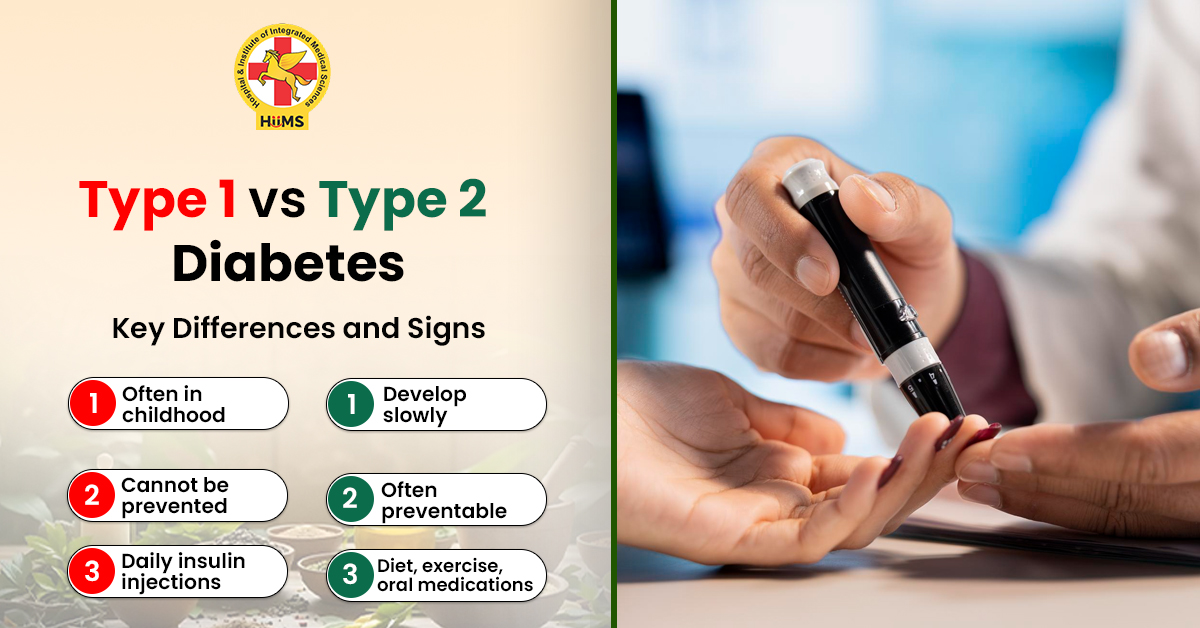
Diabetes affects how the body handles sugar from food, but it does not affect everyone in the same way. The two main types, type 1 and type 2 diabetes, differ in how they begin, how quickly they develop, and how they are managed. Understanding type 1 vs type 2 diabetes helps people notice early signs and respond in a more organised and informed way.
Both types relate to blood sugar, but their starting points, pace, and daily management are different. Learning this does not require complex medical terms or technical explanations. It needs clear thinking and everyday awareness. One type often begins suddenly, while the other develops over a long period.
Noticing early type 1 diabetes symptoms or other body signals helps guide timely medical advice. Knowing what is happening inside the body makes daily decisions calmer and more structured. This blog explains how the two types differ, what signs appear in the body, and why early knowledge is important.
What Is Diabetes
Diabetes means the body is unable to manage blood sugar properly. After eating, sugar enters the blood. A hormone called insulin helps move this sugar into cells.
When insulin:
- Is not produced, or
- Does not work properly
Sugar remains in the blood instead of being used by the body. Over time, this affects normal daily balance.
How Type 1 Diabetes Begins
How It Starts
Type 1 diabetes usually begins early in life, though adults can develop it too. In this condition, the body stops making insulin completely. The immune system attacks insulin-producing cells.
Early Signs to Watch
The signs of type 1 diabetes often appear quickly. Common ones include:
- Frequent urination
- Increased thirst
- Sudden weight changes
- Blurred vision
Because insulin is absent, the body cannot manage sugar on its own.
How Type 2 Diabetes Develops
How It Develops
Type 2 diabetes develops slowly. The body continues to produce insulin, but it does not respond to it properly. This is called insulin resistance.
Common Early Signals
The signs of type 2 diabetes usually appear gradually, such as:
- Frequent urination
- Increased thirst
- Slow healing of cuts
- Repeated skin concerns
Since changes happen over time, many people discover it during routine health checks.
Type 1 vs Type 2 Diabetes: Key Differences
When the differences are placed side by side, type 1 vs type 2 diabetes becomes clearer.
Main Differences
- Insulin production
- Type 1: Insulin is not produced
- Type 2: Insulin is present but does not work properly
- Age of onset
- Type 1: Often early in life
- Type 2: Usually later years
- Speed of development
- Type 1: Fast
- Type 2: Gradual
- Management approach
- Type 1: Insulin is essential
- Type 2: Lifestyle structure and medicines
Symptoms That Help Identify the Type
Type 1
Common type 1 diabetes symptoms include:
- Frequent hunger
- Rapid changes in weight
- Repeated urination within short intervals
Type 2
Typical type 2 diabetes symptoms include:
- Blurred vision
- Skin dryness
- Delayed healing of wounds
Doctors combine these signs with blood reports for accurate identification.
Treatment Planning for Both Types
Type 1 Diabetes Treatment
Type 1 diabetes treatment focuses on daily insulin support and monitoring. Key elements include:
- Planned insulin use
- Structured meal timing
- Regular blood sugar checks
Type 2 Diabetes Treatment
Type 2 diabetes treatment is built around a daily structure. This may include:
- Balanced food habits
- Physical activity
- Weight management
- Medicines when advised
Insulin may be added later if required.
Neem Karela Therapy- A Gentle Ayurvedic Method
Neem Karela Therapy is a traditional Ayurvedic practice followed by many people who look for structured and natural approaches while managing blood sugar concerns. It is often discussed alongside lifestyle discipline and routine awareness rather than as a replacement for medical guidance.
How It Is Prepared
- Take 250 g neem leaves and 250 g bitter gourd
- Grind both together with a small amount of water
- Make a thick, even paste
- Spread the paste evenly on a flat plate
How It Is Done
- The person walks slowly on the paste placed in the utensil
- The soles remain in contact with the paste for 20–25 minutes
- A mild bitter taste reaching the tongue is traditionally taken as a sign that the herbs have been absorbed through the soles
Why People Try This Practice
- Considered calm and non-invasive
- Does not involve heavy medicinal intake
- Often linked with traditional beliefs around natural sugar balance and internal cleansing
This method is usually followed with patience and consistency and is commonly spoken of as part of a broader daily discipline rather than a quick solution.
Conclusion
Diabetes does not move the same way for everyone, and understanding type 1 vs type 2 diabetes helps people respond with clarity instead of confusion. One begins suddenly, the other builds over time, and the signs are not the same. Each needs its own way of planning daily life. When early changes are noticed and medical guidance is taken on time, routines stay more settled. Clear information keeps decisions practical and helps daily life move in an organised direction.
Don’t wait for symptoms to worsen. At Jeena Sikho HiiMS, our experienced diabetes doctors provide personalised guidance, structured care, and expert support to help you manage type 1 and type 2 diabetes effectively. Call Now: +91-87920-87920, Email: care@jeenasikho.com
Book your consultation today and start your journey towards balanced blood sugar and a healthier daily routine!

FAQs
1. How do doctors identify the diabetes type?
Doctors use blood tests, insulin level checks, and symptom history to identify the type accurately.
2. Can adults develop type 1 diabetes?
Type 1 diabetes can appear at any age, though it is more common earlier in life.
3. Why does type 2 diabetes take time to show signs?
Insulin resistance builds slowly, so blood sugar imbalance increases over the years.
4. Is a daily routine important after diagnosis?
Meal timing, activity, and regular monitoring support stable daily management.
5. Why is monitoring needed in both types?
Regular checks help track blood sugar levels and guide timely adjustments.