
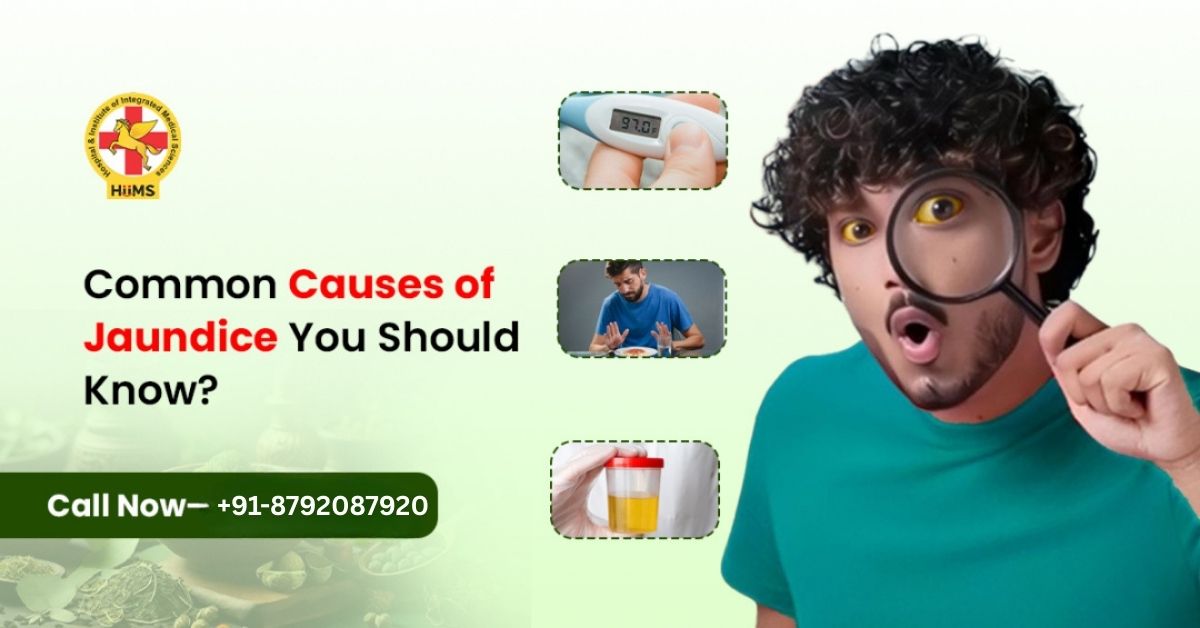
Jaundice is a condition in which the skin, eyes, and sometimes urine become yellow. This happens when a yellow substance called bilirubin collects in the body. Many people think jaundice is a disease, but it is actually a sign that something inside is not working properly. A sign that something inside the body is not working properly, mainly the liver. Understanding the jaundice causes early can really help a person take care in time and avoid bigger problems later. Jaundice can affect anyone. Children, adults, and even elderly people. Sometimes it stays mild and goes away soon. But in some cases, it may point toward deeper liver trouble. Along with yellowing of skin and eyes, there can be other jaundice symptoms too, like tiredness, low appetite, and dark urine. These signs should not be ignored, even if they look small at first.
At Ayurvedic places like Jeena Sikho HiiMS, jaundice is seen as a liver imbalance that needs gentle correction. Ayurveda does not just try to fade the yellow color. It tries to correct the root disturbance inside. When people understand the real reasons behind jaundice, they can choose better care and simple lifestyle changes in time.
What is Jaundice and Its Signs?
Jaundice happens when bilirubin, a waste substance formed after old red blood cells break down, is not cleared properly by the liver. Normally, the liver filters it and sends it out of the body. But when liver function slows or bile flow gets disturbed, bilirubin starts collecting in the blood and tissues. Then the yellow color appears.
Common jaundice symptoms include:
- Yellow discoloration of the skin and eyes
- Dark yellow urine
- Pale or clay-colored stools
- Weakness and easy tiredness
- Loss of appetite
- Nausea or mild fever
These signs may come slowly or sometimes suddenly. It depends on the underlying jaundice causes. In some people, itching also happens because the bile balance gets disturbed in the body.
Common Causes of Jaundice
The liver has the main role in handling bilirubin. So most jaundice causes are connected with liver disturbance, infection, or blockage in bile movement. Below are the common causes explained in simple words.
Liver Infections (Hepatitis)
One of the most common causes of jaundice is hepatitis which is a viral infection of the liver. Viruses like Hepatitis A, B, or E enter the body and inflame liver cells. When liver cells swell or get damaged, they cannot process bilirubin properly, and then jaundice appears. Contaminated food, water, or infected blood can spread this infection.
Excess Alcohol Intake
Regular alcohol intake weakens the liver slowly. At first, it may not show symptoms. But over time, liver tissues get inflamed, and fatty changes occur. This condition reduces the liver’s ability to clear bilirubin. So jaundice may develop. Alcohol-related liver stress is a major modern jaundice causes.
Fatty Liver Disease
Unhealthy diet, obesity, diabetes, and lack of movement cause fat to deposit inside liver cells. This is fatty liver disease. Many people have it without knowing. But if it progresses, liver function declines. Then, bilirubin handling becomes poor. So fatty liver also becomes a silent jaundice in adults.
Gallstones and Bile Duct Blockage
Bile ducts help carry bile from the liver to the gut. If a stone or swelling blocks these ducts, bile cannot flow out. Bilirubin then leaks into the blood, which causes obstructive jaundice. Here liver may be fine, but the bile pathway is blocked, so the blockage itself becomes a cause of jaundice.
Certain Medicines and Toxins
Some medicines taken for a long time or without guidance may stress liver cells. Painkillers, antibiotics, steroids, or chemical exposure can lead to drug-induced liver injury. When liver cells are harmed, bilirubin processing is reduced. So medicines themselves can sometimes become hidden jaundice causes.
Blood-Related Disorders
In some conditions, red blood cells break down faster than normal. This creates excess bilirubin. The liver cannot clear so much load. Then jaundice appears even if the liver is healthy. Hemolytic anemia and some genetic disorders fall in this group.
Newborn Liver Immaturity
In newborn babies, the liver is still developing. During the early days of life, the liver may not clear bilirubin properly. So mild neonatal jaundice can appear, and doctors observe it to prevent issues. Awareness of these causes supports correct care and reduces liver burden.
How Does Ayurveda See Jaundice?
At Jeena Sikho HiiMS, jaundice is understood as a deeper liver disturbance, not merely skin yellowing. Treatments focus on healing the root cause naturally.
Ayurvedic care focuses on:
- Detoxifying and strengthening the liver.
- Correcting digestion and metabolism.
- Balancing the Pitta dosha.
- Supporting the natural jaundice treatment through herbs.
Herbs like giloy, katuki, and Kalmegh are traditionally used for liver healing and jaundice relief. Diet correction, bitter foods, hydration, and rest are also part of Ayurvedic care. Instead of suppressing symptoms, Ayurveda works on restoring liver balance so bilirubin levels normalize naturally.
Conclusion
Jaundice is not a disease on its own. It is a clear sign that the liver or bile system needs care. Common causes include liver infections, alcohol damage, fatty liver, bile blockage, certain medicines, and blood disorders. Noticing early jaundice symptoms like yellow skin, dark urine, and tiredness helps people seek help before the problem grows. Hospitals like Jeena Sikho HiiMS focus on natural liver healing with Ayurvedic therapies and guided lifestyle care. Knowing the true causes of jaundice and taking timely steps can help protect liver health and overall wellness.

FAQs
1. What is jaundice?
Jaundice is a condition where the skin and eyes turn yellow due to a build-up of bilirubin in the body.
2. What are the main causes of jaundice?
It commonly occurs because of liver infections, alcohol-related damage, fatty liver, bile obstruction, or medicines.
3. What are common jaundice symptoms?
Usual jaundice symptoms are yellow skin, dark urine, pale stools, weakness, and poor appetite.
4. Can jaundice happen without liver disease?
In some cases, bile duct blockage or blood disorders may lead to jaundice without liver damage.
5. Is jaundice serious?
Jaundice can be mild or serious depending on its cause. It should always be checked by a doctor.