
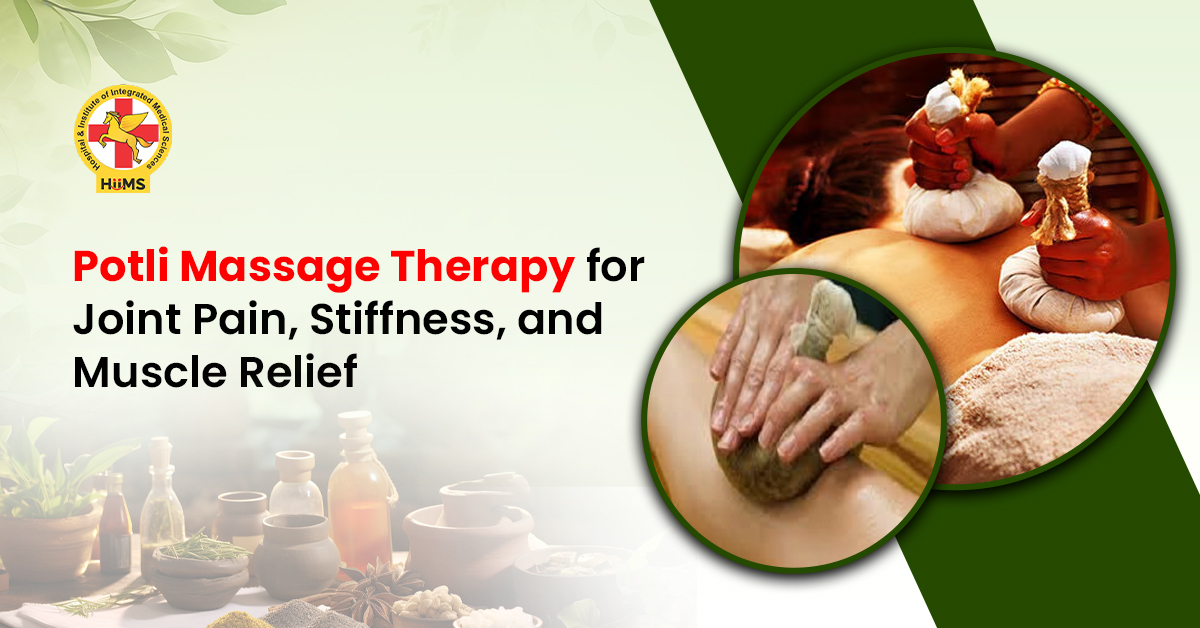
That joint ache that doesn’t really go away. The tight, heavy shoulders after a long, tiring day. That’s normally when people start thinking, “There has to be something better than painkillers.” And that’s where gentle heat therapies like Potli massage, also known as Patra Potli Swedan in Ayurveda, quietly come in. It’s a traditional therapy that uses warm herbal bundles on sore muscles, stiff joints, and tired tissues.
The word potli simply means a small cloth pouch. Inside these pouches are selected herbs, grains, or natural salts. They are gently heated and then placed on the body using slow, rhythmic movements. Potli massage is often seen as a supportive therapy that works little by little, especially when it is paired with regular routines and mindful daily habits.
This blog aims to help readers understand what Potli massage actually is, how it is traditionally done, and why it is commonly included in Ayurvedic massage for joint stiffness and muscle discomfort. The blog doesn’t talk about quick results. It looks at Potli massage therapy as a gentle practice that works gradually and fits into a simple wellness routine.
What Is Potli Massage Therapy?
A potli is just a little cloth pouch, usually cotton or muslin, stuffed with herbs, grains, rice, or even rock salt. It’s heated using steam or herbal oil and then placed softly on the body. The therapist rolls it slowly over joints, muscles, and tight spots.
As the heat spreads, the herbs inside start releasing their smell and natural goodness. In Ayurveda, this therapy comes under Swedana, which means therapeutic sweating. It has traditionally been used to relax stiff tissues and help uncomfortable areas move a little more easily.
How Potli Massage Works
The process is simple and rooted in traditional practice.
- Preparation: Selected herbs, grains, or salts are wrapped and tied into a clean cloth to make the potli.
- Warming: The potli is heated using warm oil or steam until it reaches a comfortable temperature.
- Application: The warm potli is applied to the body using gentle pressure and slow, rhythmic strokes. The focus stays on painful or stiff areas.
- Reheating: As the potli cools down, it is reheated and reused during the same session.
- Relaxation: After the massage, the person rests for a short while to allow the body to absorb the warmth and herbal influence.
This process is repeated to deepen comfort and encourage better tissue relaxation.
Potli Massage Benefits for Pain and Stiffness
Potli massage is traditionally used to bring comfort to joints and muscles.
- Pain Comfort: The combination of warmth and herbs helps calm sore joints and tired muscles.
- Reduced Stiffness: Heat improves flexibility in rigid areas, making everyday movement feel easier.
- Muscle Relaxation: Gentle tapping and pressing ease muscle spasms and tightness.
- Better Circulation: Warm potlis encourage blood flow to affected areas, supporting tissue nourishment.
- Overall Comfort: Many people notice a light, easy feeling in their body after the session.
Common Herbs Used in Potli Massage
The ingredients inside a potli change depending on the therapy goal and the area being treated. For joint comfort, herbs like Nirgundi, Guggulu, Rasna, Shallaki, and Ashwagandha are commonly used. Base ingredients such as rice, sand, or rock salt help retain heat and create a steady warming effect. In some cases, mild additions like lavender oil or eucalyptus oil are included for relaxation.
Potli massage is widely used for discomfort in the knees, shoulders, back, and hips. The warmth helps loosen surrounding muscles, while the herbs bring a traditional soothing influence. At Jeena Sikho HiiMS, potli massage is often combined with therapies like Janu Basti or Kati Basti as part of a broader, long-term wellness approach.
Jeena Sikho HiiMS Approach to Potli Massage
Jeena Sikho HiiMS integrates Potli massage into a broader wellness routine instead of using it alone. Therapists first look at lifestyle habits, digestion, daily routine, and stress levels. Based on this, Potli massage therapy may be combined with:
- Herbal routines.
- Yoga and stretching.
- Simple dietary changes.
- Panchakarma therapies, when needed.
The idea is to support the body’s internal balance and not just manage pain symptoms.
Best Places to Experience Potli Massage Therapy
The best place to experience Potli massage is an Ayurvedic clinic or integrated wellness center like Jeena Sikho HiiMS that focuses on holistic care. These centers often include potli massage therapy as part of a broader wellness plan. This helps the therapy work gradually and fit into a steady routine for joint and muscle comfort.
You can look for:
- Integrated wellness centers
- Ayurvedic clinics with traditional therapies
- Centers offering combined care plans
- Places focusing on long-term comfort routines
Conclusion
Potli massage is a traditional Ayurvedic therapy that uses warm herbal bundles to help with joint pain, stiffness, and muscle discomfort. It mixes the calming effect of heat with selected herbs, creating a gentle and relaxing experience for the body.
When it’s combined with diet guidance, yoga, and small lifestyle changes, it becomes a more holistic option for people dealing with long-term aches. To see if Potli massage therapy fits into your routine, connect with Jeena Sikho HiiMS at +91 82704 82704 or care@jeenasikho.com.

FAQs
1. What is Potli massage used for?
Potli massage is used for stiff joints, sore muscles, and the general body discomfort.
2. Is the Potli massage painful?
It’s usually gentle and relaxing. The heat is kept at a comfortable level.
3. How long does a Potli massage session take?
A typical session runs for about 30 to 60 minutes, based on what’s being treated.
4. Can Potli massage help with knee pain?
It’s often used as a supportive therapy for the knee stiffness and discomfort.
5. Can Potli massage be combined with other therapies?
It’s commonly combined with the other Ayurvedic treatments and lifestyle changes.

Name: Samar
Phone: 8168208874
Disease: Neck pain
Comment:
Good