Cancer is a deadly disease. People often get anxious when they hear that someone in their family has cancer. A common question that comes up is is cancer inherited, and whether the same illness can appear in children or close relatives. This worry becomes stronger when cancer is seen across generations, creating concern about a family history of cancer. Most cancers are not inherited from family; they often develop due to other factors like daily habits, surroundings, or just getting older, which can increase cancer risk.
At Jeena Sikho HiiMS, patients often ask how family history affects their chances of developing cancer. Paying attention to body changes, understanding early signs of cancer, and knowing family patterns can help people take timely action. Awareness allows families to stay alert, calm, and better prepared instead of living with fear. Early recognition of warning signs of cancer is often the first step in taking informed health decisions.
What Does It Mean When Cancer Is Inherited?
What is hereditary cancer?
Hereditary cancer refers to cancer that develops due to changes in genes passed from parents to children. These genetic changes are present from birth and can increase the chance of certain cancers later in life. However, it is important to note that only a small percentage of all cancers are hereditary. Most cancers happen due to changes that develop over time, not because they were inherited. Families with hereditary cancer often notice repeated cases of the same cancer.
In such cases, cancer may appear at a younger age or affect multiple relatives. This does not mean cancer is guaranteed, but the risk may be higher. Understanding this difference helps families remain alert without panic.
How is inherited cancer different from other cancers?
Questions about inherited cancer often come from fear of the unknown. When someone in the family is diagnosed, relatives start observing their own health more closely. Small changes in the body begin to feel worrying, even when they may not be serious. This is why understanding cancer clearly matters. Recognising that it arises from many factors allows families to act wisely and stay calm. Awareness does not create fear but promotes vigilance and informed choices.
Talking openly within the family about health history helps doctors understand patterns better. It also encourages timely check-ups and screening when needed. Awareness makes people more responsible about lifestyle choices and routine health monitoring. Over time, this shared understanding reduces panic and increases confidence. When families learn to recognise early warning signs and discuss concerns openly, they are better prepared to respond early and seek guidance without delay.
Which Types of Cancer Are More Likely to Be Inherited?
Cancers don’t always follow family patterns. Many happen because of lifestyle or ageing, but some may appear in relatives, even at a younger age. This does not mean that cancer will definitely occur, but it does point toward a higher level of risk that should be taken seriously.
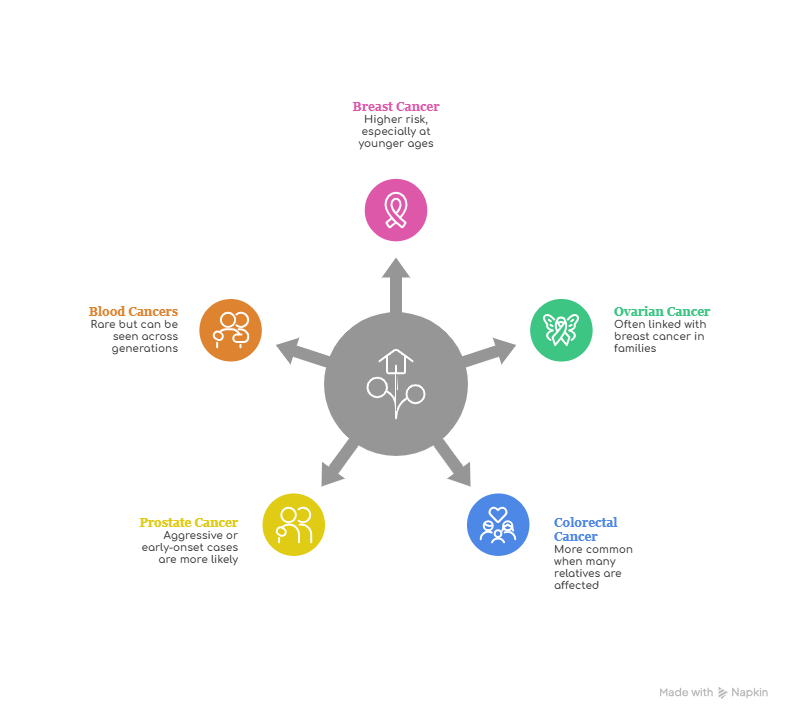
Recognising these patterns helps families remain alert and seek timely medical advice when symptoms appear or screening is advised. Some cancers are more commonly linked to family history. These include:
- Breast cancer, especially when diagnosed at a younger age
- Ovarian cancer, often seen along with breast cancer in families
- Colorectal cancer, particularly when many relatives are affected
- Prostate cancer, especially aggressive or early-onset cases
- Some blood cancers, seen across generations in rare cases
What Are the Early Signs of Cancer Families Should Watch For?
Common early signs of cancer
Cancer often gives subtle signals in the early stage. These signs may seem minor and are sometimes ignored.
- Unexplained weight loss
Weight loss without dieting or effort may be noticed over weeks or months. Clothes may feel loose, and appetite may reduce. This should not be ignored when it happens without a clear reason. - Persistent fatigue
Feeling tired all the time, even after rest, is a common early complaint. Daily work may feel heavy. This tiredness does not improve easily and may slowly increase. - Lumps or swelling
A lump in the breast, neck, armpit, or any part of the body should be checked. Some lumps are painless and slow-growing, which is why people delay action. - Changes in bowel or bladder habits
Frequent constipation, diarrhoea, blood in stool, or changes in urine pattern may appear. These signs continuing for weeks need attention. - Unusual bleeding
Bleeding between periods, blood in urine, stool, or coughing blood should never be ignored, even if it stops on its own.
When should symptoms not be ignored?
Body changes often appear slowly, and many people choose to wait, hoping the problem will settle on its own. However, symptoms that last for more than two to three weeks should not be ignored. Persistent tiredness, unexplained weight changes, repeated pain, or swelling that does not reduce with time need attention. When the body keeps sending the same signal, it usually means something deeper needs to be checked.
You should pay attention if multiple symptoms appear at the same time. Feeling tired along with loss of appetite, or noticing a lump with unexplained bleeding, needs a doctor’s check. These may not always be cancer, but ignoring them can make treatment harder later.
Progressive worsening of symptoms warrants prompt attention. Increasing pain, growing weakness, or difficulty performing daily activities should not be overlooked. Early medical consultation enables timely diagnosis and management of potential conditions. Timely attention reduces anxiety, prevents complications, and helps people make informed decisions about their health.
Who Is at Higher Risk of Hereditary Cancer?
Family history can affect cancer risk. Observing the same type of cancer in close relatives, particularly at a young age or across generations, may indicate a genetic connection. While this does not guarantee cancer, it signals the need for vigilance. Awareness of family history allows individuals and healthcare providers to take proactive steps, such as maintaining healthy habits, monitoring changes, and scheduling regular screenings.
Family History Risk Factors
- More than one close family member with the same type of cancer
- Cancer is showing up earlier than expected
- Cancer seen in more than one generation
These signs don’t mean cancer is certain, but they show why staying alert and visiting the doctor regularly is important.
Lifestyle factors that increase risk
Long-term lifestyle habits influence overall health, particularly when there is a familial predisposition. Smoking exposes the body to toxins that gradually damage cells, while diets high in heavy or processed foods can impair digestion and weaken natural defence mechanisms. Insufficient physical activity impairs circulation and contributes to weight gain, increasing the body’s overall strain. Being overweight and stressed for a long time can disturb hormones and reduce immunity, which may make illnesses appear sooner than usual.
How Can Families Reduce Cancer Risk?
Importance of early screening and awareness
Routine check-ups catch changes early. When doctors suggest screening tests, cancer can be found before serious symptoms appear. Awareness within families encourages timely discussion and action.
Healthy lifestyle and balanced diet
Simple food habits, regular meals, and physical activity help maintain body balance. Reducing tobacco and alcohol lowers risk significantly. These habits support overall health.
Role of stress management and routine health checks
Chronic stress affects the immune system. By following a proper sleep routine, practising relaxation, and attending regular check-ups, you can maintain overall health and wellness. These steps form the base of cancer prevention efforts.
How Ayurveda Supports Family Awareness and Overall Health
Ayurveda focuses on maintaining balance in digestion, lifestyle, and immunity. It views disease as a result of long-term imbalance rather than sudden events. For families with cancer concerns, Ayurveda encourages disciplined routines, mindful eating, and stress control.
This approach does not replace medical care. Ayurveda works as a supportive system, helping people notice changes in their bodies. At Jeena Sikho HiiMS, it is explained as a way to improve overall health and encourage families to stay aware and prevent problems early.
When Should You Consult a Cancer Specialist?
You should consult a doctor if symptoms don’t go away, if your family has a history of cancer, or if sudden, unexplained health changes appear. Early guidance from a best cancer specialist helps clarify risks. An experienced cancer doctor can suggest the right screening and next steps. Talking to them early usually prevents delays and clears confusion.
Seek medical advice before severe symptoms appear. Persistent changes such as unusual lumps, unexplained weight loss, prolonged fatigue, or changes in skin, bowel, or bladder habits need professional assessment. Individuals with a history of cancer in close relatives should discuss preventive measures and genetic testing options with a specialist. Routine check-ups and timely screenings can catch problems early, making treatment easier and more effective. Seeing a specialist helps you know which symptoms to watch and which are less worrying, so you can take charge of your health early.

Conclusion
Knowing whether cancer runs in the family turns fear into awareness. Asking “Is cancer hereditary? is the start of informed thinking, not panic. Family history, early signs, and lifestyle habits together shape cancer risk. Paying attention to small body changes and seeking timely advice makes a big difference. Early detection often improves outcomes and reduces treatment burden.
Families that talk openly, stay informed, and act early are better prepared. If symptoms persist or family history is strong, consulting a cancer hospital early is a wise step. At Jeena Sikho HiiMS, patients are guided to understand signs, risks, and options clearly. If concerns arise, it is better to seek guidance early and take informed steps toward health.
If you or your family have ongoing symptoms or worries because of family history, it’s best to consult a qualified cancer specialist early. Getting guidance on time helps you make clear and confident decisions.
FAQs
Q1. Is cancer always inherited?
No, most cancers are not inherited. Only a small percentage develop due to genetic changes passed through families. Many cancers result from lifestyle, environment, or age-related factors.
Q2. What percentage of cancers are genetic?
Around 5–10% of cancers are considered hereditary. These cases often show repeated patterns within families and may appear at a younger age.
Q3. Can lifestyle changes reduce hereditary cancer risk?
Yes, healthy food habits, physical activity, avoiding tobacco, and stress control help reduce overall risk, even when family history is present.
Q4. At what age should screening start if cancer runs in the family?
Screening may begin earlier than usual when a strong family history exists. The exact age depends on cancer type and medical advice.
Q5. Can early detection improve survival rates?
Yes, early detection improves treatment response and outcomes. Finding cancer early often allows simpler and more effective care.