
Back discomfort is something that builds over time for many people. Long sitting hours, physical stress, or poor posture can quietly strain the back. When tightness starts to set in, massage is commonly tried, especially when the pain feels muscular.
Massage can help, but only if it is done properly. Using too much pressure, moving too fast, or copying random techniques from videos can sometimes make the pain worse. A back massage works best when it is gentle, controlled, and done with some understanding of the body, particularly if the pain keeps returning.
The purpose of this blog is to explain how to massage back pain safely and effectively. It covers basic massage techniques, common mistakes to avoid, and situations where massage should be used carefully. The aim is to help readers to understand when massage can support comfort and when proper guidance may be needed.
Why Massage Helps with Back Pain
Most everyday back pain comes from tight muscles, reduced circulation, and stored tension. Long sitting hours, poor posture, stress, and lack of movement slowly affect the back.
A proper back pain massage can help by:
- Relaxing stiff muscles.
- Improving the blood flow to sore areas.
- Reducing tension around the spine.
- Making the movement feel easier and lighter.
A massage should never feel forced or uncomfortable. When the touch is slow and light, muscles usually soften on their own instead of tensing up.
How to Massage Back Pain Safely
It’s important that the person feels settled and relaxed first. Any sharp or unpleasant sensation means that the pressure is too much.
- Start with gentle warmth: Before beginning, let the back warm up a little. Warm hands or a towel on the back for a few minutes helps the muscles loosen.
- Use slow, circular movements: Keep your hands on both sides of the spine, not on the spine itself. Move slowly in small circles and keep the pressure light. Move in slow, small circles with light pressure. This is one of the safest ways to begin massaging the back.
- Take extra care with the lower back: For lower back pain massage, gently just above the hip area using the palm or thumbs. Keep the pressure light. If the pain starts going down the leg, stop the massage.
- Use long strokes to settle the back: Slow strokes while moving upward from the lower back toward the shoulders can help the back feel easier and less tight.
- Keep the massage short: A short massage works better. Around ten to fifteen minutes is enough; otherwise, the muscles may start feeling sore.
Common Massage Mistakes to Avoid
Massage should be done carefully, as incorrect technique or pressure can increase discomfort. It is best to avoid the following:
- Pressing directly on the spine.
- Using sudden or jerky movements.
- Applying strong pressure on the inflamed areas.
- Massaging immediately after an injury.
- If pain increases during massage, it’s a sign to stop.
Ayurvedic Approach to Back Pain Massage
In Ayurveda, back pain is often linked to Vata imbalance. When this happens, the back may feel tight or sore; at that point, the gentle massage is used to help the muscles relax.
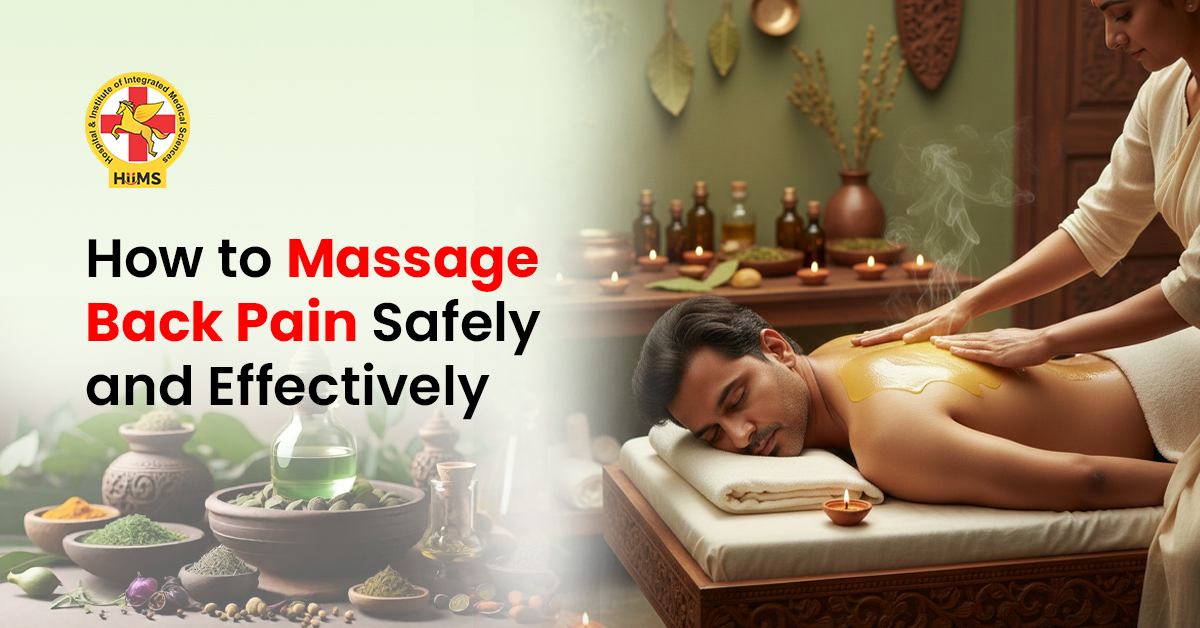
At a specialized back pain hospital like Jeena Sikho HiiMS, back pain massaging is done using Ayurvedic techniques such as Abhyanga, Swedana, and Kati Vasti. These therapies use warm herbal oils and mild heat to help the muscles loosen and reduce stiffness around the spine. Massage is done only after checking the body and is kept gentle, not forceful. The pressure and technique are chosen based on what feels right for the person. If needed, treatments like Vamana, Virechana, Basti, Nasya, or Raktmokshana may be added. Other supportive therapies, such as Prishta Vasti, Lepam, Patra Pottali Swedan, Nadi Swedan, and Shashtika Shali Swedan, are used to slowly improve strength and comfort.
Final Thoughts
Learning how to massage back pain safely can bring real comfort when done gently and consistently. Back massage helps muscles relax, but lasting relief often comes from paying attention to posture, daily routine, digestion, and stress together. When pain becomes regular or starts limiting movement, structured care at a back pain hospital like Jeena Sikho HiiMS can offer deeper support and a more stable recovery path. For guidance or consultation, you can contact +918270482704 or email care@jeenasikho.com

FAQs
1. Can massage help in managing back pain?
Massage may help relax tight muscles, improve circulation, and reduce stiffness when back pain is related to muscle strain or posture issues.
2. How often can back pain massages be done?
Massage can usually be done two to three times a week, depending on comfort levels and the nature of the pain.
3. When should massage be avoided for back pain?
Massage is best avoided if there is swelling, sharp pain, a recent injury, numbness, or if the discomfort increases during the session.
4. Does posture affect back pain?
Poor posture during sitting, standing, or sleeping can place extra strain on the back and contribute to ongoing discomfort.
5. How does a back pain hospital approach treatment differently?
A back pain hospital focuses on finding the reason behind the pain instead of just giving short-term relief, and plans care that supports long-term comfort and recovery.
