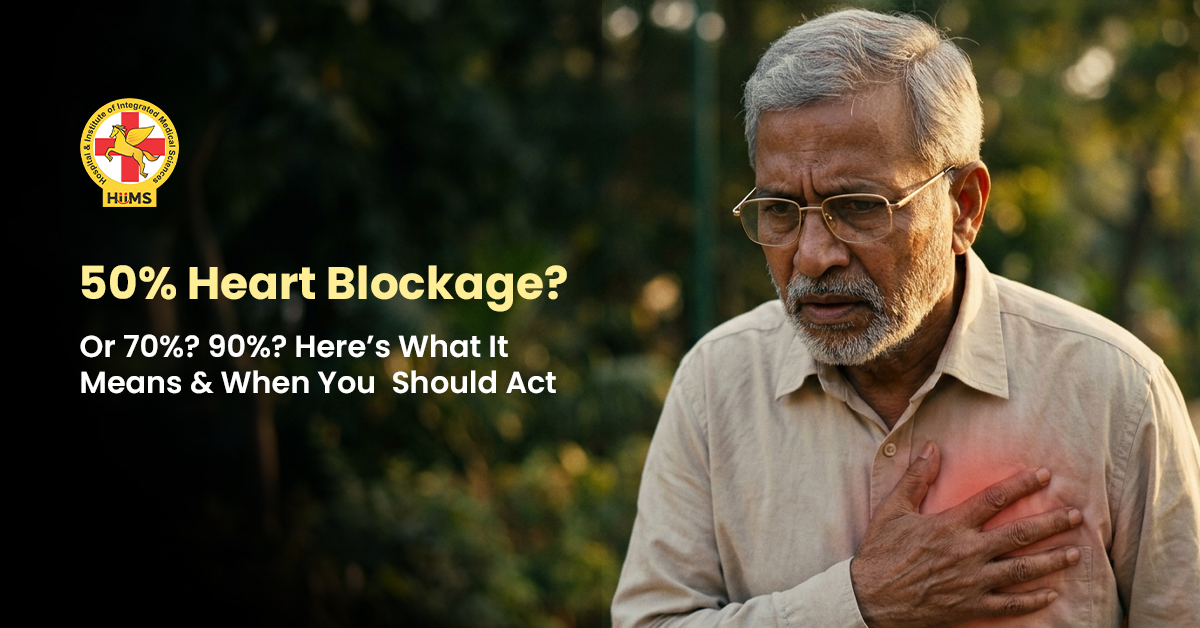

Finding out about a heart blockage in the body often feels like a sudden storm in a clear sky. One moment you are living your life, and the next, a medical test report with numbers like 50%, 70%, or 90% is looking back at you. Most people feel a sense of panic because these percentages sound like a countdown.
However, it is important to realize that these figures are not just a death sentence or a simple “clogged pipe” issue. They are measurements of how much space is left in your arteries for blood to flow. While the fear is natural, reacting only out of terror often leads to hasty decisions. Understanding the difference between a stable blockage and a critical risk is the first step toward true healing. Your heart is a strong organ, and these numbers are signals telling you exactly where your health stands.
In this blog, we will simplify these percentages and discuss how you can take the right steps toward recovery.
What Is Heart Blockage in Simple Terms?
To understand a heart blockage, picture your arteries like flexible pipes that carry blood to your heart muscle. Over time, due to poor food habits, stress, or lack of physical activity, sticky substances such as fat, cholesterol, and calcium start settling on the inner walls. This buildup is called plaque.
As this plaque grows thicker, the “pipe” becomes narrower. This narrowing is what doctors refer to as heart disease, where the heart has to pump much harder to push blood through a smaller opening.
Why Doctors Talk in Percentages (50%, 70%, 90%)
Doctors use percentages so people can understand how much the artery has narrowed. When it is fully open, blood flows easily, like a wide river. If there is a 70% blockage, most of that space is already taken by plaque, and only a small part is left for blood to move. Even then, this number alone does not tell the full picture.
The location of the plaque and whether it is “soft” or “hard” is important just as much. A small percentage in a main artery can sometimes be more concerning than a higher percentage in a minor branch.
Understanding 50% Heart Blockage – The Early Warning Stage
A 50% heart blockage is often considered the “yellow light” of traffic. It means your artery is half-blocked. At this stage, many individuals do not feel any intense pain because the remaining 50% of the space is usually enough to supply blood while you are resting or doing light work.
Common symptoms of heart blockage at this level might include:
- Feeling a bit more tired than usual after a long walk.
- Slight heaviness in the chest when climbing stairs.
- A general feeling of low energy or “heaviness.”
The risk here isn’t just the narrowing. It’s the possibility of the plaque rupturing. This is the perfect window to introduce natural remedies for heart disease to stabilize the heart and prevent the percentage from increasing further.
Understanding 70% Heart Blockage – The Risk Zone
When a report shows a 70% heart blockage, it means the “danger zone” has started. The heart is now struggling to get enough oxygen-rich blood, especially when you are active. You might feel a squeezing sensation in the chest, known as angina, which usually settles down when you sit or rest.
At 70%, the symptoms of heart blockage become more obvious:
- Noticeable shortness of breath during routine chores.
- Pain that might travel to your left arm, jaw, or upper back.
- Persistent fatigue that doesn’t go away with sleep.
At this stage, professional guidance is a must. However, don’t let the 70% figure force you into a panic. Many people manage this stage well by sticking to a proper diet for heart health and using simple natural ways to support better blood flow, without going for immediate surgery.
Understanding 90% Heart Blockage – The Critical Stage
A 90% heart blockage sounds frightening because it leaves only a small space for blood to pass. This stage is serious, and the risk of a heart attack becomes much higher. The heart muscle does not get enough oxygen. Still, in some long-term cases, the body adjusts by forming tiny new blood vessels around the blockage, known as collateral circulation.
Symptoms at 90% are usually quite severe:
- Chest pain even while sitting or lying down.
- Feeling dizzy or faint quite often.
- Extreme breathlessness even after taking a few steps.

While this stage requires urgent health monitoring at a specialized heart hospital, it is important to stay calm. Integrated modern diagnosis with natural heart disease treatment offers various ways to stabilize the heart.
Hrid Care Capsules: Ayurvedic Support for Heart Wellness
What is it?
Jeena Sikho Hrid Care Capsules are an Ayurvedic herbal formulation designed to help maintain heart health as part of a daily routine. It contains a blend of traditional herbs that are known for supporting heart function and maintaining healthy blood circulation.
Key Benefits
- Supports overall heart function
- Helps maintain balanced blood pressure
- Assists in managing cholesterol levels
- Promotes better blood circulation
- It can be included as part of a daily heart care routine

Ingredients & Their Role
- Arjun – Traditionally known in Ayurveda for heart-related support
- Lahsun (Garlic) – Used for maintaining cholesterol balance and circulation
- Sarpagandha – Known for its role in managing blood pressure and calming the system
- Brahmi – Helpful for stress balance and overall stability
- Giloy – Supports internal balance and general immunity
- Makoy – Known for its soothing effect on internal inflammation
- Shankh Bhasma – Provides mineral support for overall body balance
When Should You Actually Take Action?
You should take action the moment you notice a change in your physical stamina, regardless of the percentage on your report. Do not wait for the number to reach 90% to start caring for yourself. If you feel repeated chest pain, sudden unexplained sweating, or if your breath catches during a simple walk, your body is talking to you.
Diet for Heart Health – Small Changes That Matter
What you put on your plate is the most powerful medicine for your arteries. A diet for heart health should focus on clearing toxins and reducing inflammation.
- Eat more: Fresh seasonal fruits, green leafy vegetables, and fiber-rich whole grains like oats or millets.
- Heart-friendly spices: Use garlic, ginger, and amla, as they are known to help in improving blood flow.
- Avoid: Deep-fried snacks, non-veg. Foods, dairy products, refined flour (maida), and excessive white sugar.
Role of a Heart Hospital in Proper Guidance
Natural care can support recovery, but a specialized heart hospital like Jeena Sikho HiiMS still plays an important role in proper diagnosis. You need the right tests to clearly understand how your heart is working.
Combining expert medical diagnosis with a natural, holistic approach gives you the best of both sides. It ensures that you are safe while you work on reversing the damage through lifestyle changes.
Conclusion
Whether it is a 50%, 70%, or 90% heart blockage, these are simply stages of a condition that can be managed and, in many cases, improved. The body has a natural ability to recover when it gets the right support through food, routine, and a calmer state of mind.

Instead of living in fear of the report, use it as a map to change your direction. Focus on Ayurvedic treatment for heart disease and a disciplined lifestyle to rejuvenate your cardiovascular system.
To get personalized guidance and start your journey toward a healthier heart, you can also opt for VOPD consultation for your health issue with expert doctors at Jeena Sikho HiiMS.
FAQs
Q1: What is the first sign of a blockage in the heart?
The most common early sign is feeling unusual breathlessness or a slight heaviness in the chest during physical activities like climbing stairs.
Q2: Can a 70% blockage be managed without immediate surgery?
If the patient remains stable and has no active pain, many doctors recommend beginning with natural approaches, dietary changes, and basic lifestyle adjustments.
Q3: Is walking good for someone with a 90% heart blockage?
Light walking can help, but it should only be done after speaking with a doctor to make sure the heart is not under extra strain.
Q4: Which foods help in naturally clearing the arteries?
Foods high in fibre like oats, antioxidant-rich fruits like amla, and natural blood thinners like garlic are excellent for maintaining clear arteries.
Q5: How does stress affect heart blockage percentages?
Stress causes the release of hormones that can tighten arteries and increase inflammation, making even a small blockage more dangerous for the heart.
Ayurvedic Heart Care Products
100% natural, certified Ayurvedic formulations crafted for targeted heart wellness.



Disclaimer: The information provided on this blog is for general educational and informational purposes only. It is not intended to replace professional medical advice, diagnosis, or treatment. Always consult a qualified healthcare professional before making any changes to your diet, lifestyle, or treatment plan. Individual results may vary.