
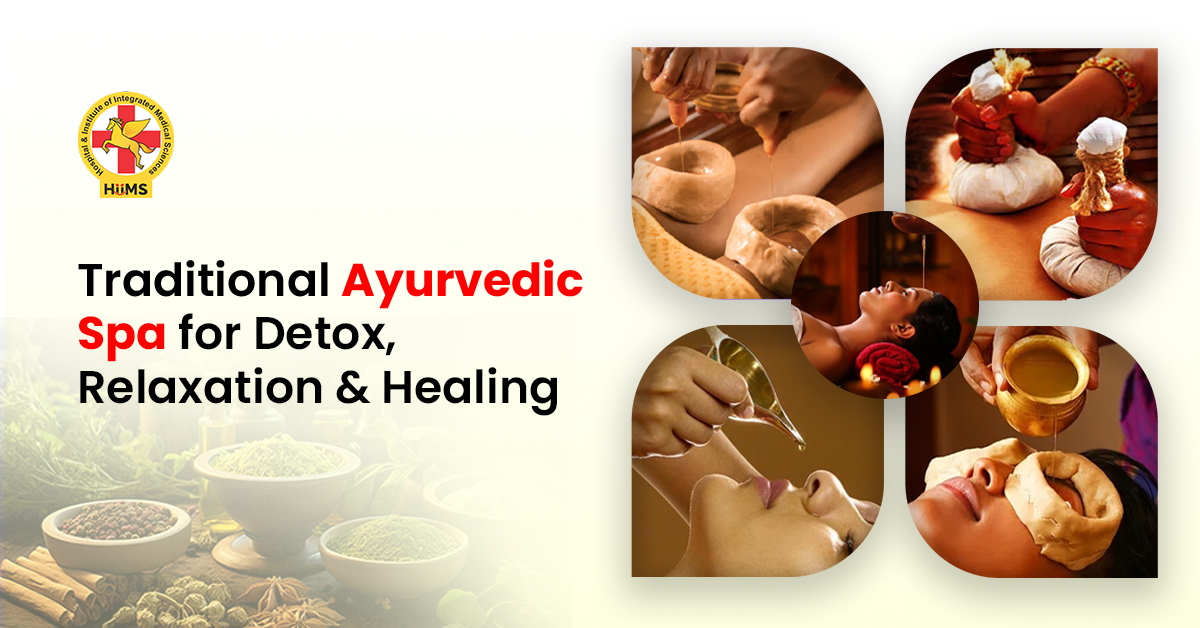
In today’s routine life, the body often carries stress, irregular food habits, poor sleep, and long working hours. Over time, these factors disturb digestion, affect sleep quality, cause muscle tightness, and reduce mental calmness. The body slowly collects toxins, which Ayurveda calls Ama. When this happens, people may feel heaviness, stiffness, tiredness, or lack of freshness in daily life.
A traditional Ayurvedic Spa follows a slow, supportive process. The body is not forced in any way. Toxins are released naturally, muscles loosen gradually, and balance is restored over time. These therapies follow age-old Ayurvedic methods and are done under trained guidance. The focus remains on overall wellness, not quick comfort.
Understanding the Role of an Ayurvedic Wellness Spa
An Ayurvedic wellness spa works on basic Ayurvedic principles. Body type, digestion, stress, and daily habits are first assessed. Only after this, suitable therapies are selected, not at random. This makes the process safe and personalised.
These therapies help improve circulation, calm the nervous system, and support natural detox. Many people notice better sleep, lighter digestion, and reduced stiffness over time. The changes may feel slow, but they stay longer when followed properly.
How an Ayurvedic Spa for Detox Works
The idea of Ayurvedic Spa for Detox is simple. The body needs help to remove waste that does not leave on its own. Poor digestion and stress block natural cleansing. Ayurvedic therapies open body channels and allow toxins to move out.
Detox therapies are done in steps. First, the body is prepared. Then cleansing methods are used gently. After that, rest and diet support recovery. This step-by-step approach protects strength while cleaning the system.
Common Ayurvedic Spa Therapy Options
Ayurvedic spa therapy offers different treatments for different needs. Some help the body relax, others help with detox or pain. Every therapy has its own role and proper time.
These therapies are usually combined with simple diet advice and rest. This balance helps the body respond better. Treatments are not rushed. Time and consistency matter here.
Benefits of Ayurvedic Spa Massage
Ayurvedic spa massage uses warm herbal oils applied with slow and rhythmic strokes. Oils are selected based on body condition. The massage helps loosen tight muscles and improves blood flow.
Many people feel relaxed after the session. Sleep improves, and stiffness reduces gradually. Massage also supports the nervous system, which helps mental calmness. When done regularly, it supports long-term comfort.
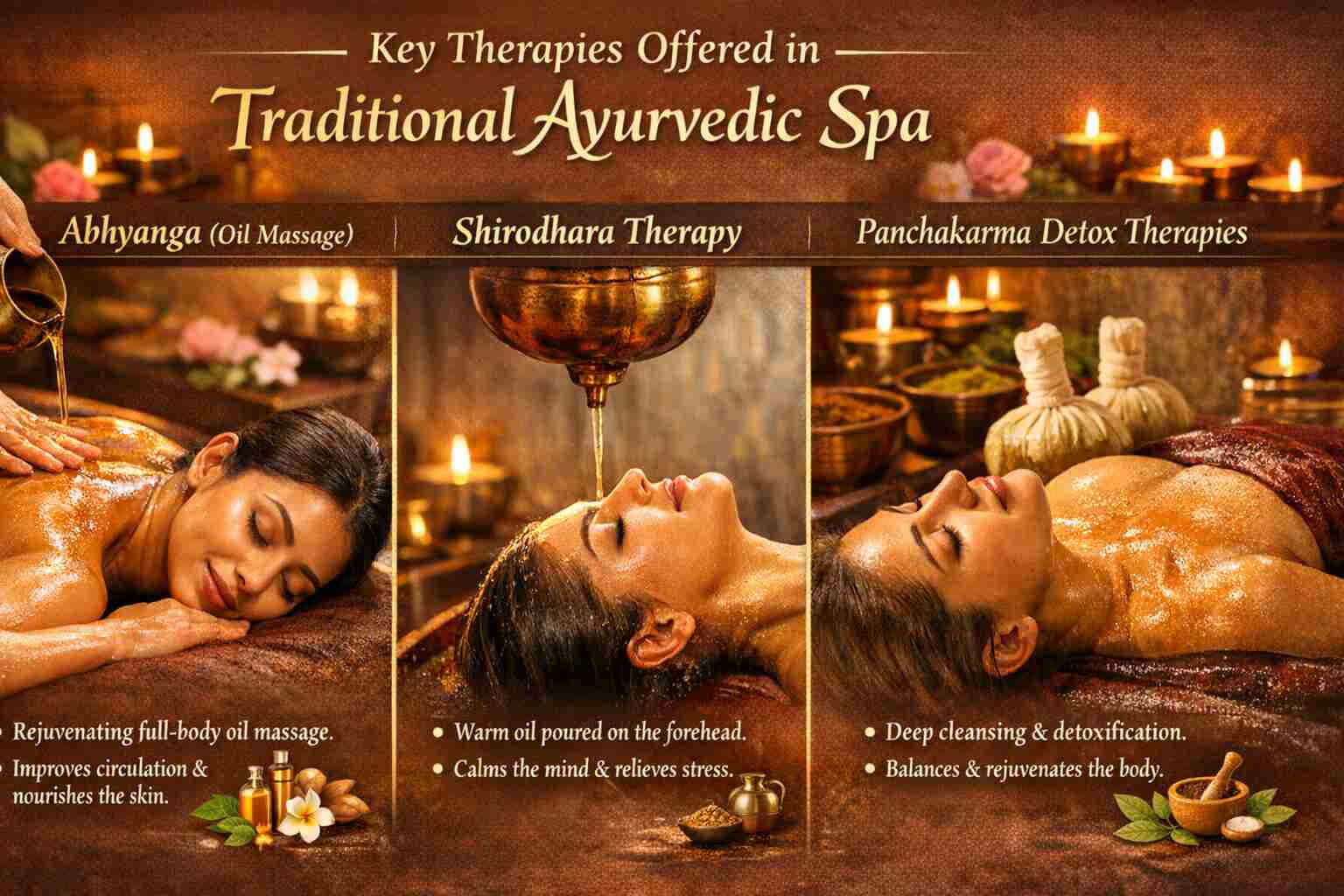
Key Therapies Offered in Traditional Ayurvedic Spa
Abhyanga (Oil Massage)
Abhyanga is a full-body oil massage done using warm medicated oils. It improves circulation, relaxes muscles, and supports joint comfort. The therapy is gentle and calming. It also helps keep the skin nourished and reduces dryness. When done regularly, tiredness reduces and the body feels lighter.
Shirodhara Therapy
Shirodhara involves a steady flow of warm liquid over the forehead. This therapy calms the nervous system, enhances sleep quality, and induces profound relaxation, particularly in stress-related conditions.
Panchakarma Detox Therapies
Panchakarma includes five main cleansing therapies. These are Vamana, Virechana, Basti, Nasya, and Raktamokshana. Each therapy targets specific toxin buildup.
These therapies are done only under medical supervision. Mild versions are selected based on body strength.
Role of Panchakarma in Healing
Panchakarma helps remove deep-seated toxins from the body. Virechana clears excess heat and bile. Basti supports digestion and balance. Nasya clears head channels.
These therapies help reset the body system. Recovery support is given after detox to regain strength slowly.
Supporting Therapies for Better Results
Steam therapy, known as Swedana, is often done after oil massage. It opens pores and helps sweating. This supports toxin release.
Other supportive treatments may include local therapies for joints or back. All therapies are chosen carefully.
Who Can Benefit from an Ayurvedic Spa
People with stress, poor sleep, body stiffness, and digestion issues often benefit. Those recovering from long illness may also feel supported. It is better to consult an Ayurvedic doctor before starting therapies. This helps make sure the treatment is safe and right for you.
Medical Care Beyond Wellness Therapies
Along with wellness therapies, doctors also manage serious health conditions. This includes cancer, liver disorders, heart diseases, infertility, jaundice, and other long-term health problems. Treatments are planned carefully, keeping overall health in mind.
At Jeena Sikho HiiMS, Ayurvedic therapies are guided by medical assessment. The focus remains on safe care, structured treatment, and long-term improvement, not temporary comfort.
Simple Lifestyle Support with Spa Care
Spa therapies work better with small daily habits. Recovery is supported when meals are on time, dinner is light, and rest is adequate. By taking warm water, walking a little, and sleeping on time, the body starts responding better to the therapy, and you feel more balanced.
Conclusion
A traditional Ayurvedic Spa supports detox, relaxation, and healing in a natural and structured way. The therapies work slowly and respect the body’s limits. Over time, sleep, digestion, and muscles feel better, and daily comfort increases.
When therapies are done under proper guidance, they support both physical and mental well-being. Selecting a trusted centre and adhering to professional guidance ensures safe Ayurvedic wellness. Jeena Sikho HiiMS provides expert support for a confident start toward balanced health.

FAQs
1. What is an Ayurvedic Spa used for?
It supports detox, relaxation, and overall body balance.
2. Is Ayurvedic spa therapy safe?
Yes, when done under trained medical supervision.
3. How often should spa therapies be done?
It depends on body condition and the doctor advice.
4. Can Panchakarma be done by everyone?
No, it is advised only when needed and under supervision.
5. Does Ayurvedic spa help long-term health?
Yes, it supports long-term balance when followed properly.