When a person begins cancer treatment, daily routines, food habits, and energy levels may change more than expected. Many patients and families feel prepared for hospital visits and medicines, but they rarely receive clear guidance about how the body may react during treatment. Then later on, learning about chemotherapy side effects before starting treatment can make the entire experience less confusing and more manageable for both patients and caregivers.
During the early phase of this therapy, people usually notice physical changes such as tiredness, changes in hunger, or digestive discomfort. These experiences may vary from person to person, especially when dealing with 1st chemo treatment side effects, which can feel unfamiliar and overwhelming. Knowing what is normal and what needs attention helps patients stay calm and take timely action.
Understanding the body’s response allows better planning of diet, rest, and emotional care during treatment. In this blog, you will read about common side effects, their causes, and practical care tips that can make everyday life less stressful.
Why Chemotherapy Side Effects Occur in the Body
Chemotherapy medicines work by targeting rapidly growing cancer cells. These medicines often fail to separate cancer cells from healthy, fast-growing cells in the digestive tract, hair roots, and bone marrow. This is why many people experience chemotherapy side effects in different parts of the body.
Each person reacts differently based on their strength, stage of illness, and treatment plan. Some people feel only small changes during treatment, but others can react more strongly and take time to adjust. Once patients understand what is happening inside the body, they usually feel more ready for 1st chemo treatment side effects and deal with them in a steadier way.
10 Common Chemotherapy Side Effects
1. Persistent Fatigue and Weakness
Symptoms: Continuous tiredness and low energy.
Causes: The body uses extra energy to repair healthy cells.
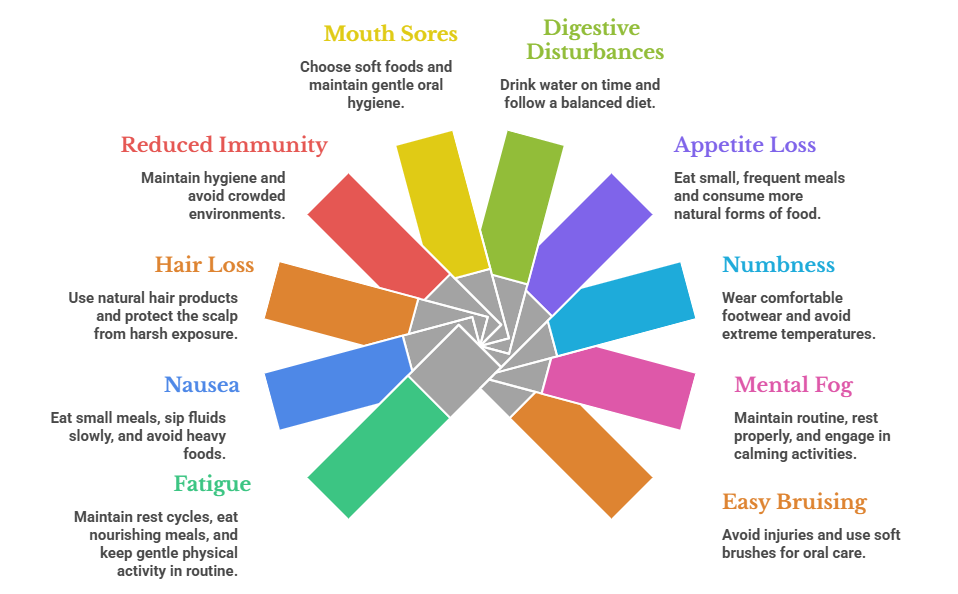
Care Tips: Maintain rest cycles, eat nourishing meals, and keep gentle physical activity in routine.
2. Nausea and Vomiting
Symptoms: Uneasy stomach and frequent vomiting.
Causes: Chemical and medication impacts on the digestive lining and brain signals.
Care Tips: Eat small meals, sip fluids slowly, and avoid heavy foods.
3. Hair Loss and Scalp Sensitivity
Symptoms: Gradual thinning or sudden hair fall.
Causes: Damage to hair follicles.
Care Tips: Use natural hair products and protect the scalp from harsh exposure.
4. Reduced Immunity and Infection Risk
Symptoms: Fever, frequent infections.
Causes: Lower white blood cell count.
Care Tips: Maintain hygiene and avoid crowded environments during treatment.
5. Mouth Sores and Throat Discomfort
Symptoms: Painful ulcers and difficulty swallowing.
Causes: Sensitive mouth lining.
Care Tips: Choose soft foods and maintain gentle oral hygiene.
6. Digestive Disturbances
Symptoms: Constipation or loose motions.
Causes: Impact on the digestive tract.
Care Tips: Drink water on time and follow a balanced diet.
7. Appetite Loss and Taste Changes
Symptoms: Food tastes different or there is reduced hunger.
Causes: Treatment-related digestive changes.
Care Tips: Eat small, frequent meals and consume more natural forms of food.
8. Numbness in Hands and Feet
Symptoms: Tingling or burning sensation.
Causes: Sensitivity in nerves.
Care Tips: Wear comfortable footwear and avoid extreme temperatures.
9. Mental Fog and Low Focus
Symptoms: Forgetfulness and reduced concentration.
Causes: Treatment stress and fatigue.
Care Tips: Maintain routine, rest properly, and engage in calming activities.
10. Easy Bruising or Bleeding
Symptoms: Frequent bruises or gum bleeding.
Causes: Reduced platelet count.
Care Tips: Avoid injuries and use soft brushes for oral care.
How Side Effects May Differ During the First Chemotherapy Session
For many people, the 1st chemo treatment side effects can feel emotionally heavier because the experience is completely new. Some patients start feeling tired or notice stomach discomfort within a few days, while for others the changes show up slowly over time. When patients remain attentive to the signals their body gives and share any changes with the doctor on time, doctors can adjust the treatment more smoothly and help them stay comfortable during the entire process.
Daily Care Tips to Support the Body During Chemotherapy
Maintaining a steady routine helps the body cope better with chemotherapy side effects. Balanced meals, proper hydration, and gentle movement support strength. Emotional well-being also plays an important role, as calmness and positive support improve recovery experiences.
Choosing Jeena Sikho HiiMS as the best cancer hospital ensures patients receive structured guidance for managing daily challenges safely.
Natural Healing Methods for Better Comfort During Treatment
Many patients today also look for supportive care that helps strengthen the body along with ongoing medical treatment. With proper guidance, simple changes in diet, balanced daily habits, and gentle wellness practices can support comfort and help the body stay steadier during the treatment phase.
Under expert supervision at the best cancer hospital, such approaches can be integrated carefully.
Finding the Right Care and Guidance During Cancer Treatment
Choosing the best cancer hospital plays a significant role in overall recovery. Many patients today prefer centres that provide both modern diagnosis and natural wellness guidance. Before starting strong treatments like chemotherapy, consulting experienced professionals of Ayurveda and natural treatment helps patients understand all available options and plan treatment wisely.

Conclusion
Facing treatment becomes easier when patients stay informed and prepared for possible changes in the body. Understanding chemotherapy side effects helps individuals respond calmly instead of feeling uncertain at every stage. With proper observation, balanced routines, and timely medical guidance, most challenges can be managed effectively without panic.
Families also play a strong role in maintaining emotional strength and daily care during this period. Choosing the right support system and staying connected with experienced professionals allows patients to move forward with clarity and confidence.
For personalised guidance and supportive care, connect with our team today at +91 82704-82704 or email care@jeenasikho.com.
FAQs
Q1. How long do chemotherapy side effects usually last?
Duration varies depending on treatment type and individual body response.
Q2. Do all patients experience severe reactions during chemotherapy?
Reactions differ from person to person and may range from mild to extreme.
Q3. Can lifestyle habits help manage treatment discomfort?
Balanced meals, rest, and hydration support the body during treatment.
Q4. When should a patient contact a doctor during treatment?
Seek help if fever, breathing issues, or unusual bleeding appear.
Q5. Is emotional support important during cancer treatment?
Strong emotional support helps patients stay calm and manage treatment better.