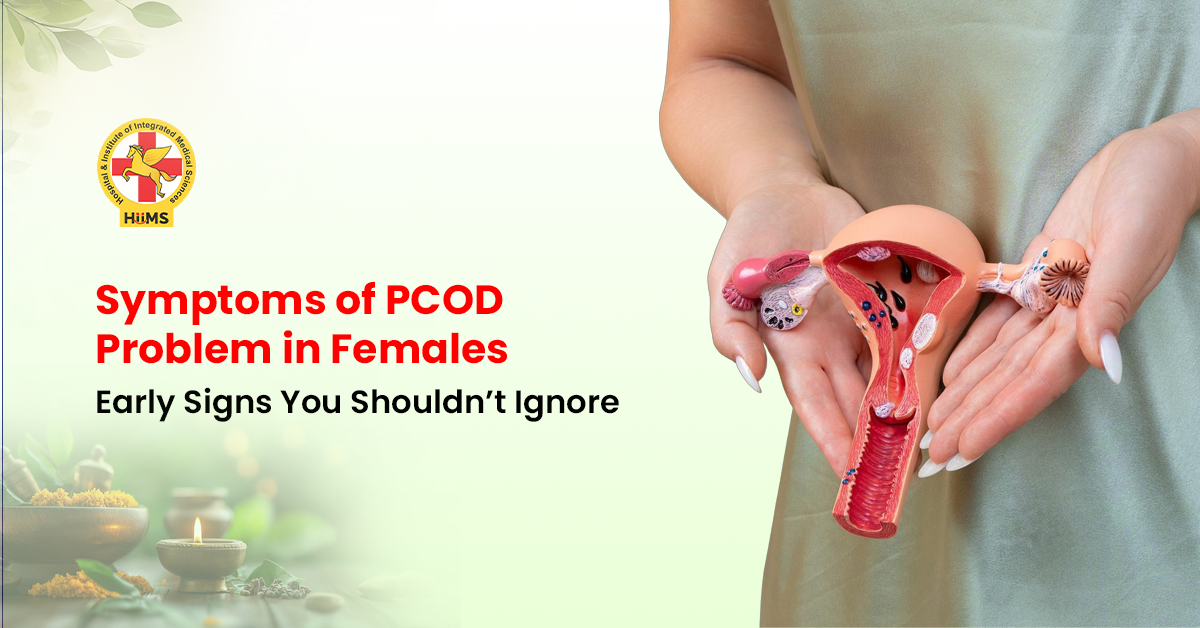

A woman’s body has its own rhythm. When that rhythm shifts, it usually gives small hints first, which are signs of pcod in women. A delayed period. Sudden acne. Mood changes that feel unfamiliar. Weight that increases without much change in diet. These are not random issues. Very often, these are Symptoms of PCOD problem in Females.
Many women ignore these changes. College students blame stress. Working women blame long hours. Married women assume it is temporary. But when the same pattern repeats month after month, it deserves attention.
PCOD Problems are not just about irregular periods. It is a hormonal imbalance that affects the entire system. The good part is that early awareness makes management much easier. At Jeena Sikho HIIMS hospital, many women come after struggling silently for years. What they often need first is clarity. Once they understand what is happening inside their body, the healing journey becomes smoother.
Table of Contents
PCOD Symptoms in Females
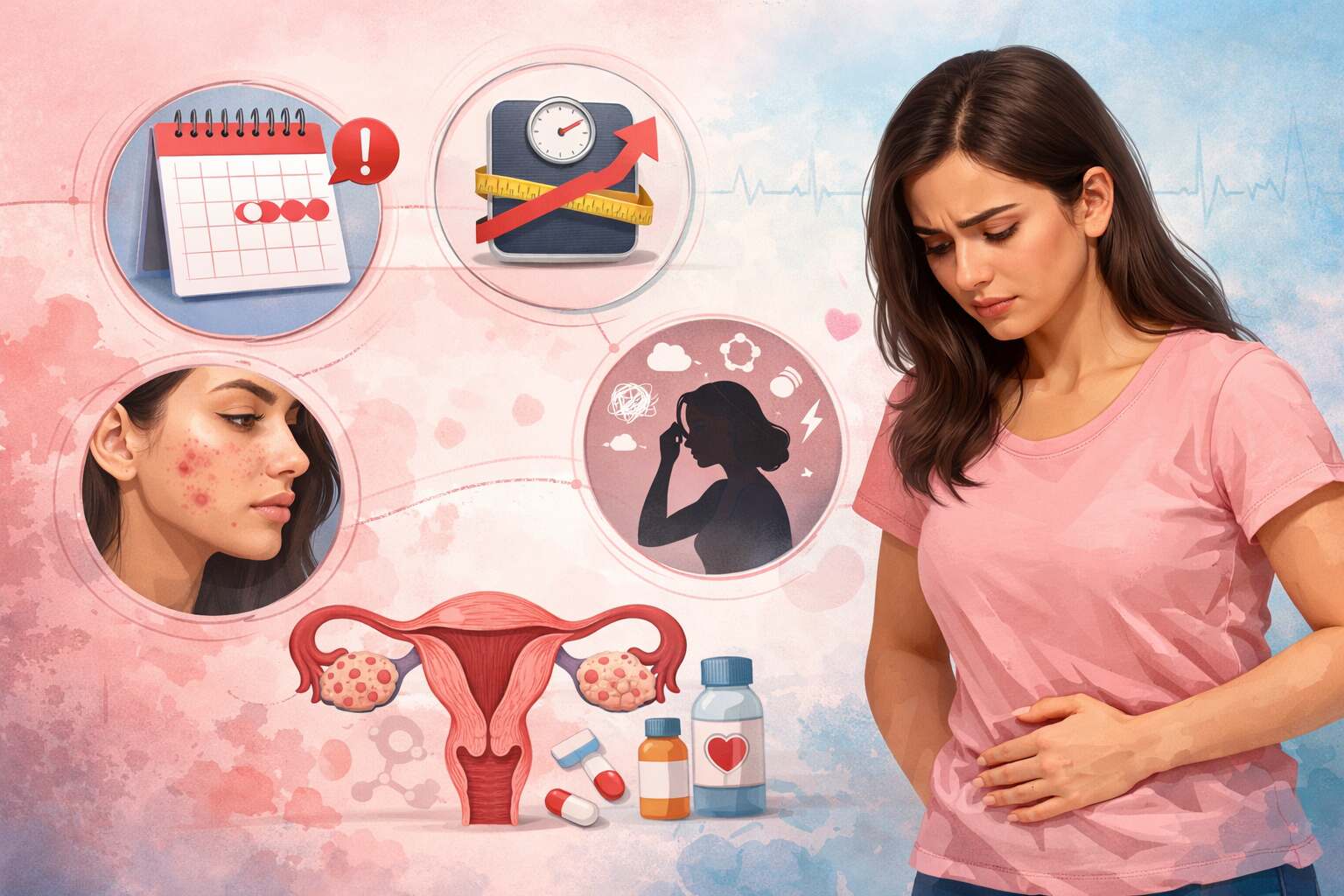
The most common Symptoms of PCOD Problem in Females begin with changes in the menstrual cycle.
You may notice:
- Periods care oming very late
- Skipping cycles completely
- Bleeding that is either too light or unusually heavy
- Severe cramps that were not present before
Along with pcod symptom in females, other changes may slowly appear:
- Acne that does not settle even after using treatments
- Weight gain, especially around the lower abdomen
- Feeling tired most of the time
- Mood swings without any clear reason
These pcod symptom in females may look small individually. But when they appear together, they point toward a hormonal imbalance.
In Ayurveda, such common symptoms of pcod is often connected to poor digestion and sedentary habits. When digestion weakens, toxins begin to accumulate. These toxins imbalance the hormones and disturb the entire body rhythm.
Jeena Sikho Hiims provides integrated therapies that work on the root cause of the signs of pcod in women. Ayurveda has 4 important pillars: Aahar(food), Vihar(lifestyle), Shaman(medicines), and Shodhan(therapies). When these four synchronise together, the body becomes disease-free.
What are the Symptoms of PCOD Problem in Females?
PCOD is not just related to monthly periods; it is beyond them. Some obvious symptoms include-
- Facial hair growth
- Hairs on the chest
- Too muchhair fall
- Dark patches on the body
- Obesity
- Unusual food cravings
Women with signs of pcod in women also complain of anxiety, stress, mood swings, and low energy levels. Women face both emotional and physical challenges, which makes them frustrated because, despite trying, they fail to cope with common symptoms of pcod.
Can Ayurveda Reverse PCOD?
Ayurveda sees it as a blockage of the reproductive organs. It says that if the hormones are disturbed, ovulation automatically becomes irregular.
Jeena Sikho Hiims guides with food, lifestyle, herbal medicines, and therapies. They concentrate on-
- Natural herbs for balancing hormones
- Detoxification by therapies
- Balanced diet
- Yoga and meditation for internal healing
- Emotional healing
Panchakarma, a combination of five therapies, is a well-known Ayurvedic detox therapy. It is carried out in five main steps:
- Vamana (therapeutic vomiting),
- Virechana (purgation),
- Basti (medicated enemas),
- Nasya (nasal therapy), and
- Raktamokshana (blood purification therapy).
These therapies are gentle and safe. They support the lower abdomen, reproductive system, menstrual cycles, and hormone balance.
2. Natural Herbs
Herbs used for PCOD management include:
- Shatavari –helps balance hormones
- Ashoka – supports overall female health
- Lodhra – helps relieve acne
- Triphala – improves digestion
- Ashwagandha – eases stress and sustains healthy hormones
These natural herbs not only balance hormones, but also improve overall women’s health.
3. Daily Life Changes
Minor lifestyle modification sometimes makes a big difference. Some helpful steps are:
- Follow a proper sleep schedule
- Take enough rest
- Go for gentle walks regularly
- Practice yogasanas like Badha Konasana, Malasana, Vajrasana, or Ujjayi pranayama
- Include mental relaxation exercises
- Eat meals on time and maintain a routine
Doing these simple daily habits can help control PCOD and keep your overall health in check
Does PCOD Affect Pregnancy?
Yes, for some women Symptoms of PCOD Problem in Females causes difficulty in conceiving, which becomes the first visible concern. Due to irregular ovulation, pregnancy may take longer.
It is important to remember that PCOD is manageable. Blaming yourself does not help. Understanding your body does.
Ayurveda believes that a healthy reproductive system depends on strong digestion, proper sleep, and emotional balance. If these foundations are disturbed, hormones follow the same path.
Jeena Sikho Hiims makes sure that patients understand the importance of discipline. Regular practice of managing meal timings, sleep habits, exercise, and herb intake. Women with PCOD should work on personal habits in the first place.
Conclusion
Having symptoms of PCOD problem in females doesn’t mean that it can never be treated. Women should always pay attention to even minor issues they have. Early action prevents bigger struggles later. Young girls should be educated about their cycle. Women should feel comfortable discussing irregularities without hesitation. Having PCOD does not change a woman’s femininity; it is just a condition that can be healed with consistency.
The aim is to restore harmony within the body through Ayurveda, mindful living, and consistent support. If you notice changes that feel unusual, listen to your body. Early care makes the journey lighter. And when the body returns to balance, everything else begins to feel easier, too.

FAQ
1. Why Does PCOD Happen?
PCOD usually happens because of a hormonal imbalance. But poor diet and lifestyle can also be responsible for it.
2. Can Young Girls Get PCOD?
Yes, PCOD can affect any age group of women who have their menstruation.
3. How to Control PCOD?
PCOD can be controlled with proper diet, exercise, therapies, and herbs.
4. Can PCOD Affect Fertility Among Women?
Yes, fertility can be affected in women dealing with PCOD.
5. Is PCOD Very Serious?
PCOD isn’t directly life-threatening but is a serious hormonal imbalance that, if ignored, can lead to significant long-term health risks like infertility, insulin resistance, Type 2 diabetes, heart disease, and even endometrial cancer.

Disclaimer: The information provided on this blog is for general educational and informational purposes only. It is not intended to replace professional medical advice, diagnosis, or treatment. Always consult a qualified healthcare professional before making any changes to your diet, lifestyle, or treatment plan. Individual results may vary.