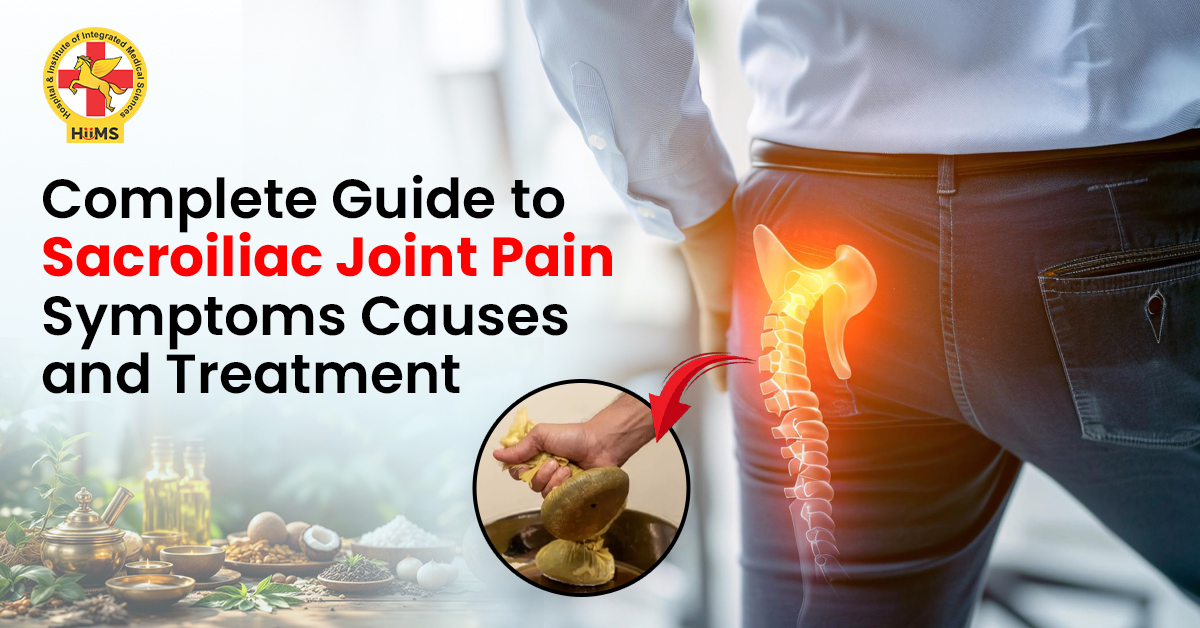

Pain in the lower back or hip area is very common today. Many people feel discomfort while standing, walking, or even sitting for long hours. Often, this pain is linked to sacroiliac joint pain symptoms, but most people don’t realise it early and ignore it as normal back pain. The sacroiliac joints join the sacrum, located at the base of your spine, and the iliac bones, two large bones present at the side of your pelvis.
When this joint becomes irritated or stiff, it affects daily movement. Early attention makes a big difference, as timely care helps prevent long-term discomfort.
This blog explains symptoms of sacroiliac joint pain, their causes, and simple ways to manage the condition using natural care and daily habits.
What Are Sacroiliac Joint Pain Symptoms?
Many people feel confused about where the pain is coming from. Sacroiliac joint pain symptoms usually start quietly and slowly increase with time.
Common signs include:
- Pain in the lower back, hips, or buttocks
- Discomfort on one side of the body
- Pain that increases while standing, walking, or climbing stairs
- Stiffness after sitting for long hours
- Pain that spreads to the thighs or groin area
Some people notice that sacroiliac joint pain worsens in the morning or after physical activity.
What are the Sacroiliac Joint Pain Symptoms?
Many factors can cause sacroiliac joint pain symptoms, such as long hours of sitting with little movement, poor posture while working or driving, sudden injuries, and weak muscles around the hips and lower back.
Pregnancy and sudden weight changes can also put extra pressure on the joint. Conditions like arthritis or inflammation may worsen the problem.
These factors disturb the balance of the joints, leading to the development of pain. Identifying sacroiliac joint pain causes early helps in avoiding serious mobility problems later.
When Should You Take It Seriously?
Many people wait until pain becomes severe. However, sacroiliac joint pain symptoms should not be ignored if they start affecting daily routine.
If pain lasts more than a few weeks, it makes simple activities like walking, sitting, or sleeping uncomfortable and affects our daily routine.
Therefore, understanding the symptoms and taking early joint pain treatment makes the recovery faster and more effective.
Simple Ways to Manage Sacroiliac Joint Pain
Good results usually come when treatment focuses on the root cause instead of temporary relief. Sacroiliac joint pain Treatment works best when combined with gentle therapies, exercises, and lifestyle changes. These include:
Natural Therapies: The natural therapies that are used by our expert doctors to cure joint pain are janu basti, kati basti, greeva basti, and pristha basti, which help in improving the overall health of our joints.
Herbal support: Shallaki, guggulu, ashwagandha, and turmeric are used to support joint strength and comfort. These herbs help in the natural healing of the joints.
Daily Movement: Daily movements such as short walks, light stretching, reduce stiffness and improve the flow of blood. Exercise plays an important role in managing pain, such as hip stretches, or yoga poses like vajrasana, mandukasana.
This balanced approach makes sacroiliac joint pain treatment safe and long-lasting.
Lifestyle Changes That Make a Difference
Small daily habits have a big impact on recovery. Following these tips supports long-term relief:
- Sit with proper posture
- Avoid lifting heavy weights
- Eat fresh, home-cooked food
- Drink enough water
- Maintain a healthy body weight
- Take short breaks from sitting
These habits support overall joint pain treatment and keep joints healthy.
Natural Treatment Guided by Specialists
At Jeena Sikho HiiMS, our experts provide personalised care to patients for their joint problems. Doctors take time to understand the condition of a patient and guide patients through every stage of care.
They work on fixing the sacroiliac joint pain causes, which maintain the overall balance of the joints and help our body for comfortable movements.
Along with joint care, doctors also look after other health problems such as liver issues, heart disease, diabetes, cancer, and digestive troubles, so patients can receive complete treatment in one place.
Read More Info: Best Joint Pain Doctor
Conclusion
Pain while walking, sitting, or standing should never be taken lightly. If ignored, sacroiliac joint pain can slowly affect daily life. Understanding the sacroiliac joint pain symptoms, starting early care, and following natural methods help reduce discomfort and restore movement.
If sacroiliac joint pain is affecting your routine, then visiting the right hospital becomes important. Proper care at the right time makes healing smoother and life more comfortable. For natural and gentle sacroiliac joint pain treatment, reach us at Jeena Sikho HiiMS, or email us at care@jeenasikho.com.

FAQs
Q1. What causes Sacroiliac Joint Pain?
Pregnancy, any type of injury, or infection can cause sacroiliac joint pain.
Q2. What are the symptoms of sacroiliac joint pain?
Pain in the lower back and hips, pain increases with movement, or uneven length of legs are the common symptoms.
Q3. Can sacroiliac joint pain be treated naturally?
Natural therapies, herbal remedies, and lifestyle changes help in managing the pain.
Q4. Which is the best hospital for sacroiliac joint pain?
Jeena Sikho HiiMS is the best ayurvedic hospital for sacroiliac joint pain.
Q5. Is joint pain treatment effective without surgery?
In most cases, early natural care helps avoid surgery and improves mobility.
Disclaimer: The information provided on this blog is for general educational and informational purposes only. It is not intended to replace professional medical advice, diagnosis, or treatment. Always consult a qualified healthcare professional before making any changes to your diet, lifestyle, or treatment plan. Individual results may vary.