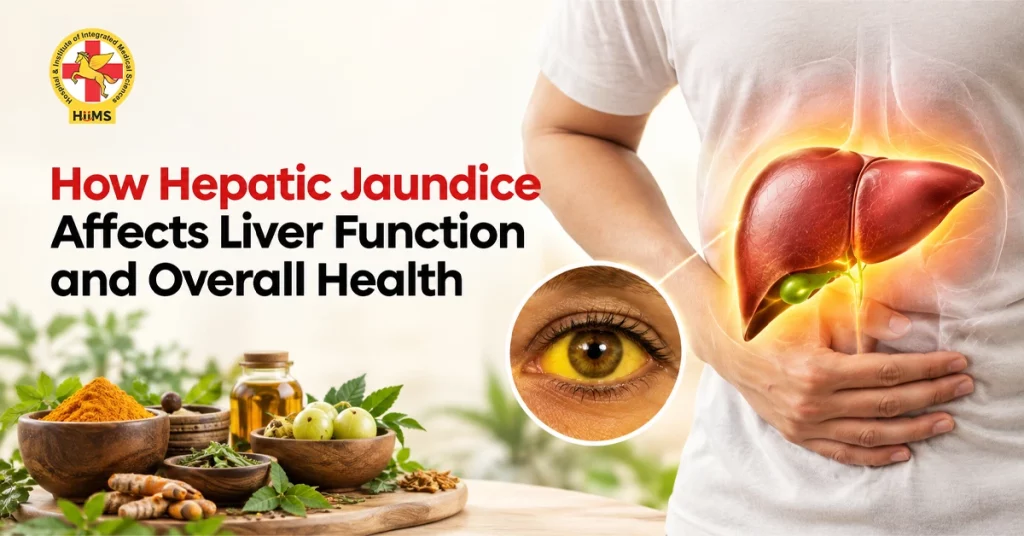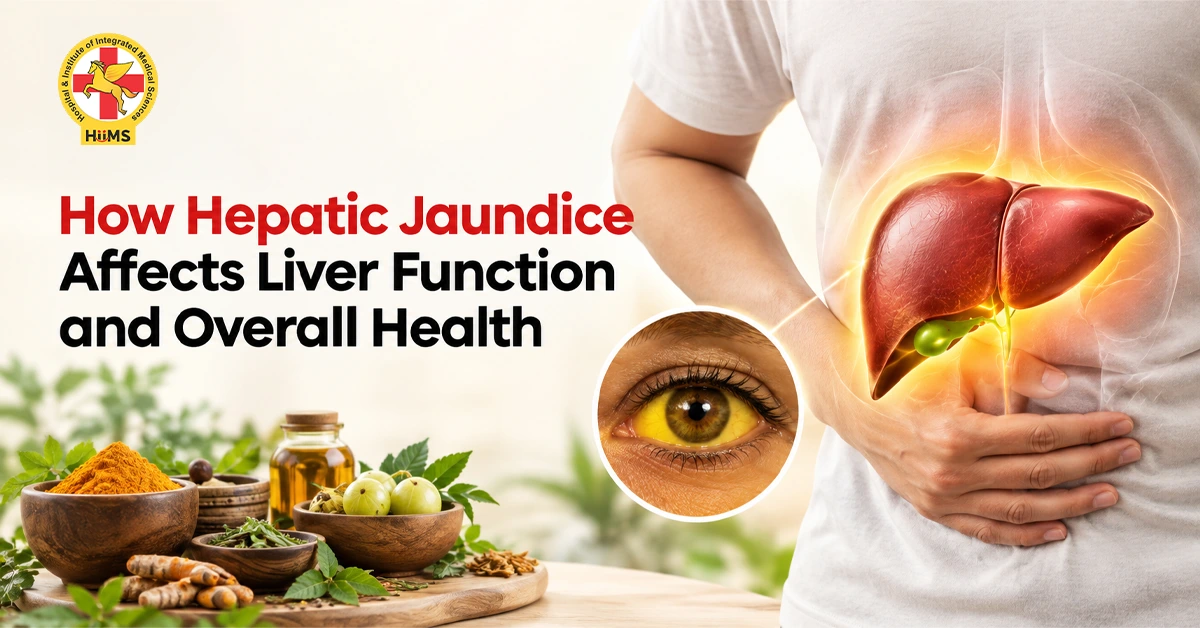

Jaundice is a condition that is fairly easy to notice, since the whites of the eyes and sometimes the skin start looking yellow. It happens because of bilirubin, which is a yellow substance formed when the old red blood cells break down in the body. Normally, the liver takes care of this bilirubin and helps remove it through bile. But when the liver is not able to do this job properly, bilirubin starts collecting in the blood, and this leads to jaundice.
Hepatic jaundice is connected to a problem occurring inside the liver. It can appear when liver cells get inflamed or damaged and are unable to process the bilirubin properly. Because of this, digestion, appetite, energy levels, and other normal body functions can also get disturbed. Understanding this connection between bilirubin and liver function can help someone take early steps for better liver care. In this blog, we will understand what takes place inside the liver and how jaundice can affect overall health.
What Is Hepatic Jaundice?
Hepatic jaundice develops when the liver has difficulty taking up, processing or removing bilirubin from the blood. The liver normally changes bilirubin into a form that can leave the body through bile. If this process becomes disturbed, bilirubin levels can rise, and yellowing of the eyes or skin may become visible.
This does not mean that every case of jaundice has the same cause. Liver inflammation, viral infections, alcohol related liver disease, certain medicines, and other liver conditions may affect bilirubin processing. The exact reason needs to be understood before deciding on a suitable care plan.
How Does Hepatic Jaundice Affect Liver Function?
The liver performs many important tasks every day. It helps process the nutrients, produces bile, stores certain nutrients and supports the removal of waste substances from the blood. When liver cells are affected, several of these functions may become disturbed. The National Institute of Diabetes and Digestive and Kidney Diseases explains that the liver has important roles in digestion, nutrient processing and distribution, and that jaundice can be a sign of liver disease.
Bilirubin processing is one of the clearest examples. When liver cells cannot handle bilirubin normally, its level may rise in the blood. This also raises an important question, Can hepatic jaundice damage the liver?
Jaundice itself is usually a sign of an underlying liver or the bile related problem, and the effect on liver health depends on its cause and severity. In more serious liver problems, the effect can go beyond bilirubin. The liver also helps make proteins needed for normal blood clotting, so severe liver dysfunction can affect clotting and other body functions.
Common Symptoms to Notice
Jaundice may show up differently from one person to another. While yellow eyes are a common sign, some people may first notice low energy, a reduced appetite, or other changes in their usual health. The common hepatic jaundice symptoms include:
1. Yellow skin or yellowing of the eyes
2. Dark coloured urine
3. Pale or light coloured stools
4. Weakness and tiredness
5. Loss of appetite
6. Nausea
7. Itchy skin
8. Discomfort on the upper right side of the abdomen
Changes in urine and stool colour can be related to problems with bilirubin processing or bile flow. However, these symptoms do not by themselves show the exact cause of jaundice. If you are experiencing yellowing of the eyes, dark urine, weakness or other jaundice symptoms, speak with a healthcare professional to understand the possible cause and suitable next steps.
What Can Lead to Hepatic Jaundice?
There are several hepatic jaundice causes, and they may affect the liver in different ways. Viral hepatitis, alcohol related liver disease, certain medicines, toxins, and some long-term liver conditions are among the recognised causes. The World Health Organization information on hepatitis also explains that viruses, alcohol, certain drugs and autoimmune conditions can cause hepatitis.
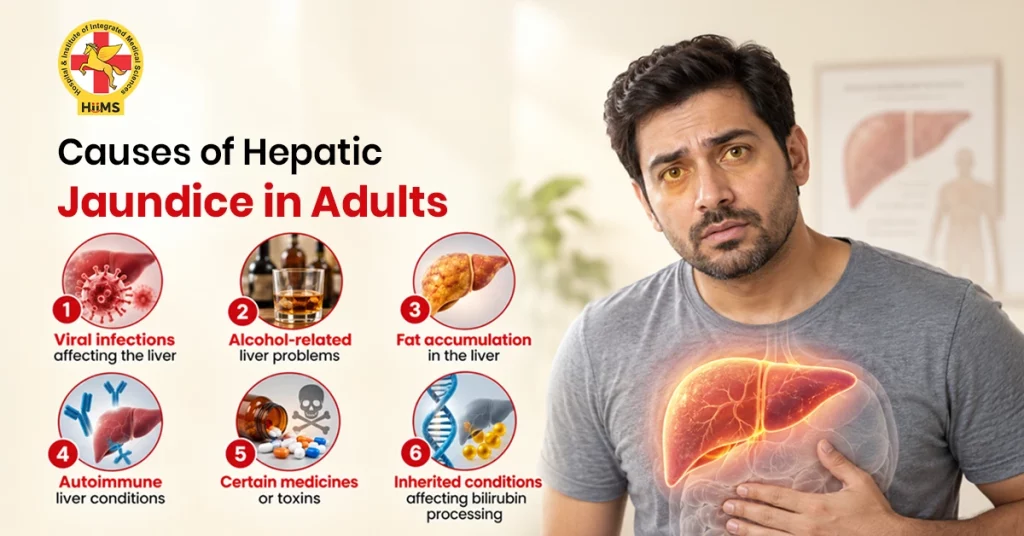
Some causes of hepatic jaundice in adults can include:
1. Viral infections affecting the liver
2. Alcohol-related liver problems
3. Fat accumulation in the liver
4. Autoimmune liver conditions
5. Certain medicines or toxins
6. Inherited conditions affecting bilirubin processing
Because the causes are different, jaundice should not simply be treated as a single condition. Finding the reason behind raised bilirubin is an important part of proper care.
Understanding Jaundice Through a Natural Care Approach
Ayurveda gives importance to digestion, food habits, daily routine, and the overall condition of the body. In a person dealing with jaundice, food should generally be simple and easy to digest. Adequate rest and proper hydration can also be important parts of supportive care.
At Jeena Sikho HiiMS, Ayurvedic care is planned by considering the person’s food habits, digestion, lifestyle and overall health. Instead of concentrating only on a particular symptom, the approach looks at the person’s condition as a whole. The guidance can vary from person to person and may include dietary changes, lifestyle practices, and supportive therapies under proper supervision. Having jaundice-related concerns? Watch Acharya Manish Ji’s video for additional guidance and information.
How Jeena Sikho HiiMS Supports Liver Wellness
Liver health is closely linked with food habits, digestion, sleep, and daily routine. Jeena Sikho HiiMS considers these factors while planning Ayurvedic care according to an individual’s needs.
The approach may involve guidance on food choices, digestion, daily habits, and proper rest, along with supportive Ayurvedic therapies when needed. Instead of using the same routine for every person, the focus is on individual needs and simple habits that can help support overall liver health.
The core therapy: Virechana (purgation)
The best treatment for jaundice is virechana, and it must start with virechana, since jaundice is understood as a vitiation of blood tissue, which is closely linked to the liver. Reasoning behind this: since the liver is the main site of metabolism and detoxification, the diet is kept easily digestible, and waste materials are removed from the intestine early during the jaundiced state, so treatment focuses on medicines and natural therapies that help clear waste from the gut and kidneys while providing energy, without burdening the liver further.
Alongside purgation
- Shodhana (bio-purification) therapies, of which Virechana is the main one used for jaundice.
- Shamana Chikitsa (palliative/pacifying treatment): herbal formulations to balance Pitta, support digestion, and aid liver recovery, often used after the purification phase.
- Pathya-Apathya (diet and lifestyle guidance): avoiding heating, oily, or heavy foods and following a Pitta-pacifying diet, considered essential to recovery alongside medicines.
What case studies report
Published case reports describe patients with viral hepatitis or hepatocellular jaundice treated with Virechana followed by herbal medicines, with improvements tracked through liver function tests (bilirubin, SGPT/ALT, AST) over weeks to months of treatment.
Conclusion
Hepatic jaundice is more than a change in skin or eye colour. It can indicate that the liver is having difficulty processing bilirubin and may be linked with changes in digestion, energy, and other body functions. Understanding the underlying reason is therefore important. A simple diet, proper rest and suitable lifestyle habits can support overall liver care.
Jeena Sikho HiiMS provides personalised Ayurvedic guidance by considering a person’s health condition, food habits and daily routine. Those looking for natural, Ayurveda-based support can opt for a VOPD consultation to understand the suitable next steps and jaundice treatment options under the proper guidance.

FAQs
Q1. What is hepatic jaundice?
It is jaundice that starts inside the liver when damaged liver cells cannot handle bilirubin properly.
Q2.What is bilirubin?
It is a yellow substance that forms when old red blood cells break down.
Q3.Why do the eyes turn yellow in jaundice?
Extra bilirubin builds up in the blood and settles in the whites of the eyes and the skin.
Q4.How does a healthy liver remove bilirubin?
It changes bilirubin into a form that can leave the body through bile.
Q5.Can Ayurveda help in jaundice?
Ayurveda supports the liver through simple food, a steady routine, and herbs taken under expert guidance.
Disclaimer: The information provided on this blog is for general educational and informational purposes only. It is not intended to replace professional medical advice, diagnosis, or treatment. Always consult a qualified healthcare professional before making any changes to your diet, lifestyle, or treatment plan. Individual results may vary.