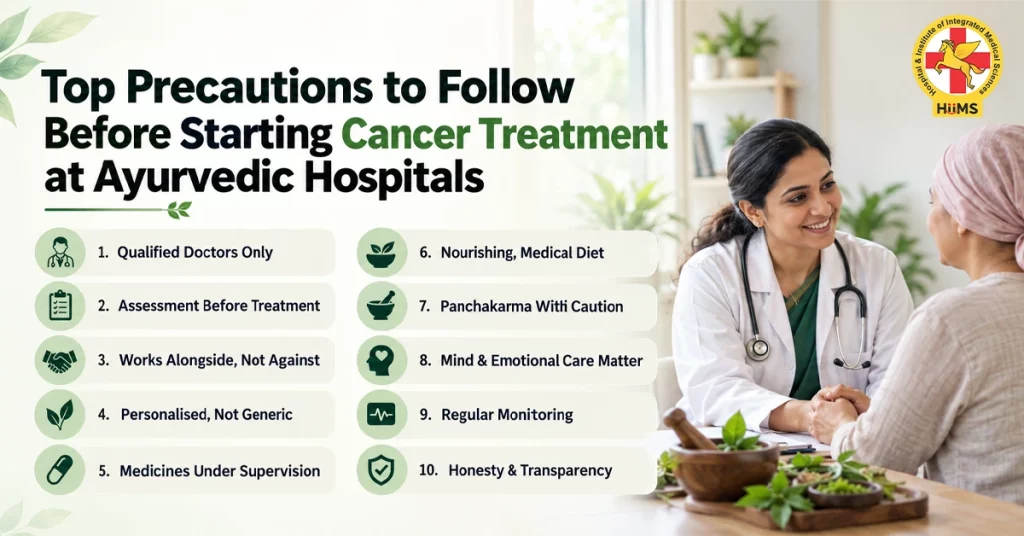

When someone is dealing with cancer, choosing the right place for treatment is not a decision to rush through. There are several things to look into before starting care, especially when you are considering an Ayurvedic hospital for cancer management. Take time to ask about the doctors, your medical reports, medicines, diet, therapies, regular check-ups, and what medical help is available if a problem comes up.
These cancer treatment precautions can help patients and families ask the right questions and understand what kind of care they are being offered. When Ayurveda is being considered along with oncology care, clear communication between healthcare teams is also important.
What Should You Check Before Starting Cancer Treatment at an Ayurvedic Hospital?
Before admission or starting a new treatment plan, patients and their carers should take some time to understand how the hospital works. Do not hesitate to ask about the doctors, proposed therapies, medicines, food plan, testing, costs, follow-up, and what happens if the patient’s condition changes. A little clarity at the beginning can make the treatment journey easier to understand.
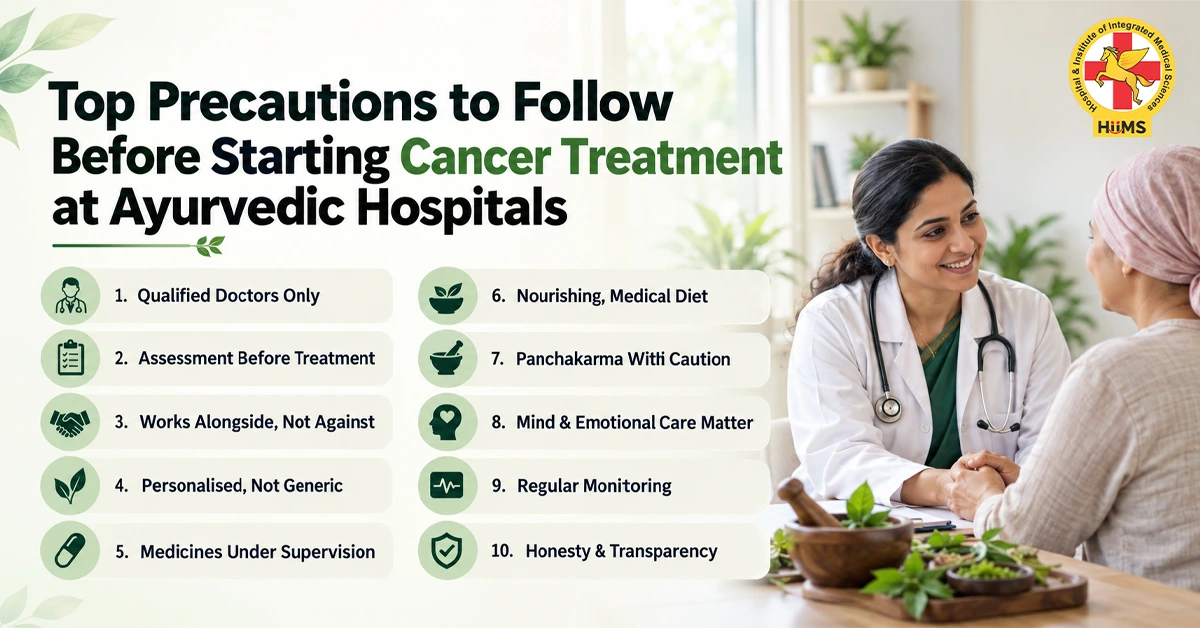
1. Treatment Should Be Led by Qualified Doctors
The first thing to check is who will be looking after the patient. Ask about the qualifications and experience of the doctors and whether they have access to the patient’s complete medical history. Cancer care can involve several medicines and procedures, so Ayurvedic cancer care should be planned by qualified professionals who understand the patient’s existing condition and ongoing treatment.
2. A Thorough Assessment Should Be Done Before Treatment
A treatment plan should begin with a proper assessment, not simply with a list of symptoms. Carry pathology reports, scans, prescriptions, previous treatment records, and details of current medicines. The doctor may also need information about the cancer type, stage, general health, nutrition, and earlier treatments. These details help the care team understand the patient’s situation before suggesting Ayurvedic treatment for cancer or any other therapy.
3. Ayurvedic Care Should Work Alongside Cancer Treatment, Not Against It
Patients should clearly tell the Ayurvedic doctor if they are receiving chemotherapy, radiation, surgery, immunotherapy, targeted therapy, or other medicines. They should also inform their oncology team about any Ayurvedic medicines, herbs, supplements, or therapies they plan to use. This kind of communication is an important part of integrative cancer care. Patients should never stop, delay, or change prescribed cancer treatment on their own. Some herbal products can interact with medicines used during cancer care, so every product should be discussed with the treating healthcare professionals.
4. The Treatment Plan Should Be Individualised
Cancer does not look the same in every patient, so the care plan should not be the same for everyone. The patient’s reports, age, current medicines, food habits, previous treatment, general condition, and personal needs should be considered. Ask the doctor why a particular therapy has been suggested and how it fits into the overall plan. A personalised approach is an important point to consider when choosing an Ayurvedic hospital for cancer treatment.
5. Medicines Should Be Properly Sourced and Used Under Supervision
Before taking any Ayurvedic medicine, ask what it contains, why it has been prescribed, how it should be taken, and who is supervising its use. Patients should also share details of all medicines and supplements they already take. The word “natural” does not automatically mean that a product is suitable for everyone. Some herbs and supplements can interact with prescription medicines, including medicines used in cancer treatment.
6. Diet Should Be Nourishing and Medically Appropriate
Food can become a major concern during cancer treatment. Appetite, digestion, taste, weight, and nutritional needs may change during different stages of care. A diet plan should therefore be prepared according to the patient’s condition instead of following a restrictive plan found online. Proper food and fluids should be considered according to medical advice. Fasting or meal-timing practices should also be discussed with the treating healthcare team before they are started.
7. Panchakarma and Other Therapies Should Be Carefully Selected
Panchakarma is not something that should automatically be given to every cancer patient. The patient’s current condition, treatment history, medicines, strength, and other medical factors need to be considered before any therapy is planned. If Panchakarma or another Ayurvedic procedure is suggested, ask what the procedure involves, how often it will be done, who will supervise it, and whether any changes are needed because of ongoing cancer treatment. This is an important part of considering Ayurvedic treatment for cancer.
8. Mind and Emotional Well-Being Should Also Be Considered
Cancer treatment can bring major changes to everyday life. Patients may feel tired, worried, frustrated, or overwhelmed at different points. A calm treatment environment, respectful communication, yoga, meditation, relaxation practices, or counselling where appropriate can make the care experience more comfortable. Some mind-body practices, including yoga and mindfulness, have been studied for managing certain symptoms and treatment-related concerns.
9. Regular Monitoring and Quick Medical Response Should Be Available
A good treatment plan should include regular review rather than leaving the patient without follow-up. Ask how symptoms, reports, medicines, and changes in health will be monitored. It is also important to know whom to contact if something unexpected happens. Before beginning treatment, ask about the hospital’s arrangements for urgent medical attention and where the patient would be taken if a higher level of care becomes necessary.
10. The Hospital Should Be Honest and Transparent With Patients
Patients deserve a clear explanation of the treatment being offered. The doctor should explain what a therapy is intended to do, how long it may continue, what its limitations are, and how it fits into the patient’s overall cancer care. Patients should also be told when conventional medical treatment or specialist care remains necessary. Be careful with any hospital or product that promises a guaranteed cancer result or asks a patient to stop established treatment.
11. Check the Hospital’s Facilities and Patient Care Environment
The treatment environment matters, especially when a patient may need to stay for several days. Check whether the hospital has suitable OPD and IPD facilities, day-care arrangements, therapy areas, diagnostic or report assessment, accommodation, diet services, and assistance for attendants. These practical details can make a difference to the patient’s daily experience. When comparing the best Ayurvedic hospital for cancer, look at the actual facilities and care arrangements rather than relying only on promotional statements.
12. Check Registration and Accreditation
Before admission, patients can ask whether the hospital is properly registered and whether the doctors and practitioners have the required qualifications. If a hospital mentions accreditation or an AYUSH-related registration, patients can ask for the relevant details and verify them through the appropriate authority where possible. Checking these details gives patients a clearer picture of the organisation they are choosing.
13. Ask About Side-Effect and Emergency Protocols
Do not wait until an emergency to find out what the hospital would do. Ask who handles urgent medical problems, whether medical assistance is available at the facility, and what arrangements are in place for transferring a patient if advanced hospital care is needed. If the treatment centre does not have an ICU, ask which nearby hospital would be used when such care is required. Having this information beforehand can help the family respond more calmly if a serious situation develops.
14. Ask for a Clear Cost Estimate Before Starting
Treatment costs can include more than the doctor’s consultation. Ask about medicines, therapies, tests, room charges, food or diet services, day-care charges, and follow-up visits. If the patient is staying at the hospital, ask for the applicable room and attendant charges as well. A written estimate can make it easier to understand the expected expenses and ask about any additional charges before treatment begins.
15. Understand the Follow-Up Plan
Treatment does not necessarily end when the patient leaves the hospital. Ask how often follow-up consultations will be required, whether reports need to be reviewed again, and whom the family should contact with questions after discharge. The follow-up plan should also explain how diet, lifestyle guidance, medicines, and any ongoing oncology treatment will be handled. Regular communication is an important part of integrative cancer care.
How HiiMS Addresses These Important Cancer Care Precautions
Knowing what to check before starting cancer care is important, but it is also useful to see how a hospital handles these areas in practice. Jeena Sikho HiiMS has facilities, treatment services, and accreditation that can give patients more information while they are considering their care options.
NABH-Accredited Facilities
Accreditation is one of the details patients can check before choosing a hospital. Jeena Sikho has NABH-accredited facilities under the AYUSH Hospital category. The NABH record for Jeena Sikho Lifecare Ltd. also includes Panchakarma Treatments within its accredited scope. This gives patients a point they can verify when looking into the hospital and its services.
Personalised Care and Follow-Up
At HiiMS, the care process includes consultation, review of medical history and reports, treatment planning, and follow-up. The hospital also provides personalised guidance related to diet and lifestyle. This allows the care plan to be discussed according to the patient’s condition rather than simply following the same routine for everyone.
OPD, IPD, Day Care, HiiMs@home and VOPD Services
Patients may have different care requirements during their treatment journey. HiiMS provides OPD, IPD, day-care, HiiMS@home and VOPD consultation options. Depending on the location and patient’s needs, these services can provide access to consultations, treatment facilities, report assessment, diet guidance, and follow-up care.
Ayurvedic Therapies
HiiMS includes Ayurvedic therapies such as Panchakarma as part of its care approach. These therapies are selected according to the patient’s condition and should be planned by the treating doctors. For cancer patients, discussing ongoing medicines and oncology treatment before starting any Ayurvedic procedure is particularly important.
An Integrated Approach to Care
HiiMS follows an approach that brings together Aahar (food), Vihar (lifestyle), Shaman (medicines), and Shodhan (therapies). In practical terms, this means the care plan can include attention to food, daily habits, medicines, and selected therapies instead of focusing on just one aspect of the patient’s health. This forms part of the hospital’s approach to integrative cancer care.
Ayurvedic Treatment Plan for Cancer Patients at HiiMS
At Jeena Sikho HiiMS, the information provided for cancer care includes a combination of diet and lifestyle guidance and selected Ayurvedic therapies. The exact plan should be discussed with the treating team after reviewing the patient’s reports and treatment history.
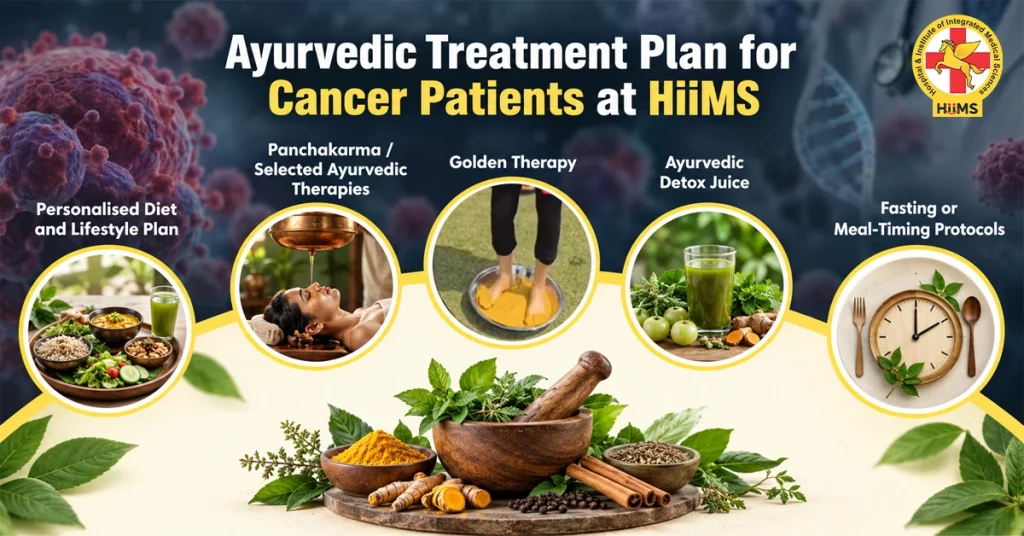
Personalised Diet and Lifestyle Plan
Diet and daily routine can be planned according to the patient’s condition and individual needs. A personalised approach can also take current medicines and ongoing cancer treatment into consideration.
Panchakarma / Selected Ayurvedic Therapies
Panchakarma or other Ayurvedic therapies may be considered according to the patient’s condition. The treatment team should decide which therapy is appropriate and when it should be carried out.
Golden Therapy
Golden Therapy is one of the supportive therapies included in the HiiMS approach. It is used as part of a natural care routine and is intended to complement the overall wellness plan through a traditional Ayurvedic process.
Ayurvedic Detox Juice
Ayurvedic Detox Juice is included in the HiiMS care approach as part of the dietary and wellness routine for patients. It may be used to provide a simple, plant-based addition to the daily diet while the patient is undergoing supportive care.
Fasting or Meal-Timing Protocols
Fasting and meal-timing approaches are also mentioned within the HiiMS treatment approach. These should not be started independently, particularly when a patient is receiving cancer medicines or has specific nutritional needs.
Facilities for Cancer Patients at HiiMS
Jeena Sikho HiiMS provides several facilities for patients who come for cancer-related care, depending on the hospital location and the patient’s needs. These include OPD consultations, IPD care, day-care facilities, personalised diet guidance, Ayurvedic therapy facilities, Panchakarma facilities where appropriate, diagnostic and report assessment, accommodation, yoga and lifestyle guidance, follow-up, and assistance for patients and attendants.
Why Safety is Important When Choosing an Ayurvedic Hospital for Cancer Treatment
Choosing an Ayurvedic hospital for cancer care requires more than looking at the name of a therapy. Patients should understand who will treat them, how their reports will be assessed, what medicines or procedures are being suggested, how their progress will be monitored, and what arrangements are available if urgent medical attention is needed.
Cancer treatment precautions are especially important when Ayurvedic care is being considered alongside conventional cancer treatment. Open communication with all members of the healthcare team should remain part of the process.
Jeena Sikho HiiMS: Ayurvedic Care Built on Trust
At Jeena Sikho HiiMS, patients can discuss their cancer reports, previous treatment history, medicines, diet, and available Ayurvedic therapies with the care team. Before beginning any programme, patients should bring their relevant medical records and prescriptions so the doctors can understand their current situation.
If you are exploring Ayurvedic cancer care, a consultation can help you understand which services are available and what may be appropriate for your individual needs.
Health Insurance and Treatment Coverage
The cost of cancer care can be a concern for many families, so it is better to understand the available payment options before starting treatment. Jeena Sikho HiiMS provides health insurance, EMI facilities, and treatment through different empanelment arrangements.
Health Insurance
HiiMS has arrangements involving several health insurance companies and TPAs, including names such as Aditya Birla Capital Health Insurance, Bajaj Allianz, Care Health Insurance, HDFC ERGO, ICICI Lombard, Niva Bupa, Star Health, and others. The exact coverage depends on the policy, treatment, hospital location, and terms set by the insurer. Patients should confirm their eligibility and covered expenses before admission.
EMI Option
For eligible patients, the SaveIn EMI facility can be used for selected treatment expenses. EMI facilities are available for amounts from ₹5,000 to ₹4 lakh and may apply to IPD, day-care, and medicines. Different repayment periods are available, including 3, 6, 9, and 12 months, with the applicable down-payment terms depending on the selected option and eligibility. A good CIBIL score is mentioned as one of the eligibility criteria.
Empanelment and Government Schemes
HiiMS also has empanelment arrangements with different organisations and government-linked schemes. These can include CGHS, CAPF, DDA, RGHS, and other empanelled organizations. The services and eligibility can differ depending on the scheme and hospital location, so patients should check the current empanelment details before planning treatment.
HiiMS Hospitals and Clinics Across India
Jeena Sikho HiiMS operates hospitals and care centres at different locations across India. Services, bed availability, consultation timings, treatment facilities, and charges can vary between locations. Patients should check the details of the hospital they plan to visit and confirm the available services before travelling or making an admission decision.

Conclusion
Starting cancer care is a decision that deserves time, clear information, and proper medical guidance. Checking the doctors, medical assessment, medicines, diet, therapies, monitoring, emergency arrangements, costs, and follow-up plan can help patients make a more informed choice.
Cancer treatment precautions are particularly important when Ayurvedic care is being considered with ongoing oncology treatment. Do not stop prescribed cancer treatment on your own, and discuss every new medicine or therapy with your healthcare team.
If you are considering Ayurvedic cancer care at Jeena Sikho HiiMS, you can also choose a VOPD consultation to discuss your health concerns, medical reports, and available care options with expert doctors before taking the next step.
FAQs
Q1: What should I carry when visiting an Ayurvedic hospital for cancer care?
Carry your pathology reports, scans, prescriptions, current medicine list, previous treatment records, and other relevant medical documents.
Q2: How can I know whether an Ayurvedic therapy is suitable for me?
Ask the treating doctor to review your diagnosis, current treatment, medicines, and overall condition before starting any new therapy.
Q3: Can I discuss my existing cancer treatment during an Ayurvedic consultation?
Yes, sharing your complete treatment history helps the doctor understand your current care and plan any additional approach more appropriately.
Q4: What questions should I ask before taking admission?
Ask about the doctors, treatment plan, medicines, therapies, monitoring, emergency arrangements, facilities, total costs, and follow-up process.
Q5: How do I plan follow-up after leaving the hospital?
Ask the care team when the next consultation or report review is due and whom to contact if your condition changes after discharge.
Ayurvedic Cancer Care Products
100% natural, certified Ayurvedic formulations crafted for targeted cancer wellness.


Disclaimer: The information provided on this blog is for general educational and informational purposes only. It is not intended to replace professional medical advice, diagnosis, or treatment. Always consult a qualified healthcare professional before making any changes to your diet, lifestyle, or treatment plan. Individual results may vary.