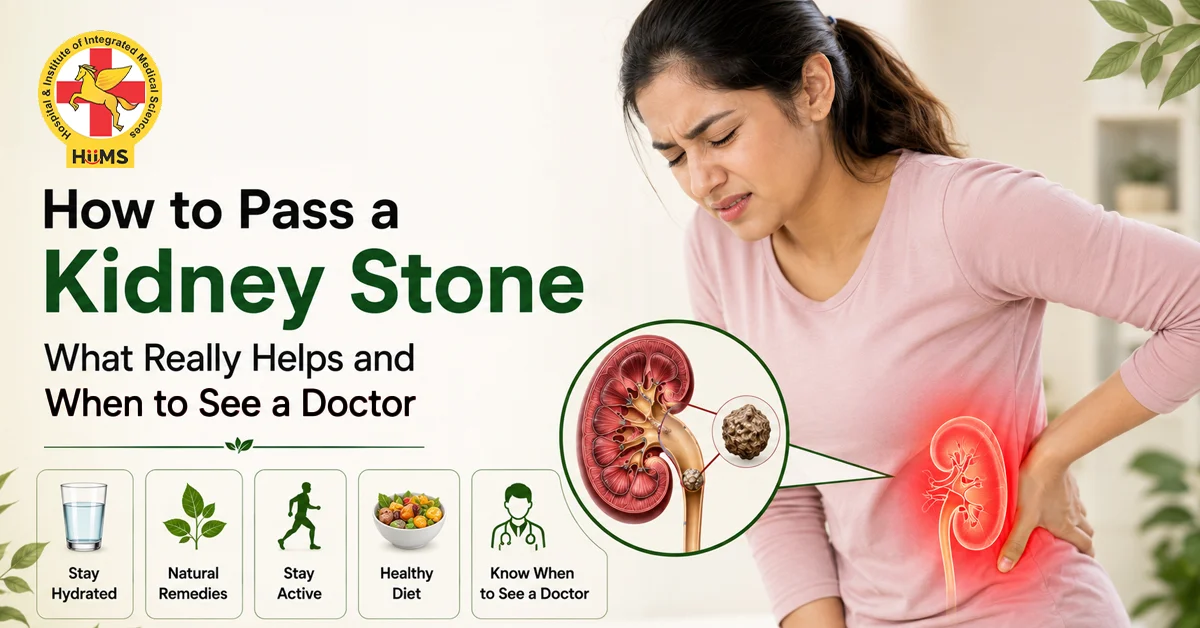

That sudden, sharp pain in your back or side that comes in waves, if you’ve ever passed a kidney stone, you already know it’s not something you forget easily. The good news is, Ayurveda has genuinely supported people through this discomfort for generations, focusing on easing the pain, helping the stone move naturally, and correcting the root cause so it doesn’t keep coming back.
This blog walks through the Ayurvedic approach to managing a kidney stone, what actually helps day to day, and when it’s time to see a doctor instead of waiting it out.
Table of Contents
What Exactly is a Kidney Stone?
A Kidney Stone is a hard deposit formed from minerals and salts, most commonly calcium oxalate, though uric acid and other types occur too. They form when urine becomes too concentrated, usually from dehydration or too much salt in the diet, letting minerals crystallise instead of staying dissolved.
In Ayurveda, this condition is called Ashmari, and it’s generally linked to a Kapha and Vata imbalance combined with weakened digestion, or Agnimandya, which allows toxins and minerals to accumulate in the urinary tract instead of being properly eliminated.
Kidney Stone Symptoms Worth Recognising
Kidney stone symptoms vary depending on where the stone is and whether it’s actually moving:
- Sudden, sharp pain in the back or side, just below the ribs
- Pain that shifts toward the lower abdomen or groin as the stone moves
- Blood in the urine, sometimes visible, sometimes only picked up on testing
- Nausea alongside the pain
- A frequent, urgent need to urinate, sometimes with a burning sensation
If a stone stays lodged in the kidney without moving, symptoms can be minimal or completely absent, which is exactly why some stones only get discovered incidentally during an unrelated scan.
Kidney Stone Pain: Why Does It Hurt So Much?
Kidney stone pain comes from the ureter spasming as it tries to push the stone through. It’s described as deep, sharp, and often cramping, arriving in waves with brief periods of relief in between, rather than staying constant the whole time.
Ayurveda ties this specifically to aggravated Vata in the urinary tract, since Vata governs movement and spasm in the body, which is exactly why calming Vata is such a central part of Ayurvedic pain management here.
When Should You See a Doctor?
A few signs mean this isn’t something to handle with home care alone: severe or unbearable pain, fever or chills, difficulty urinating, or persistent vomiting. If any of these show up, it’s genuinely important to get a proper medical evaluation and find the best kidney hospital in India rather than continuing to manage things on your own.
Natural Kidney Stone Treatment: What Genuinely Helps
A proper natural kidney stone treatment approach combines a few elements working together:
- Punarnava, Gokshura, and Varun, herbs traditionally used to ease urinary discomfort and support smaller stones passing more comfortably
- Warm water throughout the day, since Ayurveda considers this far more supportive for the urinary tract than cold water
- Coconut water and barley water are both traditionally used to help flush the urinary system gently
- Warm compresses on the lower back or abdomen to ease muscle tension and spasm
- Gentle movement, like a slow walk, since staying completely still can make Vata-driven pain feel worse
Diet Matters More Than People Realise
Kidney stone treatment through Ayurveda leans heavily on dietary correction, not herbs alone. Reducing salt intake and oxalate-rich foods like spinach and tomatoes, and limiting excess tea or coffee, genuinely lowers the risk of stones forming or growing further.
Cutting back on heavy, fried, and processed food supports digestion, which Ayurveda sees as the actual root cause behind mineral buildup in the first place. Adding lighter, easily digestible meals, along with fresh fruits and vegetables, supports the body’s own elimination process rather than adding further strain.
The GRAD System: Ayurvedic Support for Kidney Health at Jeena Sikho HiiMS Derabassi
GRAD gets used a lot at Jeena Sikho HiiMS Derabassi for kidney stone patients, and it’s really two therapies working alongside a proper diet plan. Hot Water Immersion, exactly what it sounds like, warm water helps ease the discomfort and get circulation moving better. Head-Down Tilt therapy works a bit differently, using gravity itself to direct blood flow toward the kidneys.
None of this happens in isolation either. Herbs get added in, diet gets corrected too, all shaped around whatever type of stone someone’s actually dealing with and their own body constitution. One therapy alone rarely does the job here; it’s the combination that matters.
Conclusion
Passing a kidney stone genuinely tests your patience, but Ayurveda offers a thoughtful, whole-body approach that eases pain, supports the stone’s natural passage, and corrects the dietary and digestive root cause so it’s less likely to return.
If you want to explore this kind of Ayurvedic support for kidney stone management, you can book a VOPD consultation with Jeena Sikho HiiMS Derabassi and talk it through with our team.
FAQs
1. Why does Ayurveda say kidney stones form in the first place?
It comes down to Kapha and Vata going out of balance, paired with weak digestion, letting toxins and minerals pile up instead of clearing out the way they should.
2. Does changing my diet actually cut down the risk of another stone?
Genuinely, yes. Less salt, fewer oxalate-heavy foods, lighter meals, all of it lowers the odds of round two.
3. Is warm water actually better than cold for this?
Ayurveda leans that way, warm water sits more easily with the urinary tract, eases discomfort, and supports the body pushing things out naturally.
4. What’s actually happening during GRAD therapy for kidney stones?
Hot Water Immersion and Head-Down Tilt therapy, working together alongside a diet plan built specifically around the patient.
5. At what point should I stop trying to manage this at home?
Severe pain, fever, chills, trouble urinating, any of these mean it’s time to get checked properly, not push through it alone.
Ayurvedic Kidney Care Products
100% natural, certified Ayurvedic formulations crafted for targeted kidney wellness.



Disclaimer: The information provided on this blog is for general educational and informational purposes only. It is not intended to replace professional medical advice, diagnosis, or treatment. Always consult a qualified healthcare professional before making any changes to your diet, lifestyle, or treatment plan. Individual results may vary.