
Life can make a person overlook changes that seem too ordinary to worry about. A few extra minutes to catch your breath after climbing stairs, tiredness that stays with you after a normal day, or ankles that look puffier by evening can easily be blamed on age, work, or a busy routine.
Yet when such changes keep returning, become stronger, or suddenly start appearing together, they deserve a closer look. Heart failure can develop gradually, and the body may show signs before a person realises that the heart is struggling to keep up with its usual work. Knowing the heart failure symptoms early does not mean assuming the worst. It means paying attention to changes that may need medical assessment.
In this blog, you will learn seven important symptoms, why they can occur, and how an integrated Ayurvedic approach can fit into responsible heart care. The goal is to notice these changes and take the right step.
Table of Contents
What Is Heart Failure and Why Do Its Symptoms Appear?
Heart failure does not mean the heart has stopped working. It means the heart is not pumping blood as effectively as the body needs. This can leave the body with less oxygen and cause fluid to collect in the lungs, legs or ankles.
High blood pressure, coronary artery disease, diabetes, previous heart problems and some valve conditions can contribute to it. Understanding the early signs of heart failure helps you notice when ordinary activities start feeling unusually difficult, especially when several heart failure symptoms appear together. It can develop slowly.
7 Heart Failure Symptoms You Should Never Ignore
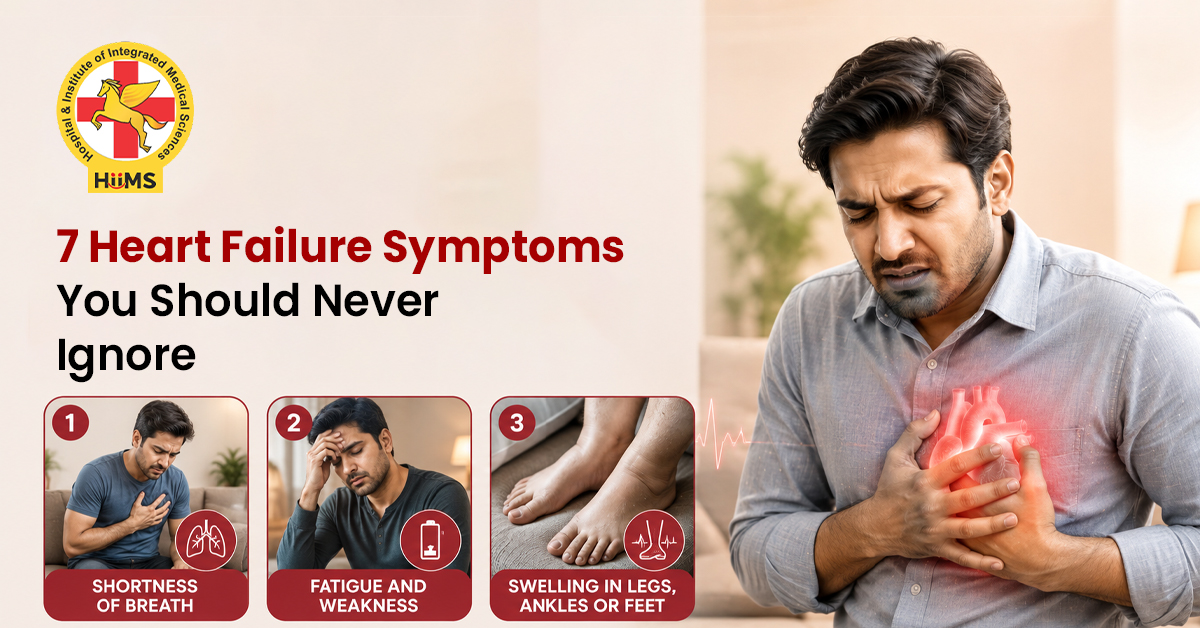
1. Shortness of Breath During Routine Activities
Pay attention when your usual pace starts feeling different. A walk to the market, climbing a flight of stairs or doing some work around the house may leave you unusually breathless. You might also notice that sleeping flat feels uncomfortable and sitting up makes breathing easier. When these changes keep coming back, shortness of breath in heart failure is one possibility worth discussing with a healthcare professional.
2. Unusual Tiredness and Low Energy
If ordinary tasks suddenly leave you drained, notice the change instead of pointing to a busy routine. Reduced circulation can leave muscles with less oxygen during activity, making persistent fatigue one of the signs of a weak heart.
3. Swelling in the Feet, Ankles or Legs
Tighter shoes, deeper sock marks or puffy ankles by evening can occur when extra fluid collects in the body. When swelling comes with breathlessness or tiredness, it can be among the warning signs of heart failure.
4. Sudden or Unexplained Weight Gain
A quick rise on the weighing scale may sometimes reflect extra fluid rather than body fat. Notice it more carefully when swelling or breathlessness also appears. Sudden weight changes are worth discussing with a doctor.
5. Persistent Cough or Wheezing
A cough that keeps returning, particularly at night or while lying down, deserves attention when other symptoms are present. Fluid in the lungs can cause coughing or wheezing, although infections and allergies can do the same. Consider the wider early signs of heart failure rather than one symptom alone.
6. Fast or Irregular Heartbeat
Racing or fluttering can happen after exercise or stress, but repeated palpitations deserve evaluation when breathlessness, weakness or dizziness also occurs. A faster heartbeat may occur as the body tries to maintain circulation, making this another of the signs of a weak heart.
7. Reduced Appetite, Nausea or Feeling Full Quickly
You may feel less hungry, nauseous or unusually full after a small meal. These changes have many causes, yet when they appear with swelling, breathlessness or fatigue, they can add to the warning signs of heart failure that deserve attention.
Understanding Heart Health Through an Ayurvedic Perspective
Ayurveda views heart health as part of the body’s wider balance, with attention to food, daily habits, movement and sleep. Its principles of Aahar (food) and Vihar (lifestyle) encourage mindful eating, suitable activity and a steady routine.
Depending on a person’s condition, a qualified practitioner may consider yoga, breathing practices and selected therapies within an individual plan. Such care should complement necessary healthcare evaluation and prescribed heart care. The plan should reflect the person’s condition.
How Jeena Sikho HiiMS Approaches Heart Health
Jeena Sikho HiiMS follows an integrated model that brings Ayurveda, naturopathy and other AYUSH approaches together with modern medical testing. Its heart-care approach considers diet, lifestyle and therapies such as Panchakarma and Hriday Basti according to individual needs. This keeps care individually planned.
Conclusion
The body can give clues when something has changed: stairs feel harder, shoes become tight, sleep is interrupted by breathlessness, or ordinary work leaves you unusually drained.
None of these signs alone proves heart failure, and several can occur because of other conditions. Still, persistent or worsening heart failure symptoms, particularly when several appear together, deserve professional attention rather than any kind of speculation. Understanding the warning signs of heart failure can help you act before a small change becomes serious concern.
For personalised guidance, opt for an online video consultation (VOPD) with expert doctors at Jeena Sikho HiiMS and discuss your concerns from home.

FAQs
Q1: What can cause heart failure symptoms to appear?
Heart problems, high blood pressure, coronary artery disease, diabetes, valve conditions and previous heart damage can contribute to these symptoms.
Q2: When should unusual breathlessness be checked?
Breathlessness that keeps returning, worsens during routine activities, occurs while lying down or wakes you at night deserves medical diagnosis.
Q3: How can swelling be related to heart problems?
When the heart does not pump effectively, fluid may collect in body tissues, causing swelling around the feet, ankles, legs or abdomen.
Q4: What should I do if several symptoms appear together?
A combination of breathlessness, swelling, unusual tiredness, weight changes or palpitations should be discussed promptly with a qualified healthcare professional.
Q5: How can Ayurveda fit into heart health care?
Ayurvedic guidance may include personalised food, lifestyle, yoga, breathing practices and selected therapies alongside appropriate healthcare evaluation and care.

Disclaimer: The information provided on this blog is for general educational and informational purposes only. It is not intended to replace professional medical advice, diagnosis, or treatment. Always consult a qualified healthcare professional before making any changes to your diet, lifestyle, or treatment plan. Individual results may vary.