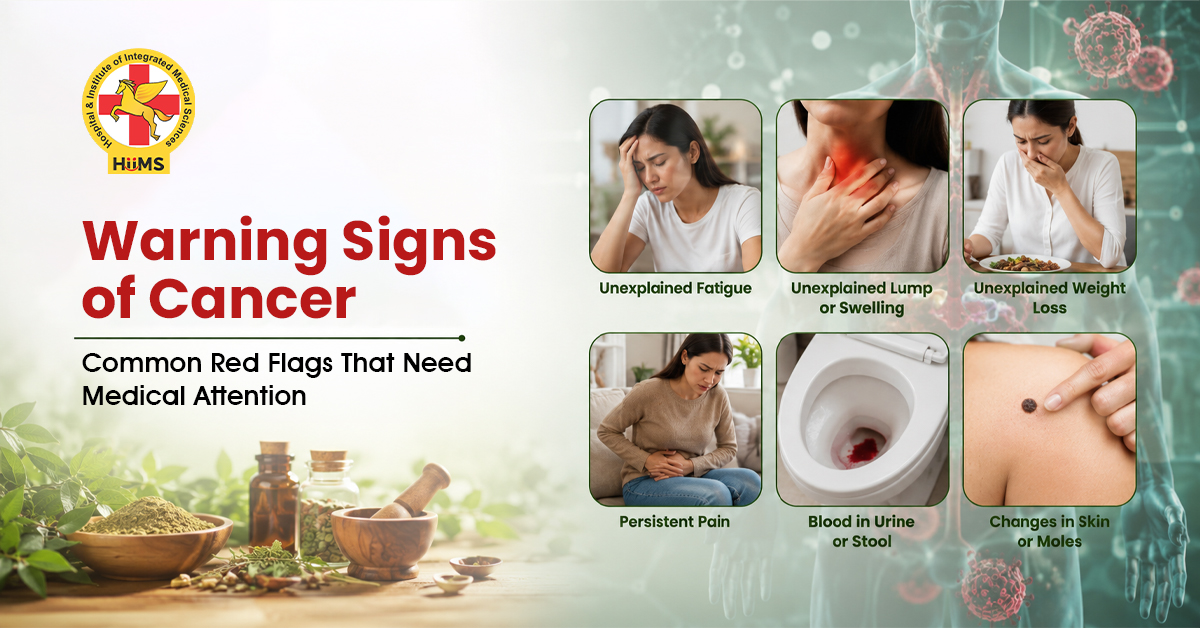

Most of us live at a fast pace, and somewhere in that rush of life, we push aside the small issues that our body brings up. A cough that lingers a little longer than usual, a lump that appears out of nowhere, a feeling of tiredness that refuses to go away, or a change in digestion that feels a bit off: these are the kind of things people quietly ignore, hoping they will settle on their own. And often, they do.
But sometimes, these small changes are the body’s way of asking for a closer look. Not every unusual symptom points toward disease, yet a symptom that stays for weeks, returns again and again, or keeps getting worse should never be ignored or put aside. Learning to recognise cancer warning signs early can genuinely decide how quickly a problem gets addressed.
In this blog, you will understand the common red flags your body may show, when a symptom crosses the line from harmless to concerning, and why timely medical attention matters more than assumptions.
Cancer Does Not Always Begin With an Obvious Symptom
One of the biggest misunderstandings people carry is the idea that a serious illness always discloses itself clearly. In reality, the early signs of cancer often look almost identical to everyday health problems.
A person may feel low on energy and put it down to work pressure. Someone else might notice a little weight drop and connect it to a busy schedule or skipped meals. Ageing, seasonal changes, poor sleep, and stress can all produce symptoms that resemble the beginning stages of a bigger health concern, which is exactly why people wait far too long before getting checked.
What actually is important is not a single symptom appearing once, but a change that refuses to go away, keeps repeating, or slowly becomes more noticeable over time. That pattern of persistence is far more telling than the symptom itself, and it is the foundation for spotting the warning signs your body may already be showing.
Common Cancer Warning Signs Your Body May Be Showing
1. Losing Weight Without Trying
When the weight keeps going down, and nothing in your diet or activity level has changed, it needs attention. This kind of unplanned weight loss is one of the more common symptoms of cancer that people underestimate, mainly because it feels like a positive change at first look.
2. Tiredness That Does Not Improve With Rest
Everyone feels tired occasionally, but there is a clear difference between normal exhaustion and fatigue that lingers no matter how much you sleep. When tiredness begins interfering with your daily routine, work, or basic tasks, it moves beyond an ordinary complaint.
3. A New Lump, Swelling, or Unusual Thickening
A lump in the breast, neck, underarm, or groin area should never be ignored simply because it does not hurt. Painless lumps are often overlooked, yet they remain one of the clearest cancer red flags that call for a proper check.
4. Bleeding or Discharge Without a Clear Reason
Blood in urine or stool, coughing up blood, or unexpected vaginal bleeding should always be evaluated. Unexplained bleeding, however minor it may seem, is one of the important signs of cancer that people are likely to postpone discussing with a doctor.
5. Pain That Keeps Coming Back or Becomes Worse
Occasional aches are part of daily life, but pain in the back, abdomen, or bones that has no clear cause and does not settle with rest or basic medication needs a closer look rather than repeated self-medication.
6. Changes in Bowel, Bladder, or Digestion
Long-lasting constipation, diarrhoea, bloating, difficulty passing urine, or difficulty swallowing are often ignored generally as digestive issues. When these changes persist for weeks, they should be discussed with a healthcare professional rather than managed at home indefinitely.
7. A Cough, Hoarse Voice, or Mouth Sore That Does Not Heal
A cough that refuses to go away, a voice that stays hoarse, or a mouth sore that stays there longer than usual all deserve a proper look, especially for individuals who use tobacco in any form.
8. Noticeable Changes in the Skin or an Existing Mole
Watch for a mole that changes in size, shape, colour, or border, along with wounds that simply refuse to heal. Skin changes are visible and easy to track, yet they are often the most delayed among all common cancer symptoms.
The Real Question Is: How Long Has the Symptom Been There?
Here is the part people often get wrong. Many common cancer symptoms overlap with completely harmless health issues, so having one symptom does not automatically mean something serious is happening. What genuinely matters most is whether the change is unusual for you personally, whether it keeps returning, whether it has lasted for several weeks, or whether it is gradually getting worse.
This is not meant to put anyone into panic. It is meant to encourage attention. Self-diagnosing based on internet searches helps no one, but delaying a simple check-up out of fear or convenience can quietly cost valuable time.
When Should You Seek Medical Attention?
- A symptom continues for several weeks
- A new lump or swelling appears
- There is unexplained bleeding
- Weight keeps dropping without effort
- Pain, cough, or tiredness becomes persistent
- Normal bowel or bladder habits change for a longer period
A proper examination, along with the right tests, helps doctors understand cancer diagnosis symptoms with clarity, rather than leaving anyone to guess what is actually happening inside the body.
Why Early Attention Can Change the Course of Care
Recognising cancer warning signs early does not guarantee a particular outcome, but it does open the door to timely consultation, screening, physical examination, blood tests, and imaging, where advised. Acting early simply gives doctors more information and more time to plan the right course of care, which is far better than reacting after a condition has already progressed.
Conclusion
The body hardly shows anything at the very beginning. It usually starts with small, easy-to-miss changes that quietly ask for attention. Staying aware of cancer warning signs is not about living in fear, but about respecting what your body is telling you.
If a symptom feels unusual, keeps returning, or is gradually worsening, treat it as a reason to get checked rather than a reason to wait. Your awareness today can make tomorrow’s care simpler.
If you would like expert guidance for any ongoing health concern, you can opt for a VOPD consultation with experienced doctors at Jeena Sikho HiiMS for integrated, personalised care.

FAQs
Q1. What are the most common cancer warning signs?
Unexplained weight loss, ongoing fatigue, new lumps, unusual bleeding, persistent pain, and changes in bowel or bladder habits are among the most reported red flags.
Q2. Can early signs of cancer feel like normal health problems?
They often do, since fatigue, minor aches, or digestive changes can resemble everyday stress or seasonal issues, which is why recurrent symptoms matter more than the symptom alone.
Q3. How long should I wait before getting a persistent symptom checked?
A general guideline doctors follow is to get any symptom evaluated once it continues for more than two to three weeks without improvement.
Q4. Does having one cancer symptom mean I have cancer?
A single symptom usually points toward a much more common and harmless condition, though a proper medical evaluation remains the only reliable way to understand the actual cause.
Q5. How does Jeena Sikho HiiMS approach cancer care?
Jeena Sikho HiiMS focuses on integrated Ayurvedic guidance alongside personalised support, helping individuals address health concerns through a holistic and root-cause-based approach.
Ayurvedic Cancer Care Products
100% natural, certified Ayurvedic formulations crafted for targeted cancer wellness.


Disclaimer: The information provided on this blog is for general educational and informational purposes only. It is not intended to replace professional medical advice, diagnosis, or treatment. Always consult a qualified healthcare professional before making any changes to your diet, lifestyle, or treatment plan. Individual results may vary.