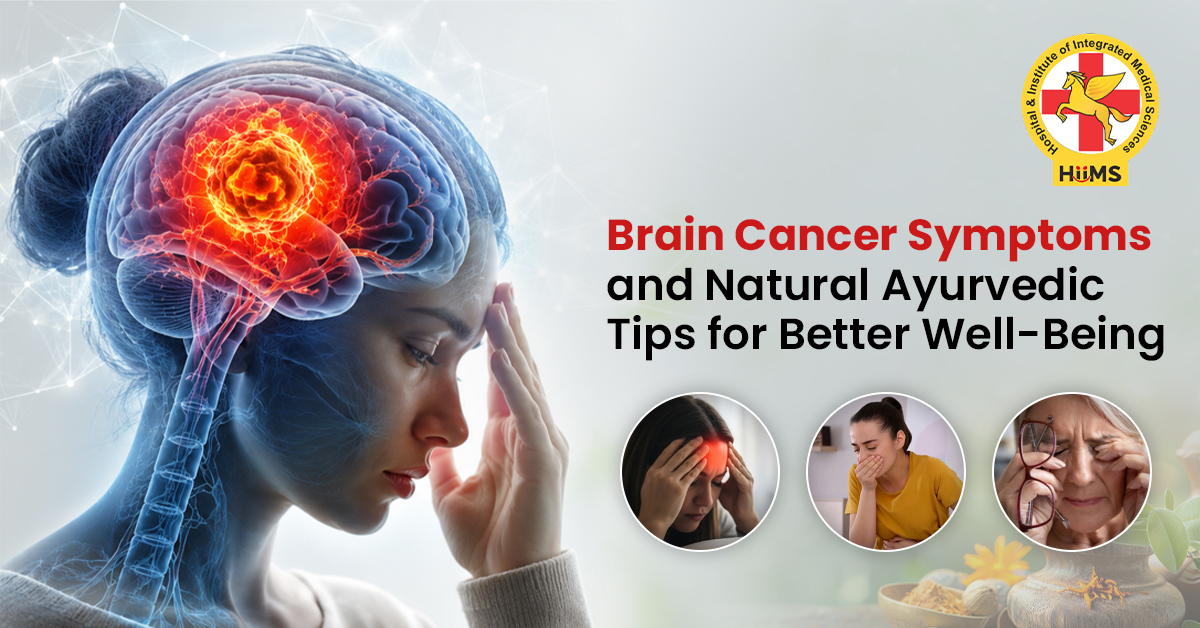

A headache that won’t go away. Blurry vision after staring at your phone too long. A sudden jerk on the stairs. Most of us just ignore these things easily. We blame stress, bad sleep, or “getting older.” And honestly, most of the time that’s exactly what it is. But here’s one more thing, and that is, when these changes don’t go away after a few weeks, they’re worth a real look. Brain cancer symptoms can hide behind ordinary complaints like these, and that’s exactly why people ignore them for far too long.
This blog talks about what these symptoms actually look like, when it’s time to see a doctor, and how an Ayurvedic lifestyle for wellness can work alongside proper medical care, not instead of it. By the time you finish reading, you’ll know the early warning indicators, how Ayurveda looks at brain wellness, and a few simple habits worth choosing.
What is Brain Cancer?
So what actually is brain cancer? It happens when cells in the brain start dividing faster than normal, and that builds up into a mass, doctors also call it a tumor. Not every tumor means cancer, though.
Some are benign, which just means they grow slowly and usually stay put. Others are malignant, and these grow fast, pushing into the healthy tissue around them. There’s also a difference between primary and secondary tumors. A primary tumor starts in the brain itself. A secondary one starts somewhere else in the body and travels to the brain later.
This is also why brain cancer symptoms look so different from person to person, where the tumor sits, how big it is, and how fast it’s growing all decide what shows up first.
Brain Cancer Symptoms You Should Never Ignore
Early Signs of Brain Cancer
Among the early signs of brain cancer, headaches usually come first — especially ones that hit in the morning and disappear a bit during the day. A lot of people get nausea or vomiting along with it and just assume it’s their stomach acting up. Vision changes matter too. Blurry sight, seeing double, anything out with your eyes can mean pressure is building near the optic nerves.
Changes in Memory, Thinking, and Behaviour
It’s not always physical, either. Brain tumor symptoms can show up as forgetfulness that feels off, sudden confusion over simple things, a change in someone’s personality, or trouble staying focused on a conversation.
Physical Symptoms That May Need Medical Attention
Weakness on one side of the body. Problems with walking straight and poor balance. Speech that sounds slurred and seizures. These need a doctor’s attention immediately.
How Ayurveda Looks at Brain Wellness
Ayurveda looks at the body through three energies — Vata, Pitta, and Kapha — and the idea is that good health depends on keeping these in balance. Agni, the digestive fire, matters a lot here too, since it decides how well your body breaks down food and clears out waste. When Agni gets weak, leftover waste turns into something Ayurveda calls Ama, basically toxins building up inside.
Instead of just focusing on one organ, Ayurveda treats the whole body as connected. Brain wellness ties back to digestion, sleep, and emotional balance just as much as it ties to the nervous system.
Natural Ways to Maintain Brain Wellness Through Ayurveda
Eat a Simple and Balanced Diet
Natural ways to maintain brain wellness often start with the right food. Seasonal fruits, fresh vegetables, millets cooked at home, simple foods, nothing processed or heavy. Drinking enough water throughout the day helps too, keeping digestion and the body’s natural rhythm steady.
Make Stress Management Part of Daily Life
Meditation, pranayama, gentle yoga, doing these regularly eases mental fatigue and brings some calm into the day. Add a steady sleep routine on top, and the body gets what it needs to recover.
Herbs Traditionally Used in Ayurveda
Brahmi, Ashwagandha, turmeric, tulsi, Giloy, these herbs have been part of Ayurveda for a long time, used to support general wellness. Take them only under a qualified Ayurvedic practitioner’s guidance, since the right amount differs from person to person.
The Jeena Sikho HiiMS Approach to Holistic Wellness
At Jeena Sikho HiiMS, the approach integrates modern diagnosis with Ayurvedic and natural treatments to ensure everything is considered. Lifestyle guidance, Panchakarma when it fits, personalised nutrition plans, yoga, and naturopathy support all come together around the individual, not a one-size-fits-all routine.
Conclusion
Catching brain cancer Symptoms early can genuinely change how fast someone gets the right care. Ongoing headaches, changes in vision, forgetfulness, and trouble with balance should not be ignored as just being tired. A proper medical diagnosis remains essential, but good daily habits and an Ayurvedic lifestyle for wellness can offer real support alongside it, helping the body and mind stay steadier through it all.

If any of these symptoms feel familiar, consider a (VOPD) video consultation with the experienced doctors at Jeena Sikho HiiMS for proper guidance and a wellness plan built around you.
FAQs
Q1: What are the first brain cancer symptoms people commonly notice?
Most people first notice persistent headaches, changes in vision, or nausea that doesn’t go away on its own.
Q2: Can every headache be a sign of brain cancer?
A single headache does not usually mean much, but one that keeps coming back along with other changes is worth checking out.
Q3: What are some early signs of brain cancer that should not be ignored?
Sudden memory lapses, unclear speech, and trouble keeping balance are signs that deserve a doctor’s assessment right away.
Q4: Can Ayurveda support overall well-being during brain health management?
Ayurvedic habits like a balanced diet, stress management, and herbal support can work alongside medical care to support overall wellness.
Q5: When should someone visit a doctor for brain tumor symptoms?
A doctor’s visit becomes necessary once symptoms last more than two weeks or start affecting daily routines.
Disclaimer: The information provided on this blog is for general educational and informational purposes only. It is not intended to replace professional medical advice, diagnosis, or treatment. Always consult a qualified healthcare professional before making any changes to your diet, lifestyle, or treatment plan. Individual results may vary.