
A person may look perfectly fine in the morning and still struggle for breath by evening. It can start with a small cough, a little tightness in the chest, or the feeling that normal walking has suddenly become harder than it should be. That is the tricky part of an asthma attack.
It does not always arrive with any kind of warning signals. Many times, the body gives gentle signals first, and those asthma attack symptoms get ignored as tiredness, weather changes, or a simple throat issue. That is where the actual issue starts. When these early changes are missed, breathing can become more difficult in a short time.
In this blog, we will look at the early signs of asthma, the common signs of asthma attack, and the moments when proper care becomes urgent.
What Happens During an Asthma Attack?
During an asthma attack, the breathing tubes inside the lungs become narrow, swollen, and filled with mucus. Air then moves through them with more effort, and that is when wheezing, coughing, and chest heaviness start. Some people feel mild pain, while others feel strong pressure and shortness of breath very quickly.
The pattern is not the same for everyone, which is why asthma warning signs are so important. A person may have a quiet day for weeks and then suddenly feel unwell after dust exposure, cold air, exercise, or even a common cold. In many cases, the body gives clues long before the attack grows stronger, and those clues should never be taken lightly.
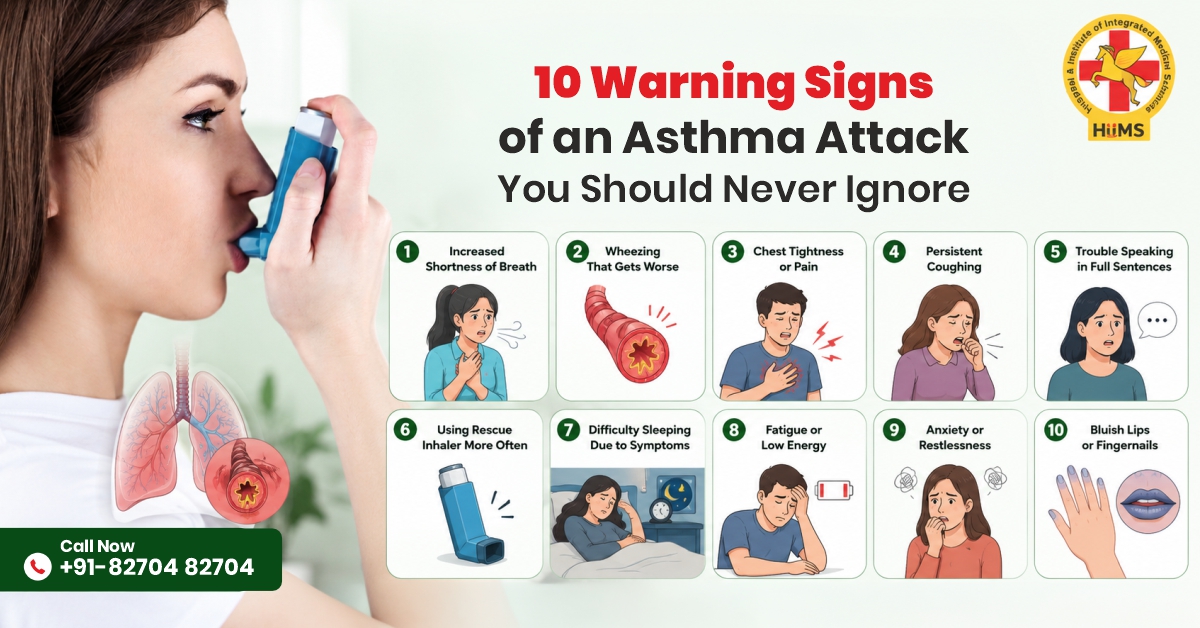
10 Warning Signs of an Asthma Attack You Should Never Ignore
1. Coughing that keeps returning, especially at night
A dry cough that keeps waking a person up, or comes back again and again after sunset, is one of the most common asthma attack symptoms. It may look small at first, but the pattern is often a warning that the lungs are already irritated.
2. Wheezing while breathing out
Wheezing sounds like a whistle or a thin squeak during breathing, especially while exhaling. Many people ignore this sound in the beginning, but it is often one of the clearest signs of asthma attack when the air passage is starting to tighten.
3. Chest tightness or a heavy feeling in the chest
For a few people, the chest may feel unusually heavy or slightly tight, especially while moving around or doing regular work. The discomfort sometimes increases with stress or walking, and that can happen when breathing starts becoming more difficult than normal.
4. Breathlessness during normal activity
When climbing stairs, cleaning the house, or walking a short distance starts feeling unusually difficult, it should not be ignored. Losing breath during routine tasks is one of the early asthma warning signs that many people notice only after the symptoms have already grown.
5. Needing the inhaler more often than usual
If a rescue inhaler starts becoming a frequent need instead of a rare one, it usually means the breathing problem is not settling well. This is one of those asthma attack symptoms that should be discussed with a doctor rather than managed casually at home.
6. Trouble speaking in full sentences
A person may stop in the middle of a sentence just to catch their breath. That small change can reveal a bigger breathing issue. When speaking becomes difficult, the lungs are already under stress, and that should be treated as an important warning.
7. Fast breathing with restlessness
Rapid breathing often comes with panic, uneasiness, or a feeling that something is not right. This happens because the body is trying to get more air. In many cases, this is one of the less noticed early signs of asthma before the attack becomes more serious.
8. Unusual tiredness or weakness
A person may begin to feel tired much faster because breathing starts taking more effort than usual. Simple daily work, walking a short distance, or normal movement can suddenly feel exhausting, and this kind of weakness should not be ignored again and again.
9. Too much mucus or constant throat clearing
A thick feeling in the chest, repeated throat clearing, or extra mucus can point to deeper irritation in the airways. These changes may seem mild, but they often appear when the lungs are already struggling with inflammation.
10. Bluish lips or fingertips
This is one of the most serious warning signs. Blue lips or fingertips may mean the body is not getting enough oxygen. In that situation, immediate health care help is needed without delay, because the breathing problem may be turning dangerous.
When Asthma Symptoms Become an Emergency
A breathing problem should never wait too long when it starts affecting movement, speech, or awareness. Severe wheezing that does not settle, difficulty with walking because of breathlessness, pale or sweaty skin, blue lips or nails, and confusion are all signs that need quick care.
At that stage, proper asthma attack treatment is not something to delay. A trusted asthma hospital like Jeena Sikho HiiMS can assess the condition quickly and take the right steps before the problem worsens further. The key is to act early rather than hoping the symptoms will simply fade away on their own.
Conclusion
An asthma attack usually leaves clues before it becomes severe, and those clues are often easy to miss when life is busy. Repeated coughing, wheezing, chest tightness, shortness of breath, or unusual tiredness should never be treated as minor complaints for too long.
When people notice these changes early, they stand a better chance of getting timely help and avoiding bigger breathing trouble later. Good awareness, steady habits, and proper care can make daily life easier for people living with asthma.

For guided support, you can also opt for VOPD consultation with expert doctors at Jeena Sikho HiiMS and take the next step toward better respiratory health.
FAQs
- What are the first signs that asthma may be getting worse?
Night cough, wheezing, chest tightness, and breathlessness during small tasks are often the first changes people notice. - Why does asthma feel stronger at night?
The airways may become more sensitive at night, which can make coughing and breathing discomfort more noticeable during sleep. - What should a person do when inhaler use increases suddenly?
A spike in inhaler use usually means the condition needs a health care review, because it can point to increasing airway irritation. - How does asthma affect daily routines?
Even simple work like walking, talking, cleaning, or climbing stairs may feel tiring when the airways are inflamed. - When should emergency care be taken seriously?
Blue lips, severe breathlessness, confusion, or trouble speaking clearly needs urgent healthcare attention without waiting.
Disclaimer: The information provided on this blog is for general educational and informational purposes only. It is not intended to replace professional medical advice, diagnosis, or treatment. Always consult a qualified healthcare professional before making any changes to your diet, lifestyle, or treatment plan. Individual results may vary.