
Eye health is something most of us take for granted until things go wrong. We wake up, we see the world, and we move on. But every now and then, a small irritation pops up. Usually, we blame it on a late night, too much screen time, or maybe a bit of dust.
While most eye issues settle down with a little rest, there is one condition that is often misunderstood and dangerously ignored: a fungal infection in the eye.
Fungal infections (technically known as fungal keratitis) are not like your everyday pink eye. They are stubborn, they grow differently, and they can be quite serious if you don’t catch them early.
Because these infections often progress slowly at first, people tend to wait too long to seek help. By the time the discomfort becomes unbearable, the risk of permanent vision loss increases.
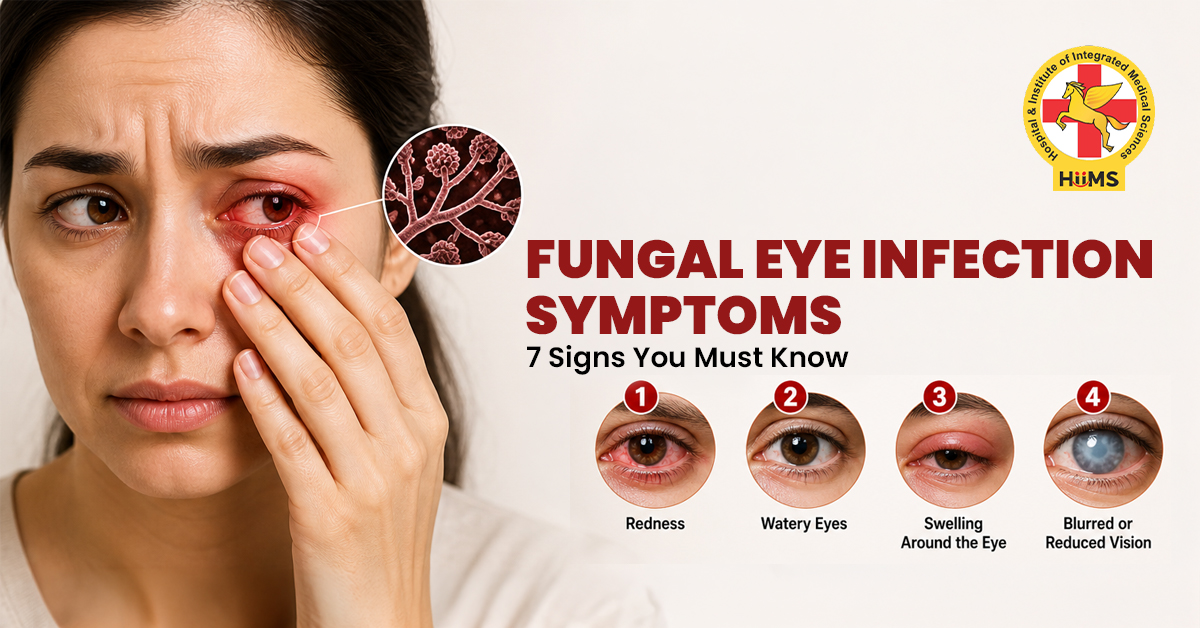
Recognizing the fungal eye infection symptoms in the eyes at an early stage is your best chance of saving your vision. In this blog post, we are going to go through the top seven symptoms that you must not overlook in addition to maintaining overall health.
Table of Contents
What Is a Fungal Eye Infection?
Before diving into the signs, it helps to know what we are dealing with. Fungal organisms causing eye infection mainly target the cornea of the eye, which is an opaque structure.
Differing from the common bacterial eye infections that occur in any person, fungal infections in the eyes usually have a definite source. The majority of eye fungal infections occur following injuries involving vegetation, such as branches from trees, leaves, or soil entering the eye. They are also common among people who use contact lenses improperly or those with weakened immune systems.

7 Fungal Eye Infection Symptoms You Should Not Ignore
1. Persistent and Deep Eye Pain
We’ve all had that itchy feeling in our eyes, but a fungal infection feels much deeper. It isn’t just a surface itch it’s a constant, aching pain that feels like it’s coming from inside the eye.
- The Warning Sign: If you find yourself using lubricating drops or washing your eye repeatedly and the pain doesn’t budge, it’s a major warning sign. Fungal pain often worsens over time rather than settling down with rest.
2. Excessive and Stubborn Redness
Redness in the eye is a way of calling out for help. When fungi begin to grow on the cornea, the body sends a major inflammatory response to the area.
- What to look for: The white part of your eye may look bloody or develop a pinkish shade. Unlike a burst blood vessel which usually doesn’t hurt, this redness is followed by discomfort and is often concentrated right around the iris (the colored part of the eye). This is one of the most visible fungal eye infection symptoms.
3. Blurred or Clouded Vision
- The cornea needs to be perfectly clear for you to see the world sharply. In this case, we may compare the corneal tissue to a window; in case it is dirty or covered with frost, we cannot see anything through it. Fungi trigger inflammation and opacity of the corneal tissue.
- Symptoms of the disease that appear first: You will likely see everything through a haze, as though the glass is dusty. When your vision becomes blurry, or you cannot concentrate on objects anymore, one of the key early symptoms of fungal eye infection.
4. Extreme Sensitivity to Light (Photophobia)
- If you experience the need to squint even under normal lighting conditions indoors, or you get an intense pain sensation from direct sunlight, your eyes have already undergone severe stress.
- Reasons: Light sensitivity is usually observed when the inner layers of the cornea become inflamed. For patients with fungal eye infection, light becomes physically uncomfortable, causing the person to keep their eyes shut.
5. Unusual Discharge or Excessive Tearing
Your eyes produce tears to wash away irritants, but fungi are too stubborn to be washed away easily. This leads to a constant watery eye that doesn’t stop.
- The Texture: In some cases, the discharge isn’t just watery. It can become thick, yellowish, or white. If you wake up in the morning and find your eyelids stuck together by dried discharge, it’s time to see an eye specialist (Ophthalmologist) immediately.
6. The Foreign Body Sensation
This is that annoying feeling that something is stuck in your eye like a piece of sand or a tiny hair that you just can’t get out.
- The Truth: Even after flushing your eye with water, or looking into a mirror and seeing that there’s nothing there, the sensation continues to persist. That’s because the feeling of the gritty sensation is, in fact, the irritation caused by the infection of the eye each time you blink.
7. A Visible White Spot on the Cornea
This is perhaps the most serious sign. In advanced stages, the collection of fungi and inflammatory cells becomes large enough to see with the naked eye.
- The Emergency: You may notice a small white or greyish dot on the clear part of the eye. This is called an infiltrate. If you see this, consider it a medical emergency. Delaying treatment at this stage can lead to corneal scarring or even the need for a transplant.
HiiMS Treatment Methods: A Holistic Perspective
At Jeena Sikho HiiMS, the philosophy is centred on the idea that the body has an incredible ability to heal when given the right environment. While a fungal eye infection treatment absolutely requires specific antifungal medical intervention, focusing on the root cause your immunity is equally important.
- Netra Tarpan (Ayurvedic Eye Care)
Netra Tarpan is an Ayurvedic eye therapy where a soft dough ring is placed around the eyes and filled with medicated ghee. It helps soothe dryness, relax the eyes, and support overall comfort.
- The Importance of a Sattvic Diet
A diet made up of fresh fruits, vegetables, and whole grains aids in keeping an individual healthy internally. Consuming processed foods may help in preventing inflammation.
- Hygiene and Lifestyle
Good habits matter a lot. Proper lens care, clean hands, enough sleep, and stress control can help prevent infections and support eye health.
Conclusion
A fungal eye infection is not a condition you should try to “wait out.” It doesn’t respond to standard antibiotic drops, and every day you wait is a day the fungi can grow deeper into your cornea.
In case you feel any pain, inflammation, or even white spots after an attack from a plant or branch, then time waits for none. Detecting any fungal eye infection symptoms is the key to regaining your eyesight sooner.
For tips on how to take good care of your eyes, how to strengthen your immunity, and learn about other ways of integrative medicine, you can opt for a VOPD evaluation at Jeena Sikho HiiMS. Health is definitely what should matter to you first.

FAQs
Q1. What are some initial symptoms of a fungal infection in your eyes?
They can be pain, redness, poor vision, and photophobia.
Q2. How does the pathogenesis of a fungal infection in the eye occur?
It occurs due to an injury to the eye or wearing contact lenses incorrectly.
Q3. Is a fungal infection in the eye self-healing?
An eye infection cannot heal without medical intervention.
Q4. How long will it take for recovery?
A person requires several weeks for recovery, depending on the severity of the condition.
Q5. When should a patient visit a doctor?
If the symptoms persist, it is wise to seek help from an expert.

Disclaimer: The information provided on this blog is for general educational and informational purposes only. It is not intended to replace professional medical advice, diagnosis, or treatment. Always consult a qualified healthcare professional before making any changes to your diet, lifestyle, or treatment plan. Individual results may vary.