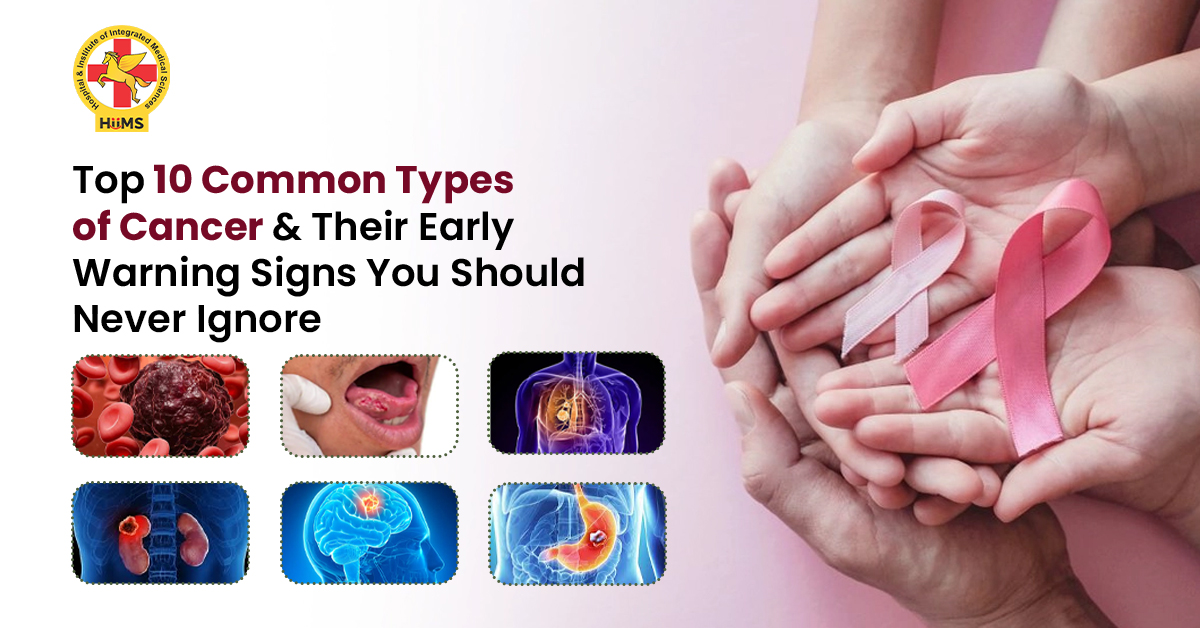
Cancer is something many people hear about, but very few really understand in a simple way. It usually starts quietly inside the body when some cells begin to grow in an uncontrolled way. Over time, these cells can form a lump, also known as a tumour, and may spread if not noticed early. That is why knowing the types of cancer and their early symptoms becomes very important in daily life.
At hospitals like Jeena Sikho HiiMS, doctors often explain that early awareness can make a real difference in how a person handles this condition. Many times, the body gives small signals, but we ignore them, thinking they are normal. These small changes can actually be common symptoms of cancer that need attention.
In this blog, you will learn about the top 10 common types of cancer, their early warning signs, and how understanding your body can help you take the right steps at the right time.
What Are the Types of Cancer and Their Early Signs
Cancer is not just one disease. It includes many conditions based on where it starts in the body. Understanding the types of cancer and their early signs helps you notice problems early and take action before things get serious.
10 Common Types of Cancer and Their Early Signs
Being aware of these common cancers and their common cancer symptoms can help you respond before the condition progresses.
1. Breast Cancer
Breast cancer is one of the most commonly seen cancers, especially in women. It usually begins in the breast tissue and may spread if not noticed early.
Common symptoms
A new lump or mass in breast tissue is one of the first signs people notice. While not every lump is cancer, certain changes should not be ignored.
Changes in breast appearance may include:
- Hard lump with uneven edges.
- Swelling or thickening in one area.
- Change in size or shape.
- Skin dimpling or texture change.
Nipple-related changes:
- Nipple turning inward.
- Unusual discharge.
- Pain or discomfort.
Stages and symptoms
- Stage 1: Cancer stays limited to a small area in the breast.
- Stage 2: Tumor grows and may reach nearby lymph nodes.
- Stage 3: Clear changes in breast skin and surrounding tissues.
- Stage 4: Cancer spreads to other organs, such as bones or lungs.
Diet to follow
Eating the fresh vegetables, fruits, and whole grains helps maintain the overall body strength during the treatment.
2. Blood Cancer
Blood cancer affects the blood cells and the bone marrow, disturbing the body’s normal functions.
Common symptoms
Blood-related changes:
- Easy bruising.
- Frequent infections.
- Pale skin.
General symptoms:
- Constant fatigue.
- Fever.
- Bone pain.
Stages and symptoms
- Stage 1: Mild symptoms like fatigue and weakness appear.
- Stage 2: Frequent infections and the visible blood changes occur.
- Stage 3: Severe weakness and the complications affect daily life.
- Stage 4: The disease reaches an advanced level, where the body becomes very weak and daily activities become difficult.
Diet to follow
A protein and an iron-rich diet support blood health and help the body cope better.
3. Prostate Cancer
Prostate cancer develops in men, usually after middle age, and often grows slowly. Paying attention to the early warning signs of cancer in men can help in early detection.
Common symptoms
Urinary changes:
- Frequent urination at night.
- Weak urine flow.
- Burning sensation.
Physical symptoms:
- Pain in the lower back or pelvis.
- Difficulty sitting.
- Reduced strength.
Stages and symptoms
- Stage 1: Cancer is small and usually shows no symptoms.
- Stage 2: Urinary problems begin as the tumor grows.
- Stage 3: Cancer spreads locally, causing pain and discomfort.
- Stage 4: Spread to bones leads to severe pain and weakness.
Diet to follow
A plant-based diet with tomatoes and green tea may help maintain prostate health.
4. Lung Cancer
Lung cancer affects the air passages of the lungs and is often linked with smoking, though non-smokers can also develop it.
Common symptoms
Respiratory changes include:
- Cough that does not go away.
- Chest infections again and again.
- Shortness of breath.
- Blood in cough.
Physical symptoms:
- Unexplained weight loss.
- Weakness.
- Chest or shoulder pain.
Stages and symptoms
- Stage 1: Cancer is limited to the lungs with the mild symptoms.
- Stage 2: Tumour grows, and the nearby tissues get involved.
- Stage 3: Breathing becomes difficult as the spread increases locally.
- Stage 4: Cancer spreads to the distant organs and causes the severe weakness.
Diet to follow
Including antioxidant-rich foods and avoiding smoking helps support lung function and recovery.
5. Brain Tumour Cancer
Brain tumours affect brain function and can interfere with daily activities, often starting with a mild tumor symptoms that people overlook.
Common symptoms
- Frequent headaches.
- Vision problems.
- Confusion.
Stages and symptoms
- Stage 1: Tumor is small and causes mild symptoms.
- Stage 2: Symptoms like the nausea and the vision issues increase.
- Stage 3: Balance and the coordination are affected.
- Stage 4: Severe neurological problems impact normal functioning.
Diet to follow
Foods rich in healthy fats, like omega-3, help support brain function during recovery.
6. Liver Cancer
Liver cancer develops slowly and often shows symptoms later.
Common symptoms
- Loss of appetite.
- Weight loss.
- Upper abdominal pain.
Stages and symptoms
- Stage 1: Cancer remains limited to the liver.
- Stage 2: Tumor grows and starts affecting nearby blood vessels.
- Stage 3: Swelling and pain become more noticeable.
- Stage 4: Cancer spreads and may lead to jaundice and severe weakness.
Diet to follow
Light and easily digestible food helps reduce stress on the liver.
7. Mouth (Oral) Cancer
Oral cancer is commonly linked with tobacco and alcohol use.
Common symptoms
- Mouth sores that don’t heal.
- Red or white patches.
- Pain while chewing.
Stages and symptoms
- Stage 1: Small sore or patch appears.
- Stage 2: Lesion grows and becomes persistent.
- Stage 3: Pain increases and affects eating.
- Stage 4: Speech and swallowing become difficult.
Diet to follow
Soft and the non-spicy foods help reduce the irritation and make eating easier.
8. Colon Cancer
Colon cancer affects the large intestine and often begins with the small digestive changes.
Common symptoms
- Constipation or diarrhea.
- Blood in stool.
- Abdominal discomfort.
Stages and symptoms
- Stage 1: Cancer is limited to the inner lining.
- Stage 2: Tumor grows into the wall of the colon.
- Stage 3: Nearby lymph nodes get affected.
- Stage 4: Cancer spreads to other organs.
Diet to follow
A high-fibre diet helps improve digestion and supports colon health.
9. Ovarian Cancer
Ovarian cancer often goes unnoticed in the beginning because the symptoms are mild, but these can be early warning signs of cancer in women.
Common symptoms
- Bloating.
- Pelvic pain.
- Feeling full quickly.
Stages and symptoms
- Stage 1: Cancer is limited to ovaries.
- Stage 2: It spreads to nearby pelvic organs.
- Stage 3: Abdominal swelling becomes noticeable.
- Stage 4: Cancer spreads beyond abdomen.
Diet to follow
Eating fresh and simple foods helps maintain strength and energy levels.
10. Kidney Cancer
Kidney cancer may not show clear signs in the beginning.
Common symptoms
- Blood in urine.
- Back pain.
- Weight loss.
Stages and symptoms
- Stage 1: Tumor is small and limited to kidney.
- Stage 2: Tumor grows but remains in kidney.
- Stage 3: Nearby tissues and veins get involved.
- Stage 4: Cancer spreads to distant organs.
Diet to follow
A low-salt and clean diet helps reduce strain on the kidneys.
Staying aware of these early signs and acting on them in time can make a meaningful difference in early detection and overall health management.
Ayurvedic Approach to Cancer Care
Along with modern care, many people also look towards natural methods for long-term support. Ayurveda focuses on improving overall body balance rather than only targeting the disease.
At Jeena Sikho HiiMS, the approach is centred around strengthening the body and supporting natural recovery.
Key Ayurvedic Methods
1. Panchakarma Therapy
Panchakarma is a traditional cleansing process that removes toxins and helps the body function better. It includes five main procedures:
- Vamana (Therapeutic vomiting): Helps remove toxins from the upper body and improves respiratory health.
- Virechana (Purgation therapy): Clears toxins from the liver and digestive system.
- Basti (Medicated enema): Supports colon cleansing and improves overall body balance.
- Nasya (Nasal therapy): It works on removing toxins from the head region and helps the brain function in a better way.
- Raktamokshana (Blood purification): Helps remove impurities from the blood and improves blood circulation in the body over time.
2. Golden Therapy
This herbal mix made from neem, guava, peepal, banyan, turmeric, and other natural elements is used on the body from the outside to help with detox over time and improve cell balance.
3. Ayurvedic Detox Juice
It is prepared using green leaves, amla, ginger, and beetroot, along with a few other herbs. It is usually taken in the morning or as advised. It helps clean the digestive system and improves energy levels gradually.
4. Fasting and Natural Repair Process
When fasting is done under proper guidance for a certain time, the body gets space to rest and heal. It also starts a natural process that helps remove damaged cells from inside.
5. Herbal Support
- Giloy helps improve immunity.
- Ashwagandha supports strength and reduces weakness.
- Turmeric helps maintain internal balance.
- Neem supports blood purification.
Along with these, specialised Ayurvedic therapies at Jeena Sikho HiiMS are planned according to each person’s condition. Many patients say that with regular therapies, they slowly started feeling better, with improved strength and more comfort in their daily routine.
This approach works slowly but focuses on long-term improvement rather than quick results.
Simple Lifestyle Tips to Stay Safe
Daily habits play a big role in preventing many types of cancer.
What to follow:
- Eat the fresh and natural food.
- Stay physically active.
- Practice yoga and meditation.
- Maintain proper sleep.
What to avoid:
- Smoking and alcohol.
- Junk food.
- Excess sugar.
- High stress.
Small changes in daily life can make a big difference over time.
Conclusion
Awareness of the types of cancer and their early symptoms allows you to notice changes and act early. Sometimes symptoms look small in the beginning, but they should not be ignored. Listening to your body is one of the simplest yet most important steps you can take.
At Jeena Sikho HiiMS, the focus is on natural healing, improving body strength, and helping people move towards a balanced lifestyle. Instead of only targeting the disease, the aim is to work on the root cause and support the body from within.

FAQs
1. What are the most common types of cancer seen today?
Many people get diagnosed with common cancers like breast cancer, lung cancer, prostate cancer, blood cancer, colon cancer, and liver cancer.
2. How can I identify types of cancer and their early signs at home?
You can notice small changes like lumps, unusual pain, weight loss, or tiredness that does not go away.
3. What causes most types of cancer?
Lifestyle habits, smoking, poor diet, stress, pollution, and genetics can all play a role.
4. How does Ayurveda look at cancer care?
Ayurveda focuses on keeping the body balanced and helping it heal naturally, instead of just targeting the disease.
5. Where can I get natural cancer care guidance?
You can consult experts at Jeena Sikho HiiMS for a more natural and balanced approach.