
A constant sore throat that refuses to go away. A voice that suddenly begins to change. That little discomfort you brush aside as insignificant. Sometimes, however, that little discomfort is the body’s way of warning you about something. And in the case of throat cancer, knowledge really makes all the difference.
Most people do not consider the possibility of throat cancer until symptoms begin to appear. It is important to understand what is happening inside the body, what causes it, and how one should deal with it.
This blog aims to provide you with comprehensive information on throat cancer stages, throat cancer survival rate, types of throat cancer, throat cancer symptoms and treatments.
What is throat cancer, and how does it start?
So, what is throat cancer? It is a condition where abnormal cells grow in parts of your throat, such as the pharynx, larynx, or tonsils. These cells begin to grow uncontrollably and may cause tumors.
Throat cancer does not usually appear overnight. It is a slow process that might begin from minor cellular changes, which may lead to a bigger problem over time without timely treatment.
There are various types of throat cancer, based on their origins. Throat cancer can occur in the larynx, hypopharynx, or pharynx. It is important to understand the various types of throat cancer to ensure effective treatment.
At Jeena Sikho HiiMS, we look beyond just the disease. We focus on the body as a whole and try to understand what caused the imbalance in the first place.
Common symptoms you should not ignore
The symptoms of throat cancer can often feel like common throat issues. That is why several people delay getting checked. Here are some symptoms that need attention:
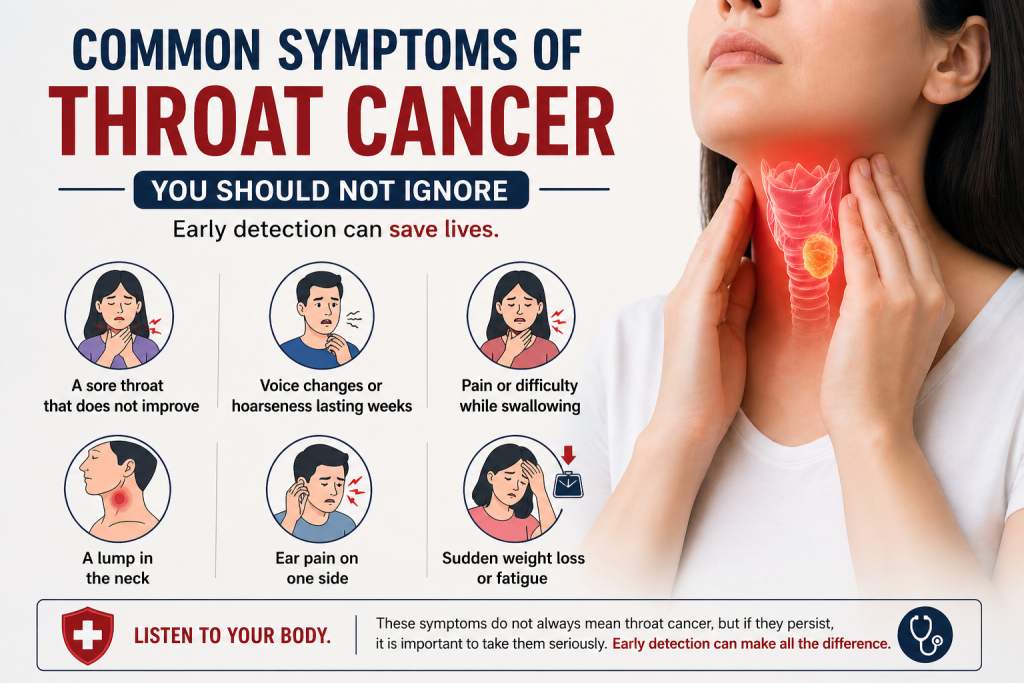
- A sore throat that does not improve
- Voice changes or hoarseness lasting weeks
- Pain or difficulty while swallowing
- A lump in the neck
- Ear pain on one side
- Sudden weight loss or fatigue
These symptoms do not always mean throat cancer, but if they persist, it is important to take them seriously. Listening to your body now can prevent any problems later.
Causes and risk factors behind throat cancer
There is no single reason for throat cancer. It usually develops due to a combination of factors. The most common causes include:
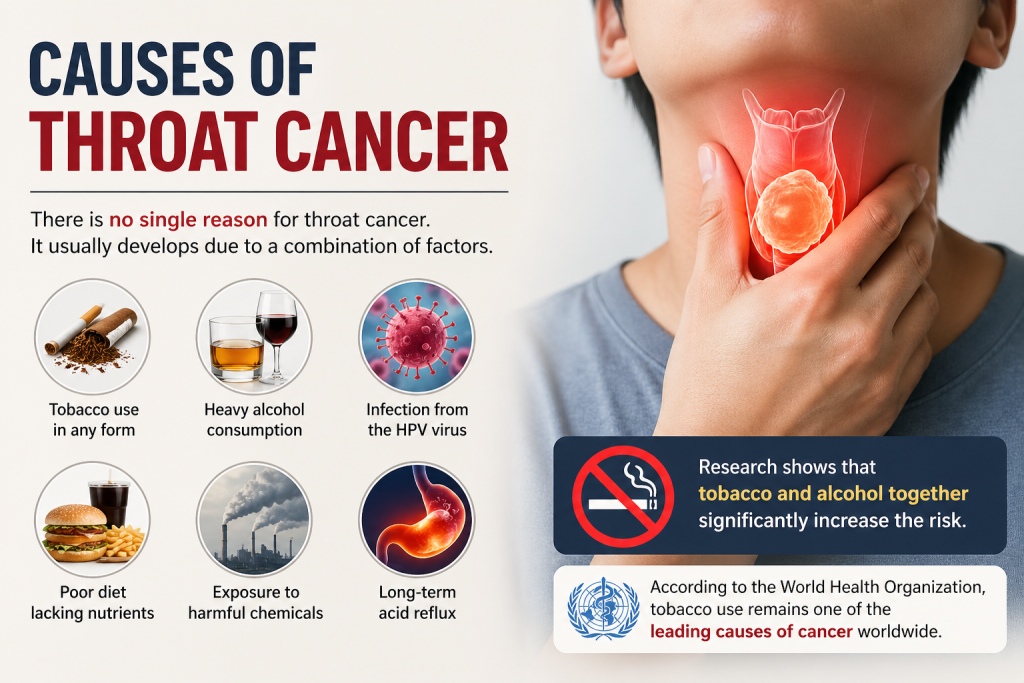
- Tobacco use in any form
- Heavy alcohol consumption
- Infection from the HPV virus
- Poor diet lacking nutrients
- Exposure to harmful chemicals
- Long-term acid reflux
Research shows that tobacco and alcohol together significantly increase the risk. According to the World Health Organization, tobacco use remains one of the leading causes of cancer worldwide.
Throat cancer stages and progression
Doctors often classify throat cancer stages based on how far the disease has spread. In the early stages, the cancer is limited to one area. In later stages, it may spread to nearby tissues or lymph nodes.
Knowing the throat cancer stages helps in planning treatment. Early detection usually leads to good outcomes.
But here is something important. Instead of only focusing on stages, it is equally important to understand why the disease developed in the first place. This is where an integrated approach can make a difference.
Treatment options for Throat cancer and their challenges
Current medical practices provide a variety of solutions for throat cancer, including surgery, radiation therapy, chemotherapy, and immunotherapy.
While all these procedures are designed to destroy the cancerous cells, they might also be accompanied by certain side effects which will impact your general well-being.
According to the National Cancer Institute, treatments like chemotherapy and radiation can cause fatigue, swallowing difficulty, and long-term complications.
This is one of the reasons why most patients prefer to use complementary methods of treatment nowadays.
Why an Ayurvedic approach matters
According to our specialists at Jeena Sikho HiiMS, throat cancer is not only a problem limited to a specific organ. It reflects a deeper imbalance in the body. Our approach focuses on restoring that balance through natural methods. We follow four key pillars:
Aahar
Aahar focuses on a personalised, healing diet that supports cellular repair and reduces inflammation. It comprises alkaline diets, natural food consumption, and other processes such as intermittent fasting and autophagy for body repair.
Vihar
Vihar improves your daily life with yoga, meditation, sunlight, and grounding. These methods reduce stress, strengthen immunity and support both mental and physical balance during recovery.
Shaman
Shaman uses Ayurvedic herbs and their formulations such as Ashwagandha, Turmeric, Guduchi, Manjistha to assist in healing. The herbal medicines used to aid in reducing inflammation, boosting the immune system and restoring balance to the body internally.
Shodhan
Shodhan revolves around removal of toxins and detoxing the body using natural methods. The following are some of the major therapies offered:
Golden Therapy
An exclusive herbal therapy that activates skin receptors for cell rejuvenation. It aids in improving the body’s healing abilities by enhancing immunity levels.
Zero-Volt Therapy
A natural healing therapy that aims at restoring electrical balance in the body via grounding. This therapy reduces tiredness, soothes the body and enhances cell coordination.
Hot Water Immersion Therapy
Hot water therapy is effective in improving blood circulation, hence allowing oxygen and nutrient transfer to cells. It relaxes muscles and increases perspiration, hence facilitating body detoxification.
Panchakarma Therapies
A group of Ayurvedic detox methods that deeply cleanse the body and restore balance.
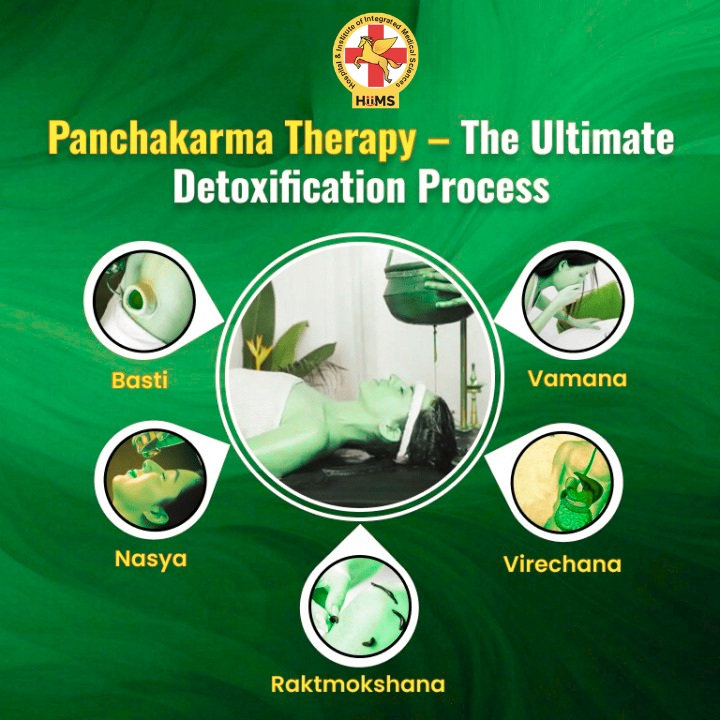
Vamana: It is a process of cleansing that eliminates toxins from the upper part of the digestive system. It is effective in improving digestion, reducing mucus, and balancing the respiratory and internal systems.
Virechana: This is a process of cleansing the liver and intestines through a detoxification technique. This helps in achieving balance in the body’s heat, metabolism, and digestion.
Basti: It is a form of enema treatment for cleaning and nourishing the large intestine. It helps in balancing the body by cleaning the large intestine.
Nasya: It is a nasal administration technique used for cleansing toxins from the upper part of the body. It also involves cleaning the respiratory system.
Raktmokshana: It is a detoxifying procedure for eliminating toxic substances from the blood. It helps reduce inflammation, improve circulation, and support overall vitality.
This structured method helps the body regain strength and supports long-term recovery. Unlike treatments that only target the disease, this method works on the root cause.
Throat cancer survival rate and what affects it
Many people search for the throat cancer survival rate when they are diagnosed. Statistics can only offer a general idea, but the full story is different. Every patient is unique. The elements that affect the survival rate for throat cancer patients are as follows:
- Diagnosis stage
- General health status
- Lifestyle behaviors
- Choice of treatment method
With proper intervention and appropriate therapy, the results may turn out positively. At Jeena Sikho HiiMS, our main aim is to strengthen the body so it can better respond to treatments.
Prevention steps that actually help
Throat cancer prevention is easy, but awareness is key. Here are some simple techniques:
- Stop smoking altogether
- Reduce drinking alcohol
- Increase fruit and vegetable intake
- Practice good oral hygiene
- Exercise regularly
- Minimise exposure to dangerous materials
Prevention is always better than cure, especially when it comes to conditions like throat cancer.
How Jeena Sikho HiiMS Supports Throat-Cancer Care
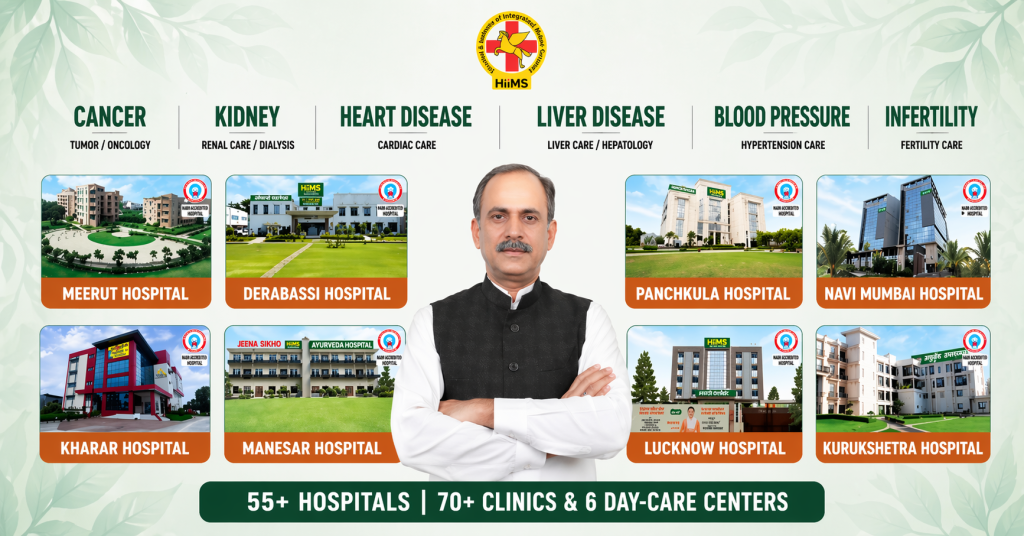
At Jeena Sikho HiiMS, the goal of throat cancer treatment is not just to treat the symptoms but to find out what caused the disease in the first place and fix it. The goal is to help the body heal itself while also making you feel better overall.
Ayurveda, diet therapy, and lifestyle changes are some of the natural and holistic methods used at HiiMS to treat people. Instead of a one-size-fits-all approach, each patient gets a care plan that is made just for them based on their health history, body type, and condition.
Diet, sleep, and stress management are all daily habits that are very important for recovery, so they get a lot of attention. Patients also learn about throat cancer, which helps them understand their condition better and be more involved in their healing process.
At Jeena Sikho HiiMS, the goal is not just to feel better for a short time, but to get better health in the long term. The goal is to naturally improve the quality of life, boost immunity, and speed up recovery by strengthening the body from the inside out.
Final thoughts
Dealing with throat cancer can feel overwhelming. There is plenty of information and many treatment options available, yet uncertainty remains.
However, by being curious and adopting an approach that will not only address the problem but also work for your general well-being, you have the chance to fight the disease successfully.
Our mission at Jeena Sikho HiiMS is to ensure that you know everything about your body and take steps to follow the natural way of recovery. If you are looking for a method that goes beyond symptoms and works on the root cause, this approach can offer a meaningful direction.
If you’re still trying to figure out what to do next for throat cancer, you can also go for a VOPD consultation with the doctors at Jeena Sikho HiiMS and see what kind of approach might actually suit your condition better. Here you will definitely get good advice from the best doctors for your health.

FAQ’s
Q1. What is throat cancer and how does it develop?
Throat cancer is when cells that shouldn’t be there grow out of control in places like the pharynx, larynx, or tonsils. Throat cancer usually grows slowly over time because of things like smoking, drinking alcohol, or viral infections like HPV.
Q2. What are the different types of throat cancer?
There are different kinds of throat cancer, and the type depends on where it starts. Laryngeal cancer (voice box), pharyngeal cancer (throat), and hypopharyngeal cancer are the three most common types. Knowing what kind it is helps you choose the best way to treat it.
Q3. What are the stages of throat cancer?
There are four stages of throat cancer: Stage 1, when the cancer is only in one area; Stage 4, when it may spread to nearby tissues or lymph nodes; Stage 5, when it has spread to other parts of the body. Finding it early is an important part of getting better treatment results.
Q4. What is the throat cancer survival rate?
The survival rate for throat cancer depends on a number of things, including the stage of the disease when it is diagnosed, the person’s overall health, and the type of treatment they get. Finding cancer in its early stages usually means a better chance of survival, while later stages may need more care and management.
Q5. What are the main causes and risk factors of throat cancer?
The most common causes of throat cancer include tobacco use, excessive alcohol intake, HPV infection, poor diet, and long-term acid reflux. Managing these risk factors can significantly help in prevention.
Disclaimer: The information provided on this blog is for general educational and informational purposes only. It is not intended to replace professional medical advice, diagnosis, or treatment. Always consult a qualified healthcare professional before making any changes to your diet, lifestyle, or treatment plan. Individual results may vary.