
Jaundice is a common condition, but many people do not understand its early signs. It is not a disease by itself. It usually shows that the liver is under stress. The liver helps in cleaning the blood and processing bile, which is a yellow fluid made by the body. When this process is disturbed, bilirubin levels increase. Bilirubin is a yellow pigment formed when red blood cells break down. When it rises in the blood, the skin and eyes start turning yellow.
The starting symptoms of jaundice are often mild in the beginning. Some people feel tired. Some notice changes in urine or appetite. These signs are sometimes ignored. That is why early attention is important. At Jeena Sikho HiiMS, patients are guided carefully so that symptoms are identified early and liver health is supported in a safe and structured way.
Key Early Signs of Jaundice
The starting symptoms of jaundice may appear slowly. You may notice small changes in the body before visible yellowing begins.
The five common early symptoms are:
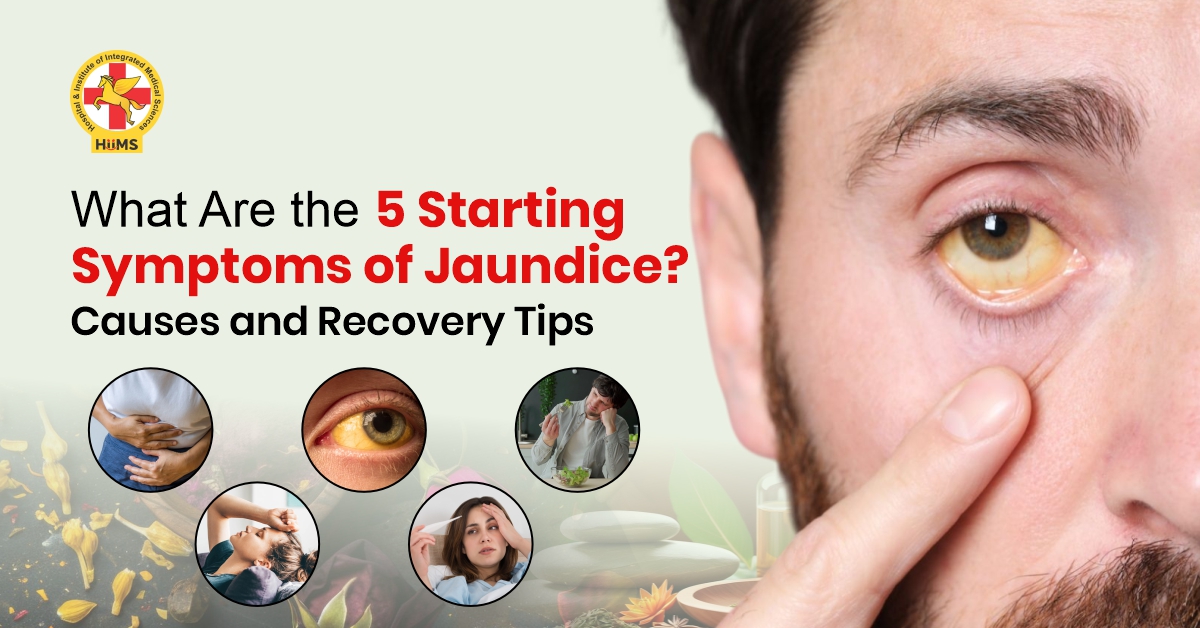
- Yellowish tint in the eyes
The white part of the eyes may look slightly pale yellow. Sometimes family members notice it first. This is often the earliest visible sign.
- Yellowing of skin
The skin may appear dull or yellowish, especially on the face and palms. In mild cases, it may not be very obvious in the beginning. Gradually the color deepens.
- Dark yellow urine
Urine may become darker than usual. Even if water intake is normal, the color may remain deep yellow or brownish.
- Loss of appetite
You may not feel like eating. Even favorite foods may not look appealing. Some people also feel mild nausea.
- Unusual tiredness
Weakness and low energy are common. Daily activities feel difficult, and there may be a feeling of heaviness in the body.
If these signs continue, it is better to get checked.
Main Causes Behind Jaundice
Jaundice happens when bilirubin builds up in the blood. This can occur due to different reasons related to liver or blood conditions.
Common causes include:
- Viral hepatitis infection
- Liver inflammation
- Excess alcohol intake
- Gallbladder blockage
- Certain medicines affecting liver
- Blood disorders causing rapid breakdown of red cells
There are different types of jaundice. Some are caused before the liver processes bilirubin, some due to liver cell damage, and some because bile flow is blocked. Identifying the correct type helps in planning proper care.
Ayurvedic Approach for Jaundice Care
In Ayurveda, jaundice is linked with an imbalance of Pitta dosha and liver weakness. The main aim is to cleanse the liver and restore digestion. Treatment is planned according to body strength and severity.
At Jeena Sikho HiiMS, therapies are selected only after proper assessment. One important therapy is Virechana, a mild cleansing process that helps remove excess bile and toxins. Herbs like Kutki, Guduchi, Haritaki, and Neem are used carefully under supervision as part of jaundice treatment.
Diet and Recovery Tips During Jaundice
Diet plays a very important role in recovery. The liver needs light and simple food so that it does not get an extra burden. Rest is also necessary.
Helpful tips include:
- Eat seasonal fruits and plain vegetable salads daily.
- Drink coconut water and fresh juices.
- Avoid fried items, oily curries, and very spicy food.
- Stay completely away from alcohol and tobacco.
- Drink clean, warm water.
- Take proper rest and go for small walks when you feel okay.
- Do not eat heavy outside food until recovery improves.
These steps support natural healing. Heavy meals and junk food should be avoided during recovery.
Medical Care Beyond Jaundice
Liver health is closely connected with overall health. Sometimes patients suffering from jaundice may also have other medical conditions. Proper medical guidance becomes necessary in such cases.
At Jeena Sikho HiiMS, doctors not only manage jaundice but also treat serious conditions like cancer, liver disorders, heart problems, infertility issues, and other chronic diseases. This combined experience helps in giving balanced and safe care when multiple problems exist together.

Conclusion
Jaundice should not be ignored, especially when early signs appear. The starting symptoms of jaundice may look mild, but they indicate that the liver is under stress. Yellow eyes, dark urine, tiredness, and loss of appetite are signals that need attention. Early diagnosis makes recovery smoother. Blood tests and liver function tests help in understanding the exact cause.
Proper rest, a simple diet, and timely medical guidance support healing. Structured jaundice treatment depends on the type and severity of the condition. At Jeena Sikho HiiMS, patients receive careful evaluation and supervised care so that liver function improves gradually. If you or your family member notices early signs of jaundice, do not delay consultation. Timely consultation is important to prevent further complications. Proper medical guidance at the right stage helps manage the condition effectively. Early intervention supports liver function and promotes steady recovery.
Frequently Asked Questions
Q1. What is the first visible sign of jaundice?
Yellowing of the eyes is usually the earliest noticeable sign.
Q2. Can jaundice go away on its own?
Mild cases may improve, but medical evaluation is always advised.
Q3. How long does recovery take?
The time needed for healing is decided by the cause and the patient’s strength.
Q4. Is diet important during jaundice?
Yes, light and simple food helps reduce stress on the liver.
Q5. Are all types of jaundice serious?
Not all are severe, but a proper diagnosis is necessary to avoid complications.