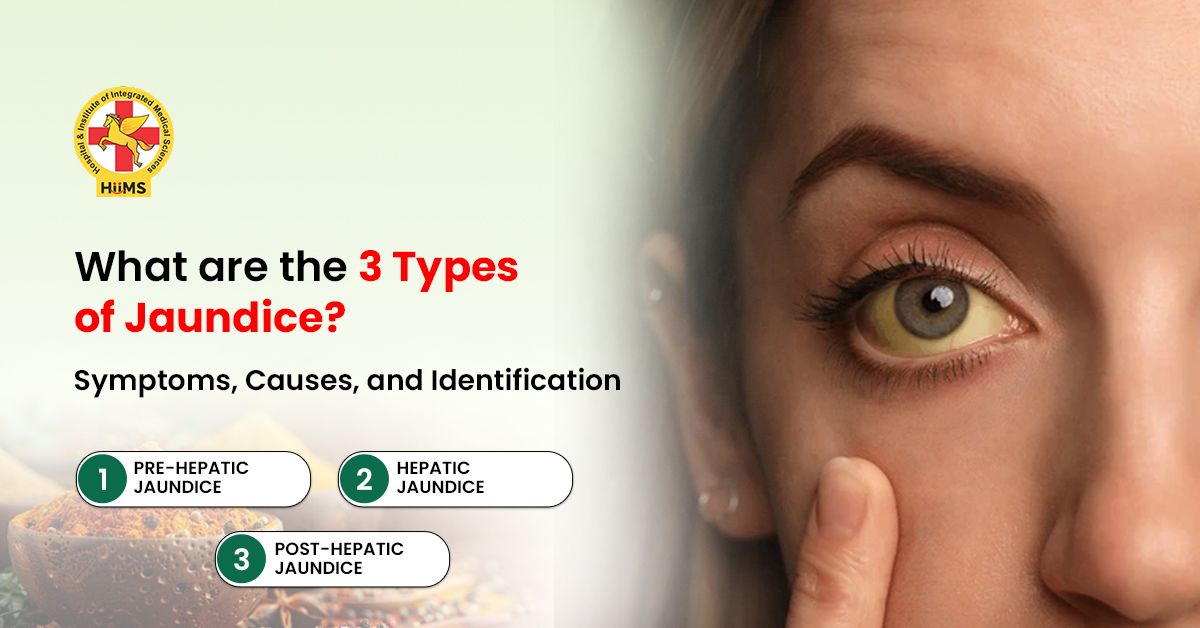

Jaundice is a health problem that happens when the body has too much bilirubin. Bilirubin is a yellow substance produced when red blood cells break down. This can make the skin and eyes look yellow.
Many people do not know jaundice clearly. It is important to know its causes and symptoms. Learning about jaundice can help in early detection and help in finding proper treatment.
At Jeena Sikho HiiMS Hospital, doctors try to find the root cause of jaundice and suggest natural ways to treat it. Each type of jaundice has different causes and ways to treat.
If noticed early, complications can be avoided, and recovery can be faster. This blog will explain jaundice, its causes, symptoms, and the 3 types of jaundice in simple language. Knowing about jaundice can help you take the right steps to stay healthy and avoid serious problems.
Basic Overview of Jaundice
Jaundice is not a disease but a sign that something is wrong in the body. It happens when the liver, gallbladder, or blood cells do not work properly. Bilirubin is usually removed by the liver. But when this process is blocked, bilirubin builds up. This causes yellow skin and eyes.
Jaundice can happen to anyone, from babies to old people. Sometimes it comes suddenly. Other times, it develops slowly over weeks. Knowing the 3 types of jaundice helps in getting the right treatment. It also prevents serious problems.
Causes of Jaundice
The causes of jaundice depend on its type. Some common causes are:
- Liver problems: Diseases like hepatitis, fatty liver, or cirrhosis can reduce liver function.
- Blockage in bile ducts: Gallstones or tumors can block bile flow from the liver to the intestine.
- Blood disorders: Rapid breakdown of red blood cells, like in hemolytic anemia, makes too much bilirubin.
- Infections: Some infections affect the liver or blood and cause jaundice.
- Medications and alcohol: Long-term use of some drugs or alcohol can harm the liver.
Knowing the cause is very important. It shows which type of jaundice a person has. It also guides treatment.
Symptoms and Identification of Jaundice
The main symptom of jaundice is yellow skin and eyes. Other signs that can help identify jaundice may include:
- Dark yellow or brown urine.
- Pale stool.
- Itching all over the body.
- Fatigue and weakness.
- Fever (sometimes if infection is present).
- Nausea or loss of appetite.
Not everyone shows all the signs. Symptoms can vary depending on the type of jaundice. Observing these early signs helps in identifying jaundice correctly and getting timely treatment.
Watch this video to understand how guidance from Acharya Manish Ji helped bring comfort in a case of liver-related obstructive jaundice.
Types of Jaundice
The 3 types of jaundice are pre-hepatic, hepatic, and post-hepatic. Each type has different causes, signs, and treatment.
1. Pre-Hepatic Jaundice
This type happens before bilirubin reaches the liver. It occurs when red blood cells break down too fast. This makes too much bilirubin for the liver to handle. Causes include:
- Hemolytic anemia
- The genetic blood problems
- And certain infections
Signs include yellow skin and eyes, dark urine, and sometimes tiredness. Pre-hepatic jaundice usually does not harm the liver. But the blood problem behind it needs treatment.
2. Hepatic Jaundice
Hepatic jaundice happens inside the liver. It occurs when liver cells are damaged. Then they cannot process bilirubin properly. Common causes are:
- Hepatitis A, B, or C
- Alcohol-related liver problems
- Fatty liver disease
- Cirrhosis
People with hepatic jaundice may see yellow skin and eyes, feel tired, lose appetite, feel nauseated, or have swelling in the legs or belly. Treatment aims to heal the liver. At Jeena Sikho HiiMS Hospital, doctors use natural therapies and lifestyle guidance. This helps the liver work better and manage hepatic jaundice safely.
3. Post-Hepatic Jaundice
This type occurs after bilirubin leaves the liver but cannot reach the intestines. Blockages in the bile ducts cause it. Causes include:
- Gallstones
- Tumors in the liver, pancreas, or bile ducts
- Narrowed bile ducts
People often notice dark urine, pale stools, itching, and a yellow shade to the skin and eyes. In some cases, post-hepatic jaundice may require medical procedures or even surgery to clear the blockage. Finding the problem early plays a big role in proper recovery.
When to See a Doctor
If jaundice signs appear, see a doctor quickly. Go immediately if:
- Yellowing spreads fast
- Severe itching or belly pain
- Vomiting, fever, or confusion
Early checkups help with proper diagnosis and treatment. Doctors may do blood tests, imaging, and liver function tests. This helps find the types of jaundice and their causes.
Preventive Measures for Jaundice
Some simple steps reduce jaundice risk:
- Wash your hands and stay clean to avoid infections.
- Avoid too much alcohol and unnecessary medicines.
- Eat a healthy diet with fruits, vegetables, and fiber.
- Drink enough water and exercise.
- Get hepatitis A and B vaccines.
- Check liver health regularly if the family has liver problems.
It is easier to prevent jaundice than to treat it. Good habits help a lot.
Conclusion
Jaundice can happen to anyone. Knowing the 3 types of jaundice helps in proper care. Each type—pre-hepatic, hepatic, and post-hepatic—has different causes, signs, and treatments.
At Jeena Sikho HiiMS Hospital, doctors check the type and root cause. They use natural and safe treatments to help with recovery. When early signs are noticed on time and simple precautions are followed, it makes recovery easier. Staying clean, eating well, and living a healthy life help the body heal.
Understanding the types of jaundice helps in getting timely care and better recovery. For holistic and safe treatment, you can connect with our Ayurveda expert team on a video call consultation.

FAQs
Q1. Is jaundice a disease?
Jaundice is a sign of an underlying health problem.
Q2. Which organ is mainly affected in jaundice?
The liver is mainly affected.
Q3. Can jaundice go away on its own?
In mild cases, improvement can happen, but treatment is still important.
Q4. Can alcohol cause jaundice?
Long-term alcohol use can damage the liver and cause jaundice.
Q5. What foods are good during jaundice?
Light, homemade food and fruits are helpful.