

Many people generally ignore small, nagging signs, like a puffy face in the morning, frequent urination at night, or a constant tiredness that doesn’t go away even after proper rest. When kidneys begin to lose their effectiveness, these tiny changes often come first. They are easy to miss because we call them ‘normal’ aging or stress.
This blog will help you spot the early, everyday signs of kidney failure before the problem grows. In this, you’ll understand how kidneys work in simple words, list the common kidney failure symptoms and signs of kidney failure, and show practical steps to check yourself at home.
You will also see what causes kidney failure, how simple lifestyle shifts and early screening can make a big difference, and how an integrative approach, including Ayurvedic support, fits into kidney care. Read on to learn what to watch for and what to do next.
How the Kidneys Normally Work
Kidneys act like a filter and a balancing team. They remove waste, keep the right amount of water, manage salts and minerals, and help control blood pressure. Think of them as quiet cleaners working day and night. When filtering slows, waste stays in the blood and fluids collect.
Why are they so vital?
Without healthy kidneys, toxins build up, energy drops, and blood pressure can spike. Bones and muscles also feel the change because minerals shift out of balance.
What happens when filtering worsens?
Small signs appear first, like changes in urine, tiredness, and mild swelling. Kidneys hide problems well, so spotting these early matters.
What Is Kidney Failure?
Kidney failure means the kidneys can’t clear waste properly. It can appear suddenly (acute) after injury or infection or slowly (chronic) over months or years. Acute cases can sometimes reverse; chronic cases need long-term care. Knowing what causes kidney failure points to prevention.
Common Signs & Symptoms of Kidney Failure
Changes in Urination Patterns
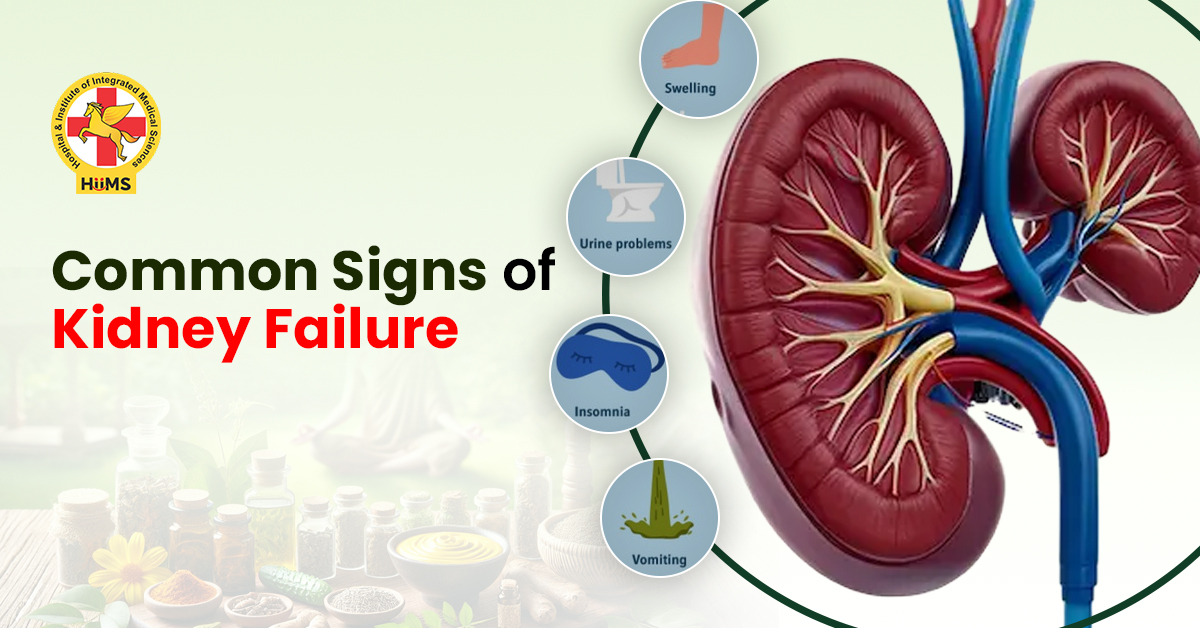
More commonly going to the toilet at night, very little urine, foamy urine (protein), or blood-tinged urine are important signs of kidney failure.
Persistent Fatigue, Weakness & Brain Fog
Toxin buildup causes constant tiredness and poor concentration, common kidney failure symptoms people dismiss as normal tiredness.
Swelling (Edema), Puffiness Around Eyes/Ankles/Feet
When kidneys fail to balance fluids, puffiness and swollen ankles show up. These are clear signs of kidney failure and deserve a check.
Skin, Appetite & Digestive Changes
A metallic taste, low appetite, nausea, dry itchy skin, and muscle cramps can come from mineral imbalance and toxins that build up when the kidneys slow.
High Blood Pressure & Other ‘Silent’ Risks
High blood pressure can both cause and reflect kidney damage. Diabetes, long-term painkiller use, and recurrent infections are known causes of kidney failure that raise the risk.
What Causes Kidney Failure?
Common drivers include poorly controlled diabetes and long-standing high blood pressure, which slowly scar delicate kidney tissue, lifelong medicines are also the reason for side effects. Blocked urine flow from stones or prostate problems, repeated severe infections, and long-term use of certain pain medicines can also harm the kidneys. Sudden causes like severe dehydration, major infections, or exposure to toxins can trigger acute kidney trouble. Understanding these causes of kidney failure helps you act early and reduce risk.
Identifying the Signs Early – Check-ups & Monitoring
Early signs are subtle. Simple urine tests and blood checks like creatinine or eGFR catch trouble before symptoms worsen. Keep an eye on swelling, urine changes, and energy levels. Jeena Sikho HiiMS Jodhpur recommends screening for people with diabetes, hypertension, or family history and encourages regular monitoring to spot kidney failure symptoms early.
How Ayurveda Supports Early Detection & Kidney Health
Ayurveda explains kidney issues as a dosha imbalance and toxin (ama) build-up. Gentle diet changes, specific herbs, Ayurvedic therapies, yoga, and pranayama can support body balance.
These steps fit into a broader kidney failure treatment plan when combined with medical care, aiming to reduce strain and support natural healing.
How You Can Act Now – Prevention & Early Intervention Tips
Manage blood sugar and blood pressure, avoid unnecessary painkillers and instead opt for Ayurveda and natural treatment methods, limit salt and processed foods, stay hydrated, and exercise regularly. Simple habits like good sleep and stress control matter.
Watch for signs of kidney failure such as changed urine, swelling, or persistent fatigue, and consult early for a personalised plan.
When to Seek Medical Help Immediately
Seek urgent care if urine stops, becomes bloody, or swelling worsens quickly, or you have breathlessness, chest discomfort, or severe confusion, these may signal serious kidney stress requiring immediate kidney failure treatment.
Conclusion
Kidneys do a vital job, and kidney failure can creep in without loud alarms. Spotting early changes like differently colored urine, persistent tiredness, swelling, or rising blood pressure lets you intervene earlier and protect what remains of kidney function. An integrative approach that blends timely medical checks with lifestyle shifts and Ayurvedic support can slow progression and improve daily life.
If you notice any worrying signs or have risk factors, contact Jeena Sikho HiiMS Jodhpur for a personalised plan. Call +91 97799-95580 or email care@jeenasikho.com to book an appointment and take the first step. Our team is here to support you.

FAQs
Q1: What are common kidney failure symptoms to watch for?
A: Look for changes in urine, persistent fatigue, swelling, and loss of appetite as early kidney failure symptoms.
Q2: What are the main causes of kidney failure?
A: Uncontrolled diabetes, long-standing high blood pressure, repeated infections, and some pain medicines are common causes of kidney failure.
Q3: How can I prevent kidney failure in daily life?
A: Control blood sugar and blood pressure, avoid unnecessary painkillers, limit salt, stay hydrated, and get routine screenings to help prevent kidney failure.
Q4: Are there non-medical supports for early kidney care?
A: Ayurveda, naturopathy, other natural treatment methods, mild herbs, yoga, and stress management are part of a broader kidney failure treatment strategy.
Q5: When should I seek urgent help for signs of kidney failure?
A: Seek immediate care for a sudden stop in urine, heavy blood in urine, rapid swelling, severe breathlessness, or confusion; these serious signs of kidney failure need prompt evaluation.