

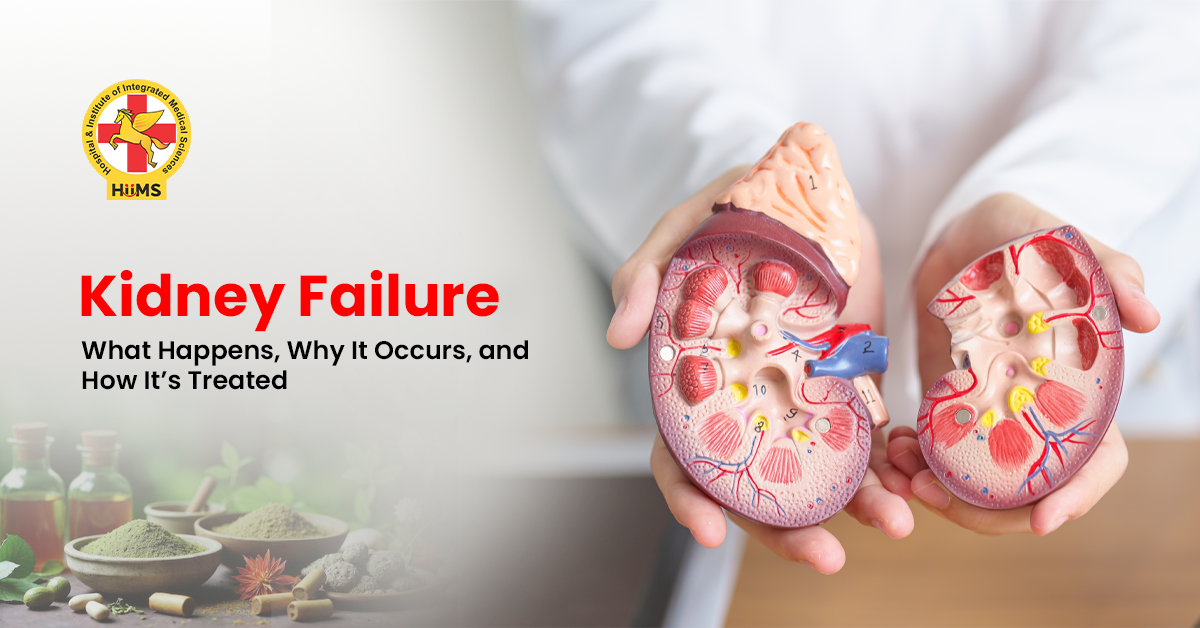
Kidney failure is a major health problem affecting people all over the world. In simple words, it occurs when one or both kidneys stop working properly. Kidneys are like the body’s natural filters; they remove waste, extra fluids, and harmful substances from the blood, which leaves the body as urine.
If the kidneys fail, these wastes can accumulate and cause serious health issues if not treated. Renal failure can happen quickly or slowly depending on the reason.
Knowing about kidney health early is very important. Platforms such as Jeena Sikho HiiMS explain health matters in easy terms. Many people don’t notice any signs until the problem becomes severe.
This is why learning about kidney dysfunction, what causes kidney failure, its signs, and treatment is essential. This blog will guide you in a simple way to understand and take care of your kidneys.
What Happens When Kidneys Fail
Kidney failure means your kidneys can’t filter blood and remove waste properly anymore. When kidneys stop working properly, toxins start to accumulate, which can bring on serious health issues. Severe renal failure is often called end-stage renal disease (ESRD).
There are mainly two types:
- Acute kidney failure, this comes on suddenly, maybe in hours or days, often because of injury or a severe illness.
- Chronic kidney failure develops slowly over months or years, usually due to long-term health problems.
Why Kidneys Stop Working Properly
Knowing what causes kidney failure is important to prevent it or catch it early. Some common reasons are:
1. Diabetes and High Blood Pressure
High blood sugar and high blood pressure are the main causes of kidney damage. High sugar levels can hurt the tiny blood vessels in the kidneys. Uncontrolled blood pressure also puts stress on the kidneys over time.
2. Sudden Events
In some cases, renal failure appears suddenly, like following a serious infection, major surgery, dehydration, or a reaction to certain drugs. If it’s not addressed fast, the kidneys can stop working quickly.
3. Blockages and Other Diseases
Kidney stones, an enlarged prostate, autoimmune diseases like lupus, or inherited kidney problems can reduce blood flow or harm kidney tissues. Over time, this may cause kidney dysfunction.
Symptoms That Show Kidney Trouble
Understanding the signs of kidney failure allows for early treatment. Everyone may show different symptoms, and at first, there may be almost no signs at all.
Common things to watch for:
- Swelling in feet, ankles, or face from extra fluid.
- Peeing less or changes in urination.
- Feeling tired or weak because of the waste in the blood.
- Feeling sick or vomiting when toxins affect your stomach.
- Shortness of the breath if fluid collects in the lungs.
- Dry or itchy skin from the mineral imbalances.
- Confusion or trouble focusing as toxins affect your brain.
Symptoms of Kidney failure usually come on slowly. Regular check-ups are very important, particularly for people with diabetes or high blood pressure.
Tests to Check Kidney Health
Doctors do a few tests to see how your kidneys are doing:
- Blood tests, check waste products like creatinine and urea.
- Urine tests, if protein or blood is in your urine, which shows kidney damage.
- Imaging scans like ultrasound or CT, to check if kidneys have structural problems.
These tests show doctors how severe the kidney damage is and the most suitable treatment plan.
How Kidney Failure Is Treated at Jeena Sikho HiiMS
Jeena Sikho HiiMS approaches kidney care carefully, with patience and attention. Patients are given time to understand their condition, and treatment is guided by modern diagnostic tests. Natural therapies reduce internal stress, while the focus remains on comfort and long-term balance.
- Addressing the Cause
If kidney damage is caused by something treatable like dehydration, infection, or blockage, doctors fix it. Treating the cause early can stop more damage to the kidneys.
- Supportive Natural Care
The treatment uses a mix of Ayurvedic and natural methods to improve kidney health. It mainly works on better digestion, proper fluid balance, and healthy circulation. Lifestyle changes are introduced slowly, letting the body adapt naturally.
- Therapies for Kidney Support
Therapies prioritize safety and gentle care. Panchakarma detox methods clean internal pathways, and the GRAD system stimulates kidney activity. Regular practices like sleeping well, drinking enough fluids, and controlling stress are suggested to boost kidney function and overall health.
How to Prevent Kidney Failure
It’s always better to prevent kidney problems than to treat them later. Here’s what you can do for how to prevent kidney failure:
- Control diabetes and blood pressure. Follow the doctor’s advice.
- Drink enough water and avoid staying dehydrated.
- Don’t overuse pain medicines like ibuprofen.
- Eat a balanced diet and maintain a healthy weight.
- Avoid smoking and limit the alcohol.
Simple lifestyle changes can reduce the risk of kidney problems in the future.
Conclusion
Renal failure means your kidneys aren’t working as they should. Being aware of the signs and symptoms, and what causes kidney failure can help you take early steps to protect your health. Treatment may include medicines, dialysis, or even a transplant in serious cases.
Following healthy habits and managing conditions like diabetes and high blood pressure is important for how to prevent kidney failure. Learning about your health and sharing knowledge from kidney care centers like Jeena Sikho HiiMS can really make a difference. Going for regular check-ups and noticing changes in your body can protect your kidneys for a long time.

FAQs
Q1. What are the first signs that your kidneys could be having problems?
Swelling in feet or ankles, frequent fatigue, and changes in urination patterns.
Q2. How does high blood pressure affect kidney function?
Uncontrolled blood pressure can strain the kidneys over time.
Q3. How does diabetes impact kidney function?
High blood sugar can damage tiny blood vessels in the kidneys.
Q4. Can dehydration harm the kidneys?
Staying dehydrated for long periods can reduce kidney function.
